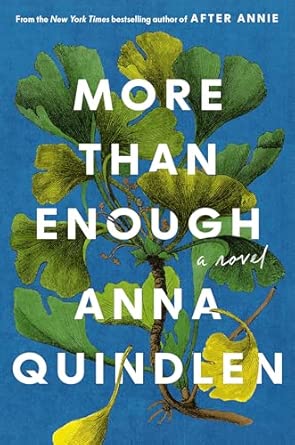
3.5 Stars

This was a 2025 Canada Reads selection chosen to be read by my book club.
In 1988, Swee Hua leaves her husband Ah Loy and her daughters, Lily and Bea. Lily, the narrator, is 11 years old when her mother disappears and is never heard from again. Twenty years later, Lily, a new mother, sets out to find Swee Hua.
The novel is divided into three parts. The first part, entitled “Before,” shows the family before Swee Hua’s departure. The family lives in Sparwood, a small mining town in British Columbia. Ah Loy wants them to blend into the Canadian life, but Swee Hua longs to return to Brunei. The second part, entitled “Now,” focuses on Lily as a young mother wishing her own mother were there to help her adjust to motherhood, a desire that sets her on her search. The last section, entitled “See,” describes Lily’s travels to Southeast Asia and her discoveries there.
The novel examines the complexities of the immigrant experience. I appreciated the contrasting views presented by Lily’s parents. Ah Loy is devoted to Canada because it gave him citizenship which he’d not had in Brunei. He largely rejects his ethnic heritage. He tends to be blind to some of the problems within Canada. Swee Hua, on the other hand, hates almost everything about Canada. She feels isolated from her family so she longs to leave and return to Southeast Asia. She tends to romanticize China, turning it almost into a fantasy land.
Other topics are also explored. For example, racism is highlighted. As a child, Lily is ostracized because of her ethnicity, and Swee Hua also faces discrimination. Depression, especially post-partum depression, and motherhood and identity are also addressed.
The novel’s slow pace is problematic. There is, for instance, a lot of repetition. In the first part there are repeated scenes of racism and disagreements between Ah Loy and Swee Hua about life in Canada. In the later sections, there is constant reference to Lily’s difficulties as a new mother. Then virtually every character questioned states s/he knows nothing about Swee Hua’s whereabouts. The many food references become tedious; some paragraphs just list foods: “Hot woks fried blood cockles for char kuey teow, a mortar and pestle ground peanuts for tangy rojack, succulent satay smoke on the grill, popiah were rolled up on wooden cutting boards, sweet and sour asam laksa simmered in a large pot, and layered kueh lapis in a rainbow of colours beamed from a refrigerated counter.”
The writing style does not impress. There is a lot more telling than showing. Dialogue is awkward because it’s used as exposition to give background information. Metaphors tend to be clunky. For example, Lily says, “I remember my teacher last year, Mrs. Henry, telling us knapweed was a noxious and non-native species that was invading the valley. It may have been unwanted, but it was vibrant and strong.” On the previous page, Ah Loy describes his Hakka tribe: “’Like a dandelion, the Hakka can land anywhere, take root in the poorest soil, flourish and flower.’” It’s obvious that neither is actually talking about weeds. Two white women who shun Swee Hua discuss a room divider: “’It’s quite ornate. Hand-painted and Oriental looking. It’s quite fetching . . . I just love how a little exotic touch can add so much to a plain room.’” It’s impossible to miss the irony.
The book touches on some important issues; I just wish the execution were more polished.