Ranked a Top Canadian Book Blog
Twitter: @DCYakabuski
Facebook: Doreen Yakabuski
Instagram: doreenyakabuski
Threads: doreenyakabuski
Substack: @doreenyakabuski
Bluesky: @dcyakabuski.bsky.social

Wednesday, October 7, 2015

2015 Governor General's Literary Award for Fiction

The Canada Council for the Arts today announced the 2015 shortlist for the Governor General’s Literary Awards.  From http://www.amazon.ca, here are brief descriptions of the five finalists for fiction:

How You Were Born by Kate Cayley
How You Were Born is a collection of short stories looking at the bizarre, the tragi-comic and the unbelievable elements that run through our lives.  An aging academic becomes convinced that he is haunted by his double.  Two children believe their neighbours are war criminals in hiding.  A dwarf in a circus dreams of a perfect wedding.  An eleven-year-old girl becomes obsessed with the acrobat who visits her small town.  Two women fall in love over a painting of the apocalypse.  A group of siblings put their senile Holocaust survivor father into institutional care, while failing to notice that he is reliving the past.  Each story examines, from a different angle, the difficult business of love, loyalty and memory.

Outline by Rachel Cusk
Outline is a novel in ten conversations.  It follows a novelist teaching a course in creative writing during an oppressively hot summer in Athens.  She leads her students in storytelling exercises.  She meets other visiting writers for dinner.  She goes swimming with an elderly Greek bachelor.  The people she encounters speak, volubly, about themselves: their fantasies, anxieties, pet theories, regrets and longings.  And through these disclosures, a portrait of the narrator is drawn by contrast, a portrait of a woman learning to face a great loss.
Note:  This book also appears on the Scotiabank Giller Prize shortlist and was a finalist for the Baileys Women’s Prize for Fiction.

The Evening Chorus by Helen Humphreys
Resigned to living out the Second World War in a German POW camp, James Hunter, an English officer, begins studying a pair of redstarts near the camp.  His interest in the birds captures the attention of the Kommandant and gives James cause to fear for his life.  Meanwhile, back in England, James's young wife, Rose, falls headlong into a passionate affair with another man.  When James's sister, Enid, is bombed out of her London flat, she comes to stay with Rose, and the two women form a surprising friendship that alters the course of both of their lives.

The Winter Family by Clifford Jackson
The novel traces a gang of ruthless outlaws from its birth during the American Civil War to a final bloody showdown in the Territory of Oklahoma.   From the 1860s to the 1880s, the outlaws known as the Winter Family roam the harsh frontier, both serving and battling the fierce advance of civilization. Among its twisted specimens are the psychopathic killer Quentin Ross, the mean and moronic Empire brothers, the impassive ex-slave Fred Johnson, and the gunslinging child prodigy, Lukas Riddle. At the centre of this ultraviolent storm is their cold, dandified and golden-eyed leader, Augustus Winter--a man with a pathological resistance to the rules of society and a preternatural gift for butchery.
Note:  This novel was on the Scotiabank Giller Prize longlist.

Daddy Lenin and Other Stories by Guy Vanderhaeghe
Among these nine stories: A teenage boy breaks out of the strict confines of his family, but his bid for independence leads him in over his head.   An actor’s penchant for hiding behind a role, on and off stage, is tested to the limits and what he comes to discover finally places him face to face with the truth. With his mother hospitalized for a nervous condition and his father away on long work stints, a boy is sent to another family for his meals. His gradually building relationship with a teenage daughter who has been left handicapped from polio opens unexpected doors to the world.  In the title story, a middle-aged man re-meets his former adviser at university, a charismatic and domineering professor dubbed Daddy Lenin.  As their tense reunion progresses, secrets from the past painfully revise remembered events and threaten to topple the scaffolding of a marriage.
Note:  I highlighted the three novels of Vanderhaege’s frontier series in yesterday’s blog entry.

See http://ggbooks.ca/~/media/ggbooks/2015/documents/gg%20finalists-e.pdf?mw=1382 for the finalists in all the categories.  The winners will be announced on Oct. 28.

Tuesday, October 6, 2015

Reviews Archive - Guy Vanderhaeghe and "A Good Man"

In my last Reviews Archive, I focused on a Newfoundland author.  This time I feature a Saskatchewan writer, Guy Vanderhaeghe, who is best known for his Frontier trilogy.  Here are brief plot descriptions of the first two novels in the series and my review of the last one.

The Englishman’s Boy (1996)
This novel was the winner of the 1996 Governor General's Award for fiction.  The Englishman's Boy is a story within a story—a romance about the myth of movie-making in Hollywood in the 1920s and an account of a real-life massacre of First Nations people in Montana in the 1870s.  Linking these two very different stories is Shorty McAdoo, an aging cowboy, who as a young man acted as a guide for the American and Canadian trappers who perpetrated the massacre and who is now going to be the subject of a no-holds-barred blockbuster set to rival D.W. Griffith's epic Birth of a Nation.

The Last Crossing (2002)
This novel was the winner of Canada Reads 2004.  Set in the second half of the nineteenth century, in the American and Canadian West and in Victorian England, The Last Crossing is a tale of interwoven lives and stories.  Charles and Addington Gaunt must find their brother Simon, who has gone missing in the wilds of the American West.  Charles, a disillusioned artist, and Addington, a disgraced military captain, enlist the services of a guide to lead them on their journey across a difficult and unknown landscape.  This is the enigmatic Jerry Potts, half Blackfoot, half Scottish, who suffers his own painful past.  The party grows to include Caleb Ayto, a sycophantic American journalist, and Lucy Stoveall, a wise and beautiful woman who travels in the hope of avenging her sister’s vicious murder.  Later, the group is joined by Custis Straw, a Civil War veteran searching for salvation, and Custis’s friend and protector Aloysius Dooley, a saloon-keeper.  This unlikely posse becomes entangled in an unfolding drama that forces each person to come to terms with his own demons.

A Good Man (2011)
5 Stars


This literary western, longlisted for the 2011 Giller Prize, is set in the late 1870s, primarily between Fort Walsh in the Cypress Hills of southwestern Saskatchewan and Fort Benton in Montana.

The protagonist is Wesley Case, a privileged intellectual who seeks to escape the political manipulations of his lumber baron father. After stints as a soldier in Ontario and as a member of the NWMP at Fort Walsh, he decides to take up ranching, purchasing property near Fort Benton. He also becomes a diplomat, serving as an informal ambassador between Major James Walsh, the commander of Fort Walsh, and Major Guido Ilges, the commander of Fort Benton, the nearest American military detachment.

Exchange of information between Walsh and Ilges is crucial. Chief Sitting Bull recently decimated General Custer's troops at Little Bighorn, but no one knows what the Sioux will do next. Will they make another attack on Americans? Will they migrate to Canada and, if so, how will the Canadians react?

The book is not just about politics; there is also romance and mystery. A love triangle develops between Case; Ada Tarr, an independent-minded widow; and Michael Dunne, a thug-for-hire whom Case encountered in the past during a mysterious event which has left him burdened with guilt.

The characters are fully developed. Through flashbacks one learns about the past of most of the characters. As a result, the "bad guys" are humanized, and the "good guys" are not faultless.

There is interplay between personal stories and historical events, the latter explained in terms of how they affect the characters. Both personal and historical dramas are fraught with uncertainty, so suspense is abundant.

Canada - U.S. relations are examined from a historical perspective. Tensions exist between the newly formed country of Canada and a post-Civil War U.S. Questions of security taint relationships between the neighbours: the Canadians have experienced Fenian raids originating in the U.S., and the Americans fear further attacks by Indians after regrouping in Canada.

Canadian and American attitudes to native people are differentiated, attitudes that are somewhat exemplified by Majors Walsh and Ilges. The Americans favour a genocidal approach while Canadians emphasize peaceful resolution of problems. That is not to say that Canada's treatment is exemplary since tribes are starved into submission!

In terms of narrative structure, this novel is strictly conventional, but it possesses a depth and complexity that makes it a very satisfying read. It may lack the experimentation some readers crave, but The Good Man is definitely a good read - this opinion from a reader who prefaced her earlier review of The Sisters Brothers by admitting her dislike of the western genre.

Monday, October 5, 2015

2015 Scotiabank Giller Prize Shortlist

Today the finalists for the Scotiabank Giller Prize were announced.  Below are the five novels with the jury's citations from http://www.scotiabankgillerprize.ca/finalists/2015shortlist/.

Fifteen Dogs by André Alexis
What does it mean to be alive? To think, to feel, to love and to envy?  André Alexis explores all of this and more in the extraordinary Fifteen Dogs, an insightful and philosophical meditation on the nature of consciousness. It’s a novel filled with balancing acts: humour juxtaposed with savagery, solitude with the desperate need to be part of a pack, perceptive prose interspersed with playful poetry. A wonderful and original piece of writing that challenges the reader to examine their own existence and recall the age old question, what’s the meaning of life?

Arvida by Samuel Archibald
Samuel Archibald’s stories come from over there: way, way over there.  They live in the woods, hunting for creatures that may or may not exist, and they sometimes go surging down the highway at reckless speeds.  At other times, they freeze, paralysed by the strange sounds that should not be coming from empty rooms in very old houses.  This writing – so wise and funny and impeccably crafted – is the best kind of gossip: it tells us everything we need to know, the real dirt, about this place and about all the people, the true ‘characters,’ we meet wandering up and down the cryptic streets of a real but mythic Arvida.  There is a lot of whispering going on in this town, a lot of information that strains credulity, a lot of laughter, a lot of suspense, a bit of fear.  Arvida is just like life: a tender, sometimes terrifying, mystery unfolding before our eyes.

Outline by Rachel Cusk
Compulsively readable and dazzlingly intelligent, Rachel Cusk’s Outline follows a writer’s journey to Athens to teach a summer writing course.  Along the way she encounters a cast of characters who share with her the outlines of their own life stories.  The result is a novel of breathtaking skill and originality. Perfectly paced, without a word out of place, Outline reminds us of the truly formidable power that good literature has to change our hearts and our minds.

Daydreams of Angels by Heather O’Neill
This is a work of acute charm and radically deft imagination.  Whether probing the behaviour of clones for some sign of a relationship between genes and genius, eavesdropping on the anecdotes of abandoned dolls, or detailing the particulars of ‘A Portrait Of The Marquis de Sade As A Young Girl’, O’Neill’s stories continually spar with that which so often defines our lives or limits our daring – the problem of pain.  Here are characters born of a distinctive sensibility and sent forth to chart the strange and volatile terrain where grace is found, lost, and found again.  There’s no thrill quite like encountering tales this tall, and few tall tales offer up their gifts this freely.

Martin John by Anakana Schofield
Stylish and provocative, Martin John comes at you as soft and lyrical as a folk song.  But like the tune that refuses to stop repeating itself, it is hauntingly about all those memories of suspect desires and guilty pleasures, of knowing right from wrong, of wanting to do what even your mamma would want you to do but maybe you just can’t.  As readers, we find Martin John a tantalizing reflection on living the contradictions in every identity and of definitively knowing what is real.  At its heart, this is a bittersweet story of personal confrontations such as asking do I always want what others — even my mother — want for me.

For more information (biographies, access to the first few pages of the books), check out the Scotiabank Giller Prize website:  http://www.scotiabankgillerprize.ca/finalists/2015shortlist/.  If you are interested in the other seven books on the longlist which didn't make the shortlist, check my blog for September 9.

The winner will be announced on November 10.

Sunday, October 4, 2015

Living with Books - A Problem We Should All Have!


In Pride and Prejudice, Jane Austen wrote, “When I have a house of my own, I shall be miserable if I have not an excellent library.”  Jorge Luis Borges wrote, “I have always imagined that Paradise will be a kind of library.”  Well I guess I’m in paradise because I have an excellent library in my house.

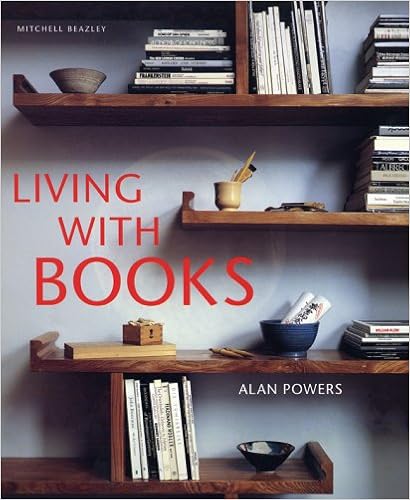
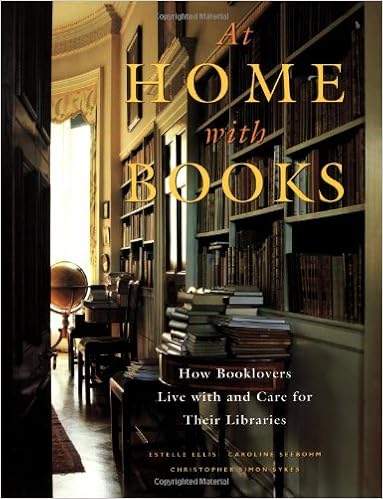
But I did not always have a library and I was faced with trying to figure out how to live among a lot of books.  I had books in every room!  And to add to my problem, I bought a couple of books detailing how people have tackled that problem:


Living with Books by Alan Powers has many photographs depicting ways to store books.  He shows them in the kitchen, bathroom, bedroom, home office, hallways, stairs, and, of course, in the library.


 At Home with Books:  How Booklovers Live with and Care for Their Libraries by Estelle Ellis, Caroline Seebohm, and Christopher Simon Sykes shows how 40 booklovers have created libraries for the books they love.


There are a few more titles I have come across and am thinking of adding:  Books Make a Home by Damian Thompson; Living with Books by Dominique Dupuich and Roland Beaufre;  Decorating with Books by Marie Proeller Hueston; Books Do Furnish a Room by Leslie Geddes-Brow; and Unpacking My Library: Architects and Their Books by Jo Steffens.  Are any of these worth purchasing?

Of course, I agree with Cicero that “A house without books is a body without soul” and with Horace Mann who said something similar:  “A house without books is like a room without windows.”  So having too many books is a problem we should all have.

Saturday, October 3, 2015

2015 Kirkus Prize for Fiction Finalists

Earlier this week, the finalists for the 2015 Kirkus Prize for Fiction were announced.  I had never heard of this literary award, but research tells me that this is the second year for the $50,000 prize sponsored by Kirkus Reviews.  Finalists are chosen from books that earned a Kirkus Star which is given to books of “exceptional merit.”  I do not find the reviews in the magazine to be especially thorough or insightful, tending more towards plot summary than literary analysis; nonetheless, I may check out a couple of the books on their finalist list.  These plot summaries are from http://www.amazon.ca/.

The Incarnations by Susan Barker
This novel is about a Beijing taxi driver whose past incarnations haunt him through letters sent by his mysterious soulmate.  The letters are filled with the stories of Wang’s previous lives spanning one thousand years of betrayal and intrigue.  As the letters continue to appear seemingly out of thin air, Wang becomes convinced that someone is watching him—someone who claims to have known him for over one thousand years.  And with each letter, Wang feels the watcher growing closer.

A Manual for Cleaning Women by Lucia Berlin
The stories in this posthumous collection are virtually all narrated by hard-living women.

Fates and Furies by Lauren Groff
This book is an examination of a marriage and also a portrait of creative partnership.  Every story has two sides. Every relationship has two perspectives.  And sometimes, it turns out, the key to a great marriage is not its truths but its secrets.  At the core of this novel, Lauren Groff presents the story of one such marriage over the course of twenty-four years.  At age twenty-two, Lotto and Mathilde are tall, glamorous, madly in love, and destined for greatness.  A decade later, their marriage is still the envy of their friends, but we understand that things are even more complicated and remarkable than they have seemed.  With stunning revelations and multiple threads, Groff delivers a novel about love, art, creativity, and power.
Note:  This book also appears on the longlist for the National Book Award for Fiction.

The Story of My Teeth by Valeria Luiselli, translated by Christina MacSweeney
A straightforward summary of this book is difficult to find.  Most sites describe it as an experimental novel with its primary appeal being the philosophical digressions.  The author described this book as a “collective ‘novel-essay’ about the production of value and meaning in contemporary art and literature.”

The Book of Aron by Jim Shepard
Aron is a perceptive but not always happy young boy coming into awareness of himself and his family's struggles.  When they are driven from the countryside into Warsaw, their lives are changed forever. Aron and a group of boys and girls risk their lives scuttling around the ghetto, smuggling and trading things through the "quarantine walls" to keep their people alive, while they are hunted by blackmailers and Jewish and Polish and German police.  Gradually things worsen, people begin to disappear, and survival is threatened on all sides.  

A Little Life by Hanya Yanagihara
When four classmates from a small Massachusetts college move to New York to make their way, they're broke, adrift, and buoyed only by their friendship and ambition.  There is kind, handsome Willem, an aspiring actor; JB, a quick-witted, sometimes cruel Brooklyn-born painter seeking entry to the art world; Malcolm, a frustrated architect at a prominent firm; and withdrawn, brilliant, enigmatic Jude, who serves as their center of gravity.  Over the decades, their relationships deepen and darken, tinged by addiction, success, and pride.  Yet their greatest challenge, each comes to realize, is Jude himself, by midlife a terrifyingly talented litigator yet an increasingly broken man, his mind and body scarred by an unspeakable childhood, and haunted by what he fears is a degree of trauma that he’ll not only be unable to overcome—but that will define his life forever.
Note:  :  This book also appears on the longlist for the National Book Award for Fiction and the Man Booker shortlist.  I posted a review of this novel on August 10, 2015.

The reviews of these books from Kirkus Reviews can be accessed at https://www.kirkusreviews.com/prize/2015/finalists/fiction/.

The winner will be announced on October 15.

Friday, October 2, 2015

Reviews Archive: Donna Morrissey and "The Deception of Livvy Higgs"

Donna Morrissey is a great Canadian author.  Her five novels, all set in whole or in part in Newfoundland, are worth a read.  Here are plot summaries of her first four (from http://www.amazon.ca/) and my review of her most recent book.

Kit’s Law (1999)
It is the 1950s in an isolated outport in Newfoundland.  Nothing penetrates this antiquated existence, as television, telephones, cars, even roads, elude the villagers and the only visitors are fog-bound fishermen.  Here, outside of Haire’s Hollow, lives 14-year old Kit Pitman with her mentally handicapped mother Josie — both women cared for and protected by the indomitable Lizzie, Kit’s grandmother.  The three live a life of some hardship, but much love, punctuated by the change of seasons in the isolated gully where they live.  Then a tragic change in their circumstances brings back an old threat — that Josie be sent to an institution and Kit to an orphanage.  And there is another menace in Haire’s Hollow — the notorious rapist and killer known as Shine.

Downhill Chance (2002)
Clair Gale is the unsinkable heart of the novel, a story of two families during wartime—the Osmonds and the Gales—joined by love, yet torn apart by fear and secrets.  Morrissey blends melodrama, realism and a flair for the comic.  At the book’s core is the unravelling of secrets—and the redemption that truth ultimately brings to the people who inhabit these pages so memorably.

Sylvanus Now (2004)
The time is the 1950s, and the place is Canada’s Atlantic coast at the edge of the great Newfoundland fishing banks.  Sylvanus Now is a young fisherman of great charm and strength.  His youthful desires are simple: he wants a suit to lure a girl—the fine-boned beauty Adelaide—and he knows exactly how much fish he has to catch to pay for it.  Adelaide, however, has other dreams.  She longs to escape the sea, the fish, and the stultifying community.

What They Wanted (2008)
What They Wanted is a sequel to Sylvanus Now.   Morrissey explores both new and familiar terrain: a divided house on the shores of Newfoundland and the equally challenging environment of an Alberta oil rig.  After Sylvanus has a heart attack, family tensions rise to the fore. Sylvie must deal with her feelings of estrangement from her mother, Addie.  Meanwhile, Chris, a natural artist, frustrates his dreams by going to work on the rig.

Review of The Deception of Livvy Higgs (2012)
4 Stars


I was so excited to discover a new novel by Donna Morrissey since I’ve read and enjoyed all of her previous books. Again, she did not disappoint.

Livvy is an octogenarian living in Halifax. As her health fails, her dreams take her back to her childhood and adolescence in an isolated fishing village on the French Shore of Newfoundland where her father owned the general store. We meet Livvy’s ever-suffering mother Cecile whose relationship with her husband can be surmised by her constantly calling him a “’paltry white bastard’” (11); her proud father Durwin whose life seems fueled by rage; her manipulative maternal grandmother, Julia Creed, whose pre-occupation is the importance of outward appearances; and the comforting neighbour, Missus Louis, who provides consolation first to Cecile and later to Livvy.

From the beginning it is clear that there are skeletons in the family closet involving Livvy’s father and grandmother. Durwin accuses Grandmother Creed of cheating him and he tells her, “’you’ll not cheat me again’” (59). Cecile describes her mother as a liar: “’She lies, she always lies. She’s clever like the fox, always setting her little traps, twisting things, making lies out of truth – or truth out of lies . . . ‘” (38). Cecile’s opinion of her husband is no better; she tells her daughter, “’Your father’s like your Grandmother Creed. They think themselves better than everybody else, got chafed necks from their too-high collars’” (12). She accuses him of being a hypocrite and asks him, “’Who else have you tricked with your lies’” (16)? Cecile also thinks of both her husband and mother as cold-hearted: “’she takes everything and gives nothing. Durwin takes nothing and gives nothing’” (42). Furthermore, she thinks they conspired in some criminal activity: “’They’ll burn in hell, I pray they’ll burn in hell. . . . They done something, Durwin and my mother, they done something’” (129). As she shifts between present and past, Livvy tries to determine the truth and reconcile with her past.

The book jacket describes the book as “the Stone Angel of the East Coast” and Livvy is in a position similar to Hagar Shipley’s in Margaret Laurence’s novel – examining her early life. Livvy, like Hagar, is a memorable character, a strong-willed, cantankerous old woman “encroached by age and neglect” (35). Like Hagar, Livvy is also a dynamic character; she realizes that a person “has to believe in [his/]her story in order to live with it, to defend it, if only to [him/]herself. . . . it comes to me that Father, too, believed his story, else he wouldn’t have fought so hard to protect it. And Grandmother Creed. . . . What shame, what shame to suffer such loneliness when love was but a truth away” (270).

The novel addresses several forces (i.e. greed, pride, hate, love, anger) which can serve as overriding motivations since “fixing one’s mind too strongly on something can hatch fear and dread” (94). Livvy mentions that she has learned “how to salvage the most from the sweetest” (10), but she also learns how to salvage the most from the sourest that life has dealt her so she can still feel “sweet, sweet grace” (271).

A book that is entertaining and also gives a glimpse into the human condition is a great read – and this is definitely one of them.

Thursday, October 1, 2015

New Release - Review of "Stasi Child" by David Young

3.5 Stars

This historical crime novel, apparently the first in a series featuring Oberleutnant Karen Müller, is set in the mid-1970s in East Germany.  The mutilated body of a teenaged girl is found near the Berlin Wall.  Klaus Jäger, an officer with Stasi, East Germany’s secret police, enlists the help of Karin and her partner, Werner Tilsner.  Jäger tells them the girl was shot by someone from the West as she was escaping to East Germany.  The police detectives are told to “’discover the identity of the girl, and to find evidence to support this account,’” but they are soon exceeding the parameters of their task and looking to identify the murderer.

One of the strengths of the book is its portrayal of life in East Germany before the dismantling of the Berlin Wall, or the Anti-Fascist Protection Barrier as it is called by East Germans.  There is an almost smothering atmosphere of paranoia as everyone is being watched.  Karin’s husband Gottfried, for example, is under surveillance, this after being “temporarily banished to the reform school after failing to instill his Berlin students with enough party zealotry.”  And even Karin is told by Jäger, “’I’m sure that Oberleutnant Müller will examine all the evidence in her usual thorough fashion, and will arrive at the correct conclusion.’  There was no real menace in his voice, yet Müller understood it as a veiled threat.”  There is a great deal of mistrust; there are times when Karin wonders if she can trust her superiors or even her partner.

The narrative alternates between the point of view of Karin and that of Irma Behrendt, a young girl in a jugendwerkhof, a reformatory.  Part of the interest lies in trying to determine how the two stories will converge. 

Karin is determined and ambitious.  My difficulty lies with her marriage.  The reader is made to understand that Karin and Gottfried’s relationship is frayed, but the reason for the distancing is unclear.  There are suggestions that Karin’s dedication to her job may be the issue, but that doesn’t explain her entanglement with someone portrayed as a philanderer.

Another problem lies with her loyalty to East Germany.  Towards the  end, Irma tells Karin, “’You’re part of the system. You try living in a closed Jugendwerkhof.  Then you would see why so many people are desperate to leave this shitty little country.’”  Karin’s response is to drop her gaze because “She didn’t want to admit the truth of what the teenager was saying.  It struck too close to what she had always believed in.”  This last statement does  not fit with what she says and thinks at other times.  For example, she comments about female workers:  “It was something she was glad to see: women at every level supporting the Republic, something that would never happen in the West.”  At another time, she observes, “Yes, it was a small country, but it was focused on the future, making its mark, not inward-looking and money-obsessed, or reliant on manufacturing cuckoo clocks for tourists like some western states.”  The author makes it clear that Karin has little interest in exploring even West Berlin, so why does she suddenly agree that she lives “in this shithole of a country”?  Her change in attitude is not convincing.

There are some plot issues.  There are some coincidences that stretch credibility.  For instance, there is an ever-so-convenient name change.   Is it realistic that a disgraced police university lecturer have so many powerful contacts and so much influence?  And there are unanswered questions.  At the end, Jäger says things like, “’We’re not sure who . . . ‘” and “’We’re not sure why’” and “’I don’t really understand that myself.’”  The epilogue has an interesting twist, but the scene before that, in the forest near East Berlin, left me confused:  Who has fallen off the political tightrope that everyone seems to walk in East Germany?

Despite its weaknesses, this is still a good police procedural set before the use of computers in investigations.  I will keep my eyes open for the next book in the series.

Note:  I received an ARC of this book from the publisher via NetGalley.