Ranked a Top Canadian Book Blog
Twitter: @DCYakabuski
Facebook: Doreen Yakabuski
Instagram: doreenyakabuski
Threads: doreenyakabuski
Substack: @doreenyakabuski
Bluesky: @dcyakabuski.bsky.social

Wednesday, October 14, 2015

2015 National Book Award for Fiction Finalists

The National Book Award for Fiction finalists were announced today:
Karen E. Bender for Refund
Angela Flournoy for The Turner House
Lauren Groff for Fates and Furies
Adam Johnson for Fortune Smiles
Hanya Yanagihara for A Little Life

Check my September 17th blog for brief plot descriptions of each of these books.

Tuesday, October 13, 2015

2015 Man Booker Prize Winner: Marlon James for "A Brief History of Seven Killings"


The winner of the Man Booker Prize was announced today; Marlon James won the award for his novel A Brief History of Seven Killings.

I know virtually nothing about this Jamaican writer, but a bit of research reveals that he has written three novels:  His first novel, The Book of Night Women, is about a slave woman's revolt in a Jamaican plantation in the early 19th century.  James's second novel, John Crow's Devil, tells the story of a biblical struggle in a remote Jamaican village in 1957. His most recent novel, A Brief History of Seven Killings, explores several decades of Jamaican history and political instability through the perspectives of many narrators.

Monday, October 12, 2015

A Booklover's Thanksgiving

Today is Thanksgiving Day in Canada.  I, as a booklover, have much for which to be grateful.

I am grateful for books which provide me with so much pleasure.
I am grateful for authors who, using their imaginations and talent, write those books.
I am grateful for the trees which provide the paper on which books are printed.  (Although I read ebooks and listen to audiobooks too, print books are still my favourite.)
I am grateful for all the people who work in the physical production of paper and books (e.g. forestry workers, pulp and paper mill workers, binders, printers).
I am grateful for publishers, especially those who take chances with new authors.
I am grateful for editors and copy-editors who ensure that an author’s work is the best it can be.
I am grateful for translators whose work allows me to read literature written in many different languages.
I am grateful for booksellers, especially the small, independent booksellers who persevere despite all odds.
I am grateful for my teachers:  my elementary school teachers (especially Zita Bloski) who taught me to read; my high school teachers (especially Sylvia Post) who challenged me to read widely; and my university professors (especially Professor Jean Moreau) who expanded my understanding of literature.
I am grateful for libraries which provide everyone with free access to books, those politicians who support them, and the librarians who staff them and are always willing to make book recommendations.
I am grateful for reviewers, both professional and amateur, whose comments often guide me to books.
I am grateful to the media that feature book-related articles giving me better understanding of books and authors and making me aware of books I might not otherwise have encountered.
I am grateful for friends who lend books and discuss them.  Among those friends are book club members, especially those in THE Timmins Book Club and The St. Andrews Lassies Book Club.
I am grateful for time to read books.
I am grateful for my husband who gave me the library of my dreams.

Sunday, October 11, 2015

Australian Literary Awards

In recent blogs, I’ve been discussing various Canadian, American and British literary prizes.  I thought I’d research the major literary awards in Australia.

Australia Literature Society (ALS) Gold Medal
This literary medal has been awarded since 1928 for “an outstanding literary work in the preceding calendar year.”  It is usually, but not always, awarded for a novel.
The 2015 winner has already been announced:  Drones and Phantoms by Jennifer Maiden, a book of poetry.  “In Drones and Phantoms, [Maiden] seamlessly fantasises dialogues between unlikely pairs: Mandela and Obama, Queen Victoria and Tony Abbott, Princess Diana and Mother Teresa.  Within the poems, which are almost entirely void of context and offering no explanation as to how or why, the historical and contemporary figures discuss their wanton desires and moral queries without restraint” (http://www.nswwc.org.au/2014/11/poetry-book-review-drones-and-phantoms-by-jennifer-maiden/).

Miles Franklin Award
This annual literary award is for “a novel which is of the highest literary merit and presents Australian life in any of its phases.”  This is Australia’s best known and most prestigious award, though it’s not the richest.  The award is valued at A$60,000.
The 2015 award went to The Eye of the Sheep by Sofie Laguna.  “Jimmy Flick is not like other kids - he's both too fast and too slow.  He sees too much, and too little.  Jimmy's mother Paula is the only one who can manage him.  She teaches him how to count sheep so that he can fall asleep.  She holds him tight enough to stop his cells spinning.  It is only Paula who can keep Jimmy out of his father's way. But when Jimmy's world falls apart, he has to navigate the unfathomable world on his own, and make things right" (http://www.amazon.com/The-Eye-Sheep-Sofie-Laguna-ebook/dp/B00K7VHTEM).


Prime Minister’s Literary Awards
These are annual awards supported by the Australian government across several categories, including Fiction.  The awards were designed as "a new initiative celebrating the contribution of Australian literature to the nation's cultural and intellectual life." The awards are Australia's richest with each category winner receiving A$80,000.  This year’s winner has not yet been announced; last year, there were two winners in the fiction category:  A World of Other People by Steven Carroll and The Narrow Road to the Deep North by Richard Flanagan.

"A World of Other People is a life-affirming evocation of love in war time, when every decision, and every day, matters.  Set in 1941 during the Blitz, Steven Carroll's cinematic new novel traces the love affair of Jim, an Australian pilot in Bomber Command, and Iris, a forthright young Londoner, finding her voice as a writer.  Haunted by secrets and malign coincidence, the couple struggles to build a future free of society's thin-lipped disapproval.  Iris shares rooftop fire watching duties with the poet T.S. Eliot, who unwittingly seals their fate with his famous verse 'Little Gidding'" (http://arts.gov.au/shortlists/Fiction/AWorldofOtherPeople).

I did read The Narrow Road to the Deep North which also won the 2014 Man Booker Prize.  Here’s my review:
4 Stars
I picked up this novel to read since it won the 2014 Man Booker Prize. Though it was at times a harrowing read, it was definitely a worthwhile one.

The novel focuses on Dorrigo Evans, a surgeon and the senior officer whose men, Australian prisoners of war of the Japanese, work under slave labour conditions to build the 415 km railway between Thailand and Burma during World War II. As an old man, he reminisces about this childhood in Tasmania, his torrid love affair with Amy Mulvaney, his war experiences, and his post-war marriage and life.

The depiction of life for the POWs is unsanitized and unforgiving in its details. We read about beatings, starvation and diseases (malaria, cholera, dysentery, flesh-eating ulcers, beriberi). Daily life is filled with grueling labour in either sweltering jungle heat or torrential rains: “They went on trudging and falling, they went on stumbling and slipping and swearing as they thought of food, or as they thought of nothing, they went on crawling and shitting and hoping, on and on” (175). There is no rest from “The suffering, the deaths, the sorrow, the abject, pathetic pointlessness of such immense suffering by so many” (19).

During the war, Dorrigo suffers privations like his men but he is a kind and respected leader who cares about his men: “every day he carries them, nurses them, holds them, cuts them open and sews them up, plays cards for their souls and dares death to save one more life. He lies and cheats and robs too, but for them, always for them” (154). Nonetheless, he constantly feels like a fraud: “The men called Dorrigo Evans Colonel to his face and the Big Fella everywhere else. There were moments when the Big Fella felt far too small for all that they now wanted him to bear. There was Dorrigo Evans and there was this other man with whom he shared looks, habits and ways of speech. But the Big Fella was noble where Dorrigo was not, self-sacrificing where Dorrigo was selfish. It was a part he felt himself feeling his way into, and the longer it went on, the more the men around him confirmed him in his role. It was as if they were willing him into being, as though there had to be a Big Fella, and, having desperate need of such, their growing respect, their whispered asides, their opinion of him – all this trapped him into behaving as everything he knew he was not. As if rather than him leading them by example they were leading him through adulation” (37-38).

Nor is life after the war much better for the survivors: “They died off quickly, strangely, in car smashes and suicides and creeping diseases. Too many of their children seemed born with problems and troubles, handicapped or backward or plain odd. Too many of their marriages faltered and staggered . . . They went bush by themselves; they stayed in town with others and drank too much; they went a bit crazy . . . They went silent or they talked too much” (246).

Dorrigo’s post-war existence is certainly not happy. Adulation follows as he is treated like a war hero, but he does not consider himself one: “He understood that he shared certain features, habits and history with the war hero. But he was not him. He’d just had more success at living than at dying.” Like he felt imprisoned by his men’s adulation, he now feels trapped by society’s acclaim: “there were no longer so many left to carry the mantle for the POWs. To deny the reverence seemed to insult the memory of those who had died. He couldn’t do that” (14).

Dorrigo is like Ulysses in Tennyson’s poem, the dramatic monologue to which Dorrigo often alludes. During the war, he “suffer'd greatly.” Once he returns home, he finds life boring and meaningless: “Wealth, fame, success, adulation – all that came later seemed only to compound the sense of meaninglessness he was to find in civilian life” (254). He feels constrained by the “still hearth” of his life: “It all bored him. [His wife] bored him. . . Home brought on a weary headache. He bored himself” (288). He finds himself constantly “roaming with a hungry heart.”

One aspect of the novel which I especially admired is the author’s unwillingness to portray evil as black and white. We are given the point of view of Nakamura, the Japanese officer in charge of the construction of the segment of the railroad on which Dorrigo’s men are forced to work. Nakamura was raised on emperor worship: “one existed for the Emperor and for the railway – which was, after all, the embodiment of the Emperor’s will – or one had no reason to live or even die” (216). And he had been brutalized and trained to brutalize in turn: “He had been beaten all the time in the Japanese army, and it had been his duty to beat other soldiers. Why, when he was training he had been knocked out twice, and once suffered a ruptured eardrum. He had been beaten with a baseball bat on his buttocks for showing ‘insufficient enthusiasm’ when washing his superior’s underwear. He had been beaten senseless by three officers when as a recruit, he had misheard an order” (238). Dorrigo sees Nakamura at his worst as the embodiment of “the terrifying force that takes hold of individuals, groups, nations, and bends and warps them against their natures, against their judgements , and destroys all before it with a careless fatalism” (219). Such an attitude is amazing, considering that Flanagan’s father was a POW who worked on the death railway.

The one weakness in the novel is the love affair between Dorrigo and Amy. I found it hackneyed and unconvincing. This romance could have been omitted and nothing of value would have been lost. And the lies of Dorrigo’s uncle and his wife make the love story even more trite.

In the end it is the novel’s message of our powerlessness in the face of history which stays with me. This powerlessness is clearly conveyed in a metaphor. One day Amy and Dorrigo go to the beach and she sees fish caught in a wave: “As far as she could see all the fish were pointed in the same direction along the wave face, and all were swimming furiously as they sought to escape the breaking wave’s hold. And all the time the wave had them in its power and would take them where it would, and there was nothing that glistening chain of fish could do to change their fate” (91-92). And then there is the meaningless of our endeavours, an idea expressed in an allusion to “Ozymandias”: “For the Line was broken, as all lines finally are; it was all for nothing, and of it nothing remained. People kept on longing for meaning and hope, but the annals of the past are a muddy story of chaos only. And of that colossal ruin, boundless and buried, the lone and level jungle stretched far away. Of imperial dreams and dead men, all that remained was long grass” (227).

This book deserves to be reread. It haunts me even though I know there is much I missed. The artistry of it will undoubtedly impress me even more on a second read.

Saturday, October 10, 2015

New Shakespeare Novels to be Released Soon!


In my blog entry of September 1, I wrote about Shakespeare-inspired novels.   Many of Shakespeare’s plays, especially the tragedies, have inspired a modern re-telling or a novel featuring characters from the plays, and I outlined some of the ones with which I am familiar.

Now there will be more such novels.  The publisher Hogarth has commissioned authors to write prose ‘retellings’ of Shakespeare’s plays for the modern reader.  The Hogarth Shakespeare programme will launch in 2016, coinciding with the 400th anniversary of Shakespeare’s death.   

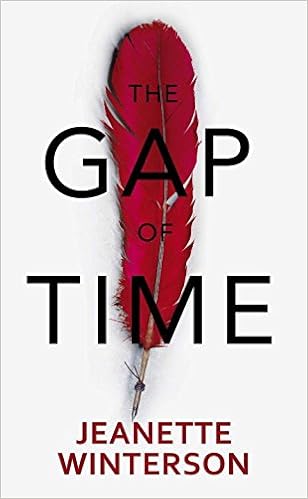
The first book in the series was released this past Tuesday:  Jeanette Winterson’s retelling of The Winter’s Tale which is called The Gap of Time:

"The Winter's Tale is one of Shakespeare's ‘late plays’.  It tells the story of Leontes, King of Sicily, whose insane jealousy results in the banishment of his baby daughter, Perdita, from the kingdom and then the death of his beautiful wife, Hermione.  Perdita is brought up by a shepherd on the Bohemian coast, but through a series of miraculous events, father and daughter, and eventually mother too, are reunited.

In Jeanette Winterson's retelling we move from London, a city reeling after the 2008 financial crash, to a storm-ravaged city in the US called New Bohemia.  Her story is one of childhood friendship, money, status, video games and the elliptical nature of time.  It tells in a hyper-modern way, full of energy and beauty, of the consuming power of jealousy on the one hand, and love, redemption and a lost child on the other” (http://www.amazon.ca/Gap-Time-Winters-Hogarth-Shakespeare/dp/0345809173/ref=sr_1_sc_1?ie=UTF8&qid=1444484207&sr=8-1-spell&keywords=jeannette+winterson).

Here are the other seven authors who have joined the project thus far and the plays they have chosen to use as inspiration:
Margaret Atwood – The Tempest (October 2016)
Tracy Chevalier – Othello
Gillian Flynn – Hamlet
Howard Jacobson – The Merchant of Venice (February 2016)
Jo Nesbø – Macbeth
Edward St. Aubyn – King Lear
Anne Tyler – The Taming of the Shrew (June 2016)

Friday, October 9, 2015

SDG Reads: One Community, One Book

The libraries of Stormont, Dundas & Glengarry have started a community program called SDG Reads.  The residents of the United Counties are encouraged to read the same book, discuss it, and then meet the author.  The first book chosen was Alone in the Classroom by Elizabeth Hay.  The Meet the Author event was held last night at North Stormont Place in Avonmore, Ontario.

Elizabeth Hay has written five novels.  A Student of Weather was a Giller Prize finalist and a Governor-General’s Award for Fiction finalist; Late Nights on Air won the Giller Prize in 2007; His Whole Life is currently on the shortlist for the Rogers Writers’ Trust Fiction Prize for 2015. 

Image result for Elizabeth hay
At the Q & A session, Hay spoke about the writing process.  Here are some of her comments about various aspects of writing:

 “I do not consider myself a great researcher.”  She does a bit of research to feed her imagination.
She does not make a plan for a novel.  She makes a map as she drives.
The best writing comes from the deepest emotions.
Her characters are inspired by people she has met or heard about.  “All you need is a few clues and you flesh out the rest.”
A writer observes his/her characters and they may surprise by doing unpredictable things, though not things out of character.
A writer must let characters out from under his/her judgmental thumb. 
   Every character, even the most stupid, must be more intelligent than the writer.
   A writer needs to see things from multiple points of view so one can learn generosity by writing        fiction.
   Advice to any budding novelist:  Write from the heart but be willing to do the work.  Writing                doesn’t get easier with each novel.  Each novel has its own needs.

It was a very successful event with a great deal of audience interaction.  I am eager to hear about the next novel chosen for the program.

Note:  I reviewed His Whole Life on August 18.

Thursday, October 8, 2015

2015 Nobel Prize for Literature - Svetlana Alexievich

The Nobel Prize in Literature for 2015 will be awarded to the Belarusian author Svetlana Alexievich "for her polyphonic writings, a monument to suffering and courage in our time" (http://www.nobelprize.org/nobel_prizes/literature/laureates/2015/).

“Alexievich used the skills of a journalist to create literature chronicling the great tragedies of the Soviet Union and its collapse: the Second World War, the Soviet war in Afghanistan, the Chornobyl nuclear disaster and the suicides that ensued from the death of Communism” (http://www.cbc.ca/news/arts/nobel-prize-literature-svetlana-alexievich-1.3262060).

Her first novel, War's Unwomanly Face, was based on the previously untold stories of women who had fought against the Nazi Germans.

Zinky Boys: Soviet Voices from the Afghanistan War gives the testimony of the officers and soldiers, nurses and prostitutes, mothers, sons, and daughters who describe the Soviet Union’s war in Afghanistan and its lasting effects

Enchanted with Death is about suicides due to the downfall of the Soviet Union.

For Voices from Chernobyl: The Oral History of a Nuclear Disaster, Alexievich interviewed more than 500 eyewitnesses, including firefighters, members of the cleanup team, politicians, physicians, physicists, and ordinary citizens, over a period of 10 years. The book relates the psychological and personal tragedy of the Chernobyl accident, and explores the experiences of individuals and how the disaster affected their lives.

The Permanent Secretary of the Swedish Academy, Sara Danius, paid tribute to Alexievich's work:  "For the past 30 or 40 years she’s been busy mapping the Soviet and post-Soviet individual. But it’s not really a history of events. It’s a history of emotions. What she’s offering us is really an emotional world. So these historical events that she’s covering in her various books – for example the Chernobyl disaster or the Soviet war in Afghanistan – are, in a way, just pretexts for exploring the soviet individual and the post soviet individual. She’s conducted thousands of interviews with children, women and men, and in this way she’s offering us a history of a human being about whom we didn’t know that much” (http://www.theguardian.com/books/booksblog/2015/oct/08/everything-you-need-to-know-about-svetlana-alexievich-winner-of-the-nobel-prize-in-literature?CMP=twt_books_b-gdnbooks).

Alexievich described the theme of her books in this way:
"If you look back at the whole of our history, both Soviet and post-Soviet, it is a huge common grave and a blood bath.  An eternal dialog of the executioners and the victims.  The accursed Russian questions: what is to be done and who is to blame.  The revolution, the gulags, the Second World War, the Soviet-Afghan war hidden from the people, the downfall of the great empire, the downfall of the giant socialist land, the land-utopia, and now a challenge of cosmic dimensions – Chernobyl.  This is a challenge for all the living things on earth.  Such is our history.  And this is the theme of my books, this is my path, my circles of hell, from man to man" (https://en.wikipedia.org/wiki/Svetlana_Alexievich).