Ranked a Top Canadian Book Blog
Twitter: @DCYakabuski
Facebook: Doreen Yakabuski
Instagram: doreenyakabuski
Threads: doreenyakabuski
Substack: @doreenyakabuski
Bluesky: @dcyakabuski.bsky.social

Sunday, November 15, 2015

Reviews Archive - "On Canaan's Side" by Sebastian Barry

Sebastian Barry is an Irish writer I have always admired.  Today, from my Reviews Archive, I am featuring one of his novels to which I gave my highest rating.  Sebastian Barry has appeared on the Man Booker lists three time, most recently for this book in 2011.

Review of On Canaan’s Side
5 Stars
The narrator is 89-year-old Lily Bere. Over seventeen days after the death of her grandson, she recounts the major events of her life beginning with her childhood in Ireland and continuing through her adulthood in America.

America does not prove to be Canaan, the Biblical Promised Land. America is not a place of refuge since Lily's life and the lives of her loved ones are dominated by violence. Her story includes many of the historical events of the twentieth century (war, racial tensions). These events are not detailed; the focus is on the damage they leave in their wake. Her presence in the wings of so many momentous events might seem far-fetched, but there is an emotional truth in Lily's narrative.

Lily is a character who will long remain with the reader. Her life story is full of hatred and vengefulness, but it is told by a humble, kind, non-judgmental, and compassionate woman. Her stoicism and indomitable will in the face of multiple bereavements and separations and hardships is remarkable, as is her joy in small pleasures. Lily attributes all of these qualities to Mrs. Wolohan, her long-time employer, not realizing she herself possesses them in abundance.

Obviously, this is a novel of memory and remembrance. Early in her "confession" Lily mentions that "There is no inoculation against [memory]" (83). It is this very remembering that brings her deliverance: "To remember sometimes is a great sorrow, but when the remembering has been done, there comes afterwards a very curious peacefulness. Because you have planted your flag on the summit of the sorrow. You have climbed it" (217).

Barry's language is wonderfully poetic. The figurative diction is reminiscent of T. S. Eliot: "The sea sat out on the beach like a thousand patients at a surgery, still, vexed, worrisome" (253) and "the sun was falling away under the table of the world, like a drinking man" (254). The book is worth a re-read just to savour the lyricism.

Saturday, November 14, 2015

The First of the "Best of 2015 Books" Lists

The 2015 literary awards season is coming to an end; now it’s time for the Best Books of 2015 lists to be published.  The first has already appeared:  Amazon has released its Top 100 Books of the Year

I have read 3 of the 20 titles in the Literature/Fiction category:
A Little Life by Hanya Yanagihara (reviewed on August 10)
A Spool of Blue Thread by Anne Tyler (reviewed on August 2)
Orhan's Inheritance by Aline Ohanesian (reviewed on August 27)

From their Mysteries/Thrillers category, I’ve also read 3 of the 20 titles:
Career of Evil by Robert Galbraith (reviewed on October 31)
The Girl on the Train by Paula Hawkins (reviewed on July 25)
The Hanging Girl by Jussi Adler-Olsen (reviewed on September 16)

Library Journal has also come out with its list.  Check out http://reviews.libraryjournal.com/2015/11/best-of/best-books-2015-more-of-the-best/.

And Publishers Weekly just issued its list as well:  http://best-books.publishersweekly.com/pw/best-books/2015.

Look for more of these lists to be published in the next few weeks.

Friday, November 13, 2015

2016 International Dublin Literary Award Longlist

International DUBLIN Literary AwardThe 2015 literary award season is winding down, but a 2016 list has already made an appearance.  The longlist for the 2016 International Dublin Literary Award (formerly the International IMPAC Dublin Literary Award) was announced earlier this week.   At €100,000, this is the world’s most valuable annual literary prize.
The Award, presented annually for a novel written in English or translated into English, aims to promote excellence in world literature.  Nominations are submitted by library systems in major cities throughout the world; to be eligible for the 2016 prize, books must be of high literary merit and must have been first published in English or in English translation in 2014.   

Canadians on the 2016 International Dublin Literary Award Longlist
Ten Canadian novels appear on the longlist; those titles are
Sweetland by Michael Crummey
Outline by Rachel Cusk
The Back of the Turtle by Thomas King
Station Eleven by Emily St. John Mandel
Us Conductors by Sean Michaels
The Girl Who Was Saturday Night by Heather O’Neill
Who by Fire by Fred Stenson
All My Puny Sorrows by Miriam Toews
Will Starling by Ian Weir
The Lobster Kings by Alexi Zentner

Libraries in Calgary, Edmonton, Halifax, Ottawa, Saint John, St. John’s Sydney, Toronto and Winnipeg nominated books for the 2016 award.  To see what books were nominated by which libraries, check out http://www.dublinliteraryaward.ie/libraries-2016/.

Two Canadians have won the prize in the past:  Alistair MacLeod for No Great Mischief in 2002 and Rawi Hage for De Niro’s Game in 2008.


Other Nominees
For the complete longlist and information about each book, visit http://www.dublinliteraryaward.ie/nominees/.  It looks like a great list to peruse when looking for your next read.
I have read 15 of the titles from this list.  If I have not already posted reviews of them, I will do so in the next few weeks.
                Sweetland by Michael Crummy (reviewed on November 18)
                All the Light we Cannot See by Anthony Doerr (reviewed on September 22)
                The Silkworm by Robert Galbraith (reviewed on October 20)
                Elizabeth is Missing by Emma Healey (reviewed on August 22)
                Natchez Burning by Greg Iles
                The Love Song of Miss Queenie Hennessy by Rachel Joyce (reviewed on September 13)
                The Invention of Wings by Sue Monk Kidd
                Summer House with Swimming Pool by Herman Koch (reviewed on September 5)
                The Children Act by Ian McEwan
                Us Conductors by Sean Michaels
                Everything I Never Told You by Celeste Ng
                All My Puny Sorrows by Miriam Toews (reviewed on July 20)
                Nora Webster by Colm Tóibin
                Small Blessings by Martha Woodroof
                The Storied Life of A. J. Fikry by Gabrielle Zevin (reviewed on November 26)
               
A shortlist, up to a maximum of ten titles, chosen by judges will be announced in April, and the winner will be announced in June.

I have only 145 more books to read!!

Thursday, November 12, 2015

2015 Scotiabank Giller Prize Winner

This past Tuesday, the winner of this year’s Scotiabank Giller Prize was announced:  André Alexis for Fifteen Dogs.  The book is a modern-day parable about what happens when 15 dogs in a Toronto veterinary clinic are given human consciousness. 

 
The book, which also won the Rogers Writers’ Trust Fiction Award last week, “begins with a bet between the gods Hermes and Apollo: ‘that animals would be even more unhappy than humans are if they were given human intelligence.’ This leads them to grant human consciousness and language to a group of dogs overnighting at a Toronto veterinary clinic. Suddenly capable of more complex thought, the pack is torn between those who resist the new ways of thinking and those who embrace the change. The gods watch from above as the dogs venture into their newly unfamiliar world, as they become divided among themselves, as each struggles with new thoughts and feelings” (http://writerstrust.com/Awards/Rogers-Writers--Trust-Fiction-Prize.aspx). 

Of his novel, the Giller jury wrote "What does it mean to be alive? To think, to feel, to love and to envy? André Alexis explores all of this and more in the extraordinary Fifteen Dogs, an insightful and philosophical meditation on the nature of consciousness. It's a novel filled with balancing acts: humour juxtaposed with savagery, solitude with the desperate need to be part of a pack, perceptive prose interspersed with playful poetry. A wonderful and original piece of writing that challenges the reader to examine their own existence and recall the age old question, what's the meaning of life?" (http://www.cbc.ca/books/2015/11/who-will-win-the-2015-scotiabank-giller-prize.html)

Check my blog of October 5 for brief summaries of the other four books on the shortlist.

I have not yet read this award-winner, but it has already earned its author $125,000 in award money.  I will put it on my to-read pile and hope I agree with the judges.

Wednesday, November 11, 2015

Books for Remembrance Day

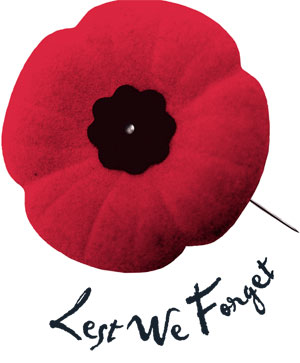
Today is Remembrance Day, a day to contemplate and honour the sacrifice of our veterans.  It is so important that we never forget, but perhaps the best tribute we could pay our veterans would be to abolish war.  Doing a quick perusal, I was surprised by the number of anti-war novels on Schatje’s Shelves.  Some of these have explicit anti-war messages; others convey anti-war sentiments via their portrayal of the horrors of war and its effects on people.                                                                                                                                                                                                Here are the titles of some of those books:
Half of a Yellow Sun by Chimamanda Ngozi Adichie shows the effects of the Nigerian civil war.
Empire of the Sun by J. G. Ballard tells of a young boy's struggle to survive World War II in China.
A Long Way Gone: Memoirs of a Boy Soldier by Ishmael Beah details the experiences of a child soldier.
The Light in the Ruins by Chris Bohjalian portrays life in German-occupied Italy.
Captain Corelli’s Mandolin by Louis de Bernières is “nearly unbearable in its portrayal of European darkness during the war.”
The Boy in the Striped Pajamas by John Boyne explores the horror of WWII through the eyes of the young son of a concentration camp commandant.
A Sunday at the Pool in Kigali by Gil Courtemanche is a brutally blunt account of the events that led to the Rwandan genocide of 1994.
The Red Badge of Courage by Stephan Crane depicts the harsh realities of the American Civil War.
Birdsong by Sebastian Faulks has some brutal depictions of life in the trenches of WWI.
The Wars by Timothy Findley depicts the horrors of combat in WWI.
The Narrow Road to the Deep North by Richard Flanagan is an account of Australian POW experiences as slave labourers and emphasizes man's inhumanity to man during war.
The Hired Man by Aminatta Forna, set in a Croation village after the War of Independence, chronicles how war reverberates in the daily lives of those touched by it.
Billy Lynn’s Long Halftime Walk by Ben Fountain has been described as the Catch-22 of the Iraq War.
The Diary of a Young Girl by Anne Frank is a young girl’s journal written while her family was in hiding during the Nazi occupation of the Netherlands.
Cold Mountain by Charles Frazier paints a desolate picture of the American Civil War and its consequences.
The Cellist of Sarajevo by Steven Galloway depicts life in Sarajevo in 1992 during the siege of that city.
The Tin Drum by Günter Grass is considered a classic of post-World War II literature.
The Good Soldier Švejk by Jaroslav Hašek explores the pointlessness and futility of conflict.
Stones from the River by Ursula Hegi heightens the grotesqueness of life in Nazi Germany.
Catch-22 by Joseph Heller is a satire on the insanity of war.
A Farewell to Arms by Ernest Hemingway examines the tenuous nature of love in a time of war.
For Whom the Bell Tolls by Ernest Hemingway graphically describes the brutality of the Spanish civil war.
Hiroshima by John Hersey is an account of the aftermath of the atomic bomb dropped on Hiroshima.
The Kite Runner by Khaled Hosseini, set in Afghanistan, examines the effect of warfare on individuals, societies and nations.
Schindler's Ark by Thomas Keneally is a testament to the horrors of Hitler's attempts to eradicate Jews from Europe.
The Naked and the Dead by Norman Mailer is partly based on the author’s experiences during the Philippines Campaign in World War II.
A Marker to Measure Drift by Alexander Maksik examines the impact of the Liberian civil war.
A Constellation of Vital Phenomena by Anthony Marra portrays life in war-torn Chechnya.
In Country by Bobbie Ann Mason examines the effects of the Vietnam War.
Suite Française by Irène Némirovsky depicts life in France during the German Occupation.
Orhan's Inheritance by Aline Ohanesian examines the consequences of the Armenian genocide.
The English Patient by Michael Ondaatje “traces the intersection of four damaged lives in an Italian villa at the end of World War II.”
All Quiet on the Western Front by  Erich Maria Remarque explores the impact of World War I on German troops during the war and afterwards.
Sarah’s Key by Tatiana de Rosnay offers a portrait of France under occupation.
On the Beach by Nevil Shute imagines the aftermath of a nuclear war.
Maus by Art Spiegelman is a graphic novel about living and surviving in Hitler's Europe.
Sophie’s Choice by William Styron emphasizes the universality of the suffering under the Third Reich.
The Pianist by Wladyslaw Szpilman is a Holocaust memoir which depicts the grim details of life in Warsaw under the Nazi occupation.
Johnny Got His Gun by Dalton Trumbo is a classic anti-war novel narrated by a young American soldier injured during World War I.
Slaughterhouse-Five by Kurt Vonnegut, which depicts the horrors of bombing directed against civilians, is considered one of the world’s great anti-war novels.
Night by Elie Wiesel details the author’s experiences in Nazi German concentration camps.
My Heart is Not My Own by Michael Wuitchik explores the brutality and impact of the civil war in Sierra Leone.
The Book Thief by Markus Zusak, set in Nazi Germany with Death as its narrator, depicts the devastating effects of war.

Tuesday, November 10, 2015

Review of "Harvest" by Jim Crace

   4 Stars
Jim Crace won the world’s richest literary prize this year - the International IMPAC Dublin Literary Award – for this novel.

The novel is set in an unnamed English village sometime before the Industrial Revolution.  The village is small and isolated but self-sufficient.  One day strangers arrive:  three are a family which has been dispossessed by enclosure and seeks to make a new home, but they are soon charged with arson though there is no proof they are guilty.  The other newcomer is Jordan Edmund, the new lord of the manor, who has decided that subsistence agriculture will be replaced by the raising of sheep and the production of wool; with him, he brings some men to act as enforcers.  The scapegoating of the trio by the villagers has unforeseen consequences; they inadvertently set in motion a series of events which help Master Jordan to initiate his plan for the remote, agrarian community.  Within seven days, the “commonwealth of habit, custom, and routine” is supplanted so everything can be “weighed and sized for selling.”

The book details the unraveling of a traditional way of life in the face of economic progress: “the village as we know it and our employments are to be surrendered to the yellow teeth of three thousand sheep” in the name of “Profit, Progress, Enterprise” so “a village of Enough . . . will be a settlement of More.”  Master Jordan downplays the fact that the villagers “’will sadly need to make economies’” but it soon becomes clear that the villagers will be unsettled since there will not be sufficient work for them once the common fields are enclosed and dedicated to sheep pasturage.

Crace’s decision to leave the village unnamed (though the surnames of the villagers suggest it is in England) and the time period vague was deliberate.  The fate of this one village mirrors events in many parts of the world.  The physical and emotional displacement of people has happened repeatedly over the centuries and continues even in the present with globalization.  The fable-like timelessness emphasizes that this is a parable for all peoples in all times. 

The narrator is Walter Thirsk, a relative newcomer to the village.  He has lived there for twelve years but is to some extent still viewed as an outsider.  What is interesting is that he is not present for many of the major events so his narration is second-hand; he gets information from others or speculates as to what might have happened:  “I already understand enough . . . to suppose how [events] might have advanced.”  He is also very passive, always meaning to do something but not taking action or doing so too late; he is described as “a cautious man . . . a civil owl, too quick to hoot, too scared to show [his] talons to the world.”  He seems to represent the people of the world who use distance from events as an excuse for inaction and who don’t act for fear of reprisal.

The novel offers a close-up of rural life.  The routines and customs of village life are detailed; in the first paragraph, there is reference to “the custom and the law.”  There is definitely an appeal to the senses in many of the descriptions of nature:  “The bread-and-biscuit smell of rotting wood.  The piss-and-honey tang of apple trees”; “two woven cloths, one lemon-yellow, one apple-green”; and “a patterned canopy of trees, line on line, the orchard’s melancholy solitude, the jewelry of leaves . . . the russet, apple-dotted grass, the saltire of two crossing paths worn smooth by centuries of feet.”

Though the passing of a way of life is mourned, the author does not idealize the villagers.  They are very close-minded, almost xenophobic:  “They are too rooted in their soil, too planched and thicketed, to be at ease with newcomers” and “And it makes sense in such a distant place as this, where there is little wealth and all our labors are spent on putting a single meal in front of us each day, to be protective of our modest world and fearful for our skinny lives.”  So newcomers are soon blamed for a crime of which they are, almost certainly, innocent.  Mob mentality surfaces; the narrator says, “The village is aflame, but not with fire.”  As mob mentality rules, the narrator realizes that he, because he is not native-born, is not safe:  “these are also dangerous times for me.”  Their world is not an ideal one, but it seems to be better than the one offered by Master Jordan, a “pattern of living . . . which would assure a profit for those - he means himself - who have ‘the foresight.’”

This is not a hopeful book.  It is full of warnings:  “I could sense the thunder and the lightning closing in on us.  A mighty storm of reckoning was on its way.”  The way in which the villagers treat the outsiders who were displaced suggests how they themselves will be treated when they have to venture out into the larger world.  At the end, the narrator offers a summary of what has happened:  “Today, I’m seeing Privilege, in its high hat.  Then comes Suffering:  the Guilty and the Innocent, including beasts.  Then Malice follows, wielding its great stick.  And, afterward, invisibly, Despair is riding its lame horse.”

This book is a morality tale, Biblical in tone, warning of the consequences of letting private interests take control of resources once the responsibility of everyone and shared by all.    It is a book worth reading and perhaps even re-reading.

Monday, November 9, 2015

"The Golden Mean" by Annabel Lyon, Writers' Trust Engel/Findley Award Winner


Last week, Annabel Lyon was awarded the Writers’ Trust Engel/Findley Award which ”is given to a mid-career writer in recognition of a remarkable body of work, and in anticipation of future contributions to Canadian literature. Writers are judged on their body of work – no less than three works of literary merit which are predominantly fiction – rather than a single book” (http://www.writerstrust.com/Awards/Writers--Trust-Notable-Author-Award.aspx).

 Lyon is probably best known for her first novel, The Golden Mean, a bestseller in Canada that won the Rogers Writers’ Trust Fiction Prize, was shortlisted for both the Scotiabank Giller Prize and a Governor General’s Literary Award, and has been translated into 14 languages.  Here are notes I made about that book which I read back in May of 2010.

Review of The Golden Mean
This book imagines the life of Aristotle through the philosopher’s eyes.  The focus is on the years Aristotle served as Alexander the Great’s tutor, imagining the real-life teacher/student relationship.  Aristotle believed that philosophical contemplation was the greatest form of human activity, and he was appointed tutor to the heir of a regime based almost entirely on war and conquest. 

Both Aristotle and Alexander have their demons.  Aristotle is a lonely thinker in a world that prizes soldiers, and he suffers from bouts of debilitating depression; in modern psychology, he would be bipolar.  Alexander has two faces, one for the public and one in the private sessions with his tutor.  After battles, he suffers from “soldier’s heart” which we would call post-traumatic stress disorder.

Aristotle’s depression may account for his prescription of happiness:  striving to maintain the Golden Mean, the middle of two emotional extremes.  The author does not delve into his other theories, although the novel ends with Aristotle asking about the perfect tragedy, thereby foreshadowing his Poetica.

Aristotle’s relationship with women shows his lack of emotional maturity.  He examines his wife’s genitalia in detail but rarely makes eye contact.  He believes women incapable of experiencing pleasure from sex.

Stylistically, the book is divided into five chapters, like a play, with some modern-day profanity which is jarring. 

In the award citation, the judges commented on this book:  “Aristotle and his contemporaries gain living flesh – as fathers, as rivals, as sometimes brutish and ignorant, as people with failing bodies and working kitchens. The wild violence of the period is unflinchingly documented” (http://www.writerstrust.com/Awards/Writers--Trust-Notable-Author-Award.aspx).