Ranked a Top Canadian Book Blog
Twitter: @DCYakabuski
Facebook: Doreen Yakabuski
Instagram: doreenyakabuski
Threads: doreenyakabuski
Substack: @doreenyakabuski
Bluesky: @dcyakabuski.bsky.social

Thursday, March 24, 2016

Canada Reads 2016 Winner


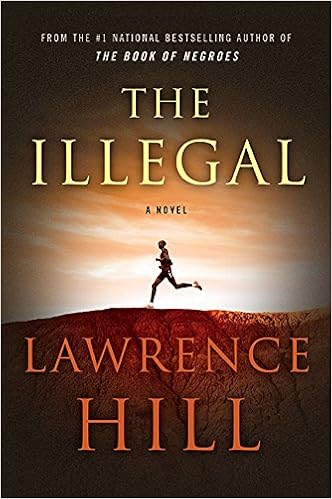
The Illegal by Lawrence Hill is the winner of Canada Reads 2016. 

It was a great “title fight.”  There were several highlights; all panelists made impassioned defenses.  I think all the books deserve a reading.

I was very impressed by the fact that Bruce Poon Tip is donating 10,000 copies of Birdie by Tracey Lindberg, the book he defended, to Canadian high schools.  Teachers can go to www.10000birdies.com to request copies.

To honour the winner, I’m reposting my review of it which I originally posted on September 19, 2015.

I thoroughly enjoyed this book.  I hesitated to read it because I heard it was about a marathon runner, and running is not a sport in which I have much interest.  I’m glad I overcame my reticence because the book is about so much else and, considering the news from Europe, proves to be so timely.  The book is about undocumented refugees and the uncertainty they face:  will they be accepted, persecuted or deported?

Keita Ali is a refugee from the island nation of Zantoroland; he has to flee because his father was a journalist critical of the dictator ruling the country and because he is a member of an ethnic minority.  Dissenters and members of the minority are routinely tortured and killed so many escape to Freedom State where they live in AfricTown, a makeshift settlement of shipping containers.  Freedom State is the island nation closest to Zantoroland; its economy was built using slaves from Zantoroland, and though slavery was abolished, the descendants of those slaves are marginalized, and undocumented migrants are deported to the country from which they fled.  Keita is an elite runner who hopes to use his talent to win his freedom and citizenship in Freedom State, but he ends up running from authorities and running to save a family member.

Zantoroland and Freedom State (with its wonderfully ironic name) are fictional countries separated by the fictional Ortiz Sea in the middle of the Indian Ocean.  Undoubtedly, the author used invented countries so they can represent any number of actual countries.  Zantoroland could be Cuba or Vietnam or Mexico or Syria and Freedom State could be the United States or Canada or any number of European countries.

The characters are many.  There are villains:  corrupt politicians, power-seekers, money-launderers, torturers, and thugs.  There are also the good people who are willing to subvert the laws in order to assist those labelled as illegals.  The reader will find him/herself cheering for the latter.  The major characters are realistic, possessing both good and bad traits.  Lula DiStefano, for example, helps refugees by providing shelter and food in AfricTown, but she also exploits them to her benefit.  Rocco Calder is a minister in the corrupt government of Freedom State but he struggles with his role.   Viola Hill and John Falconer are both ambitious, in-your-face investigative journalists, but they are determined to expose some unpleasant truths

The book examines serious issues, especially the treatment of refugees and undocumented immigrants.  I loved Viola’s argument that “it was fair to accuse somebody of doing something illegal but not to say that they were illegal” (71).  The novel also touches on racism, ageism, discrimination based on gender and sexual orientation, the tenuous position of mixed-race people, global inequity, and the hypocrisy of the richest nations not acknowledging that their economies owe much to the marginalized.

Despite its seriousness, the book also has comic relief.  Often it stems from the antics of Viola Hill and John Falconer as they relentlessly pursue the truth, making many uncomfortable in their willingness to ask incendiary questions.  There are also the tongue-in-cheek comments about Canada:  “The tenth [runner] was a Canadian.  But he didn’t really count as a Canadian, because he was black and born in Kenya. . . . Canada, all the way across the world, had been smart about recruiting the immigrant, giving him Canadian citizenship.  Now the country of snow and ice had a chance to win a medal in the next Olympic marathon” (126).

And there is suspense and romance.  Will Keita be able to win the races and get sufficient money in time to rescue a threatened family member?  Will he be able to elude the marathon agent wanting money from him?  Will he be able to avoid the authorities who want to deport him?  Can Keita really trust Lula and Ivernia to help him?  Should he have a relationship with Candace who hides from him her occupation in the service of Freedom State?

Marathon running serves as a perfect metaphor.  Keita runs to freedom in Freedom State, but he ends up running from imprisonment in that state.  Citizens of Freedom State run from the truth about their government and its deportation policies.  A marathon is a long endurance test.  Refugees undertake marathons (three-week journeys on overcrowded fishing boats) to escape Zantoroland but then run figurative marathons every day, trying to avoid the deportation raids.  An elderly woman must survive a six-month administrative marathon in order to keep her independence.

One element that bothered me is how the villains tend to reveal all when they think they have nothing to lose.  This happens a couple of times (354, 372).  The confessions of an important figure (349, 360) are also made to two people at very convenient times.  Such plot manipulation is a weakness.

In the end, the conflicts are tidily resolved.  All loose ends are tied up.  But, like all good literature, this book will have a lingering effect.  It raises moral issues that people should consider and debate.

The novel is set in 2018 but its moral questions are relevant to the present.  

Tuesday, March 22, 2016

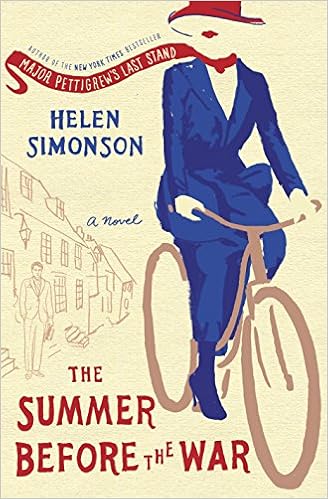
Today's New Release: THE SUMMER BEFORE THE WAR by Helen Simonson

4 Stars
Simonson’s second novel, after her debut Major Pettigrew’s Last Stand, is set in 1914 in the seaside town of Rye. Championed by Agatha Kent, 23-year-old Beatrice Nash has been hired to be the Latin teacher at the local school.  Beatrice arrives, more free thinking and attractive than expected, and becomes involved in the social life of the town.  She encounters many colourful characters but becomes especially close with Agatha and her two nephews:  Hugh Grange, a medical student, and Daniel Bookman, a bohemian poet. 

This is a comedy of manners; à la Jane Austen, it is full of dry wit and sparkling dialogue.  Beatrice, left penniless after her father’s death, decides she will live like a spinster earning her financial independence by pursuing teaching and writing.  Of course, the possibility of romance is introduced early on though there are complicating factors.  There is one potential suitor, the odious Mr. Poot, who is very similar to Mr. Collins in Pride and Prejudice.

The novel certainly has its light moments.  Class snobbery and small-town intrigue are often rendered with a comic touch; the scenes involving various women manipulating for power are wonderful.  Agatha in particular is very eloquent when verbally fencing with others, especially Mrs. Fothergill who is the model of a small-minded, small-town gossip who yearns for status and power. 

But the book also examines serious issues. It focuses on gender, class and social mores.  We see society’s reaction to ethnic background, divorce, pregnancy outside marriage, the feminist movement, and homosexuality.  Most strongly, we see how social constructs limit people.  Beatrice, like other women of the time period, has difficulty getting a job and maintaining her independence; the slightest rumour of the scantest association with scandal risks her job security.  Another example of society constraining potential is evidenced in Snout, an exceptionally intelligent boy whose future is limited because of his Gypsy blood.

As the title suggests, the setting is England at the cusp of World War I.  What is disturbing is that the townspeople idealize war as an adventure.  Of course the reader knows what horrors await the men who enlist; I often found myself cringing at phrases like “civilized warfare” and shaking my head at the naivety of both civilians and the military.  Hugh’s mentor envisions a specialist hospital as close to the front lines as possible, offering “the opportunity to catalog every possible type and severity of brain injury”!  A brigadier insists on holding a drill and parade “only a couple of miles from the German lines,” not thinking that the enemy could use the sound of the full brass band to recalibrate “the range and direction of their artillery”!

It is the female characters who steal the show.  Agatha, Beatrice’s patron, stands out as an intelligent, diplomatic woman who loves life and enjoys verbal jousts with the pretentious.  She is not perfect, however, and, though more progressive than most, is, as she admits herself, “as small-minded as the next woman.”  Beatrice finds a soul-mate in Agatha; she is intelligent and determined and feisty, so she has “to work harder to cultivate an appropriate attitude of grateful subordination.”  Beatrice is also a dynamic character who learns “what it meant to be of limited income” and re-examines her relationship with her beloved father.

Though the novel is set one hundred years in the past, its discussion of refugees seems timely.  The town decides to shelter some Belgian refugees and the attitudes of the various residents remind me of comments I have heard and read with regard to the refugee crisis in Europe and whether Syrians should be welcomed so openly to Canada.

This is quite a lengthy novel and at times is very slow-paced but, nonetheless, I enjoyed it.  It needs to be approached leisurely.  It will undoubtedly be described as a gentle, quiet read but its charm is not a disguise for fluff.  The book has its comic moments, but it also accurately recreates a time of innocence before a major cataclysm which ushered in the age of experience.

Note:  I received an ARC of this book from the publisher via NetGalley.

Monday, March 21, 2016

Canada Reads 2016 Debate Begins Today

Canada Reads 2016 begins today:   “5 books.  4 days of debate.  1 winner.  Five prominent Canadians chose a book they believe is the one novel all of Canada should read.  Over four days of live debate, they narrow the list down until only one remains.”

This year’s theme is starting over.  All five books centre on themes of transformation and second chances, stories about people choosing, or being forced to choose, a dramatically different course in life.
The five books are                  Birdie by Tracey Lindberg
                                                Bone and Bread by Saleema Nawaz
                                                                (See my review posted on January 29, 2016.)
                                                The Illegal by Lawrence Hill 
                                                                 (See my review posted on September 19, 2015.)
                                                Minister Without Portfolio by Michael Winter
                                                The Hero's Walk by Anita Rau Badami


Here you can find information about how to tune in to the debate:  http://www.cbc.ca/books/2016/03/how-to-tune-in-to-canada-reads.html.

Sunday, March 20, 2016

Some Suggestions for Spring Reading

Image result for reading for springToday is the first day of spring.  To honour the beginning of the season of renewal, I’m recommending an article entitled “8 Rejuvenating Books to Read in the Spring.”  It appeared in the Huffington Post on March 14, 2014, but though it is two years old, its suggestions are still relevant.  Check out http://www.huffingtonpost.com/2014/03/14/spring-books_n_4956736.html.To this list, I will add one of my own, Major Pettigrew’s Last Stand by Helen Simonson.  It’s a perfect spring read because the characters blossom and because there is hope in the midst of struggles, like buds on bare branches.  I reviewed this book on December 18, 2015.             Note:  I will be posting a review of Simonson’s latest novel, The Summer Before the War, this coming Tuesday when the book is released.


Saturday, March 19, 2016

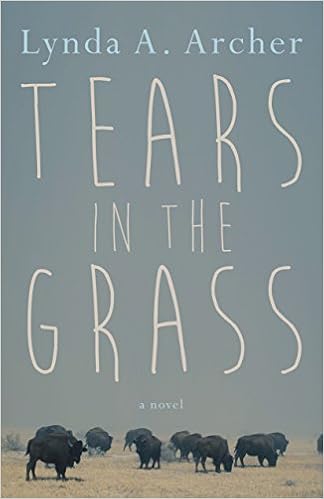
Today's New Release: TEARS IN THE GRASS by Lynda A. Archer

4 Stars
It is 1968.  Elinor Greystone is a 90+-year-old Cree woman living in the Qu’Appelle Valley in Saskatchewan.  As she nears the end of her life, she feels an urgent need to find her first daughter, Bright Eyes, the result of a rape at a residential school.  Elinor enlists the help of Alice, her granddaughter, and Louise, her daughter, to find Bright Eyes, the child forcibly taken from Elinor over seven decades earlier.

Red Sky in the Morning, a.k.a. Elinor, is a character the reader will come to love and admire.  She has not had an easy life, as she herself admits, having “’survived residential school, the theft of my first-born, the loss of babies, the murder of my husband.’”  Yet she retains a stamina and tenacity that belie her years, and she sees beauty in the natural world around her.  Her wisdom and her connection to nature especially make her a memorable character; she speaks to animals, even a stuffed bison in a natural history museum which she visits regularly. 

This is the first novel I have read which is written from the perspective of a residential school survivor.  What makes the novel’s message powerful is that we see the treatment of Indians from a personal perspective.  This book could very well have become a political diatribe about the horrors of residential schools, but the author merely touches on some of what happened, and that is enough to convey the horrors of that experience.  Elinor’s comment that the school was “a canker, sucking life from all that entered” is an effective description.

It is not just Elinor who emerges as a round character.  Her daughter Louise and her granddaughter Alice are also developed.  Each of these women has secrets because “shame holds secrets like a banker’s vault” but “Secrets are like pods of the milkweed.  They always burst open.”  Each woman is also compelled to examine herself to acquire a better sense of who she is, especially in terms of her relationship with her Native heritage.  Louise escaped the reservation on which she lived and has long been alienated from her culture; Alice wants her heritage to inform her life.

This book is definitely a worthwhile read.  It has a strong, memorable character and it addresses an aspect of Canadian history of which we should all be aware.  The novel speaks to both the mind and the heart.

Note:  I received an ARC of this book from the publisher via NetGalley.

Friday, March 18, 2016

National Book Critics Circle Award Winner for Fiction

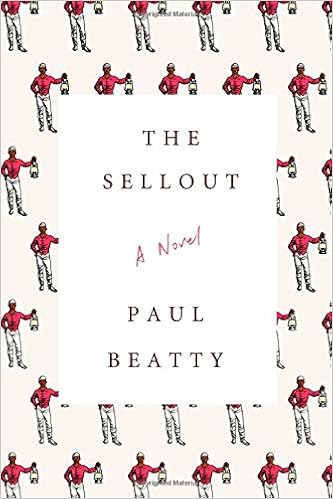
Yesterday, the National Book Critics Circle announced the recipients of its book awards for publishing year 2015.  The Fiction winner is Paul Beatty for The Sellout.

The Sellout is a biting satire about a young man's isolated upbringing and the race trial that sends him to the Supreme Court.  Born in Dickens, on the southern outskirts of Los Angeles, the narrator resigns himself to the fate of lower-middle-class Californians: "I'd die in the same bedroom I'd grown up in, looking up at the cracks in the stucco ceiling that've been there since '68 quake." Raised by a single father, a controversial sociologist, he spent his childhood as the subject in racially charged psychological studies. He is led to believe that his father's pioneering work will result in a memoir that will solve his family's financial woes. But when his father is killed in a police shoot-out, he realizes there never was a memoir. All that's left is the bill for a drive-thru funeral.  Fuelled by this deceit and the general disrepair of his hometown, the narrator sets out to right another wrong: Dickens has literally been removed from the map to save California from further embarrassment. Enlisting the help of the town's most famous resident―the last surviving Little Rascal, Hominy Jenkins―he initiates the most outrageous action conceivable: reinstating slavery and segregating the local high school, which lands him in the Supreme Court (https://www.amazon.ca/Sellout-Novel-Paul-Beatty/dp/0374260508/ref=sr_1_1?s=books&ie=UTF8&qid=1458310977&sr=1-1&keywords=the+sellout).

Thursday, March 17, 2016

Three Contemporary Irish Authors for St. Patrick's Day

Since today is St. Patrick’s Day, I thought I’d suggest some contemporary Irish authors worth reading. The Emerald Isle has blessed the literary world with the talents of Joyce, Wilde, Beckett, Shaw, Synge, Yeats, Swift and many more. Those are tough shoes to fill but, fortunately, the country of St. Patrick continues to produce a steady crop of skilled storytellers.There are any number of names that come to mind; for example, I’d recommend Anne Enright, Roddy Doyle, and William Trevor.  But here are my top three:
Colm Tóibín
Tóibín’s work often explores Irish characters moving into unfamiliar cultures, though the plots are fairly simple. He is definitely my favourite living Irish author.
I’ve reviewed three of Tóibín’s novels:   The Testament of Mary (December 19, 2015)
                                                                  Brooklyn (January 21, 2016)
                                                                  Nora Webster (January 22, 2016).

Emma Donoghue
Donoghue's work often incorporates LGBTQ themes and explores the status and role of women in the modern world.  Her novels have alternated between contemporary settings like Room‘s and historical tales. Frog Music, and her upcoming novel, The Wonder (to be released in September), are both historical fiction. Although Donoghue now lives in Canada, Ireland still claims her as one of its best living writers.
I reviewed Frog Music on October 24, 2015.

Sebastian Barry
Barry is noted for his dense literary writing style and is considered one of Ireland's finest writers. 
He has twice been shortlisted for the Man Booker Prize for his novels A Long Long Way (2005) and The Secret Scripture (2008), the latter of which won the 2008 Costa Book of the Year. His 2011 novel On Canaan's Side was longlisted for the Booker. 
I reviewed On Canaan’s Side on November 15, 2015.