Ranked a Top Canadian Book Blog
Twitter: @DCYakabuski
Facebook: Doreen Yakabuski
Instagram: doreenyakabuski
Threads: doreenyakabuski
Substack: @doreenyakabuski
Bluesky: @dcyakabuski.bsky.social

Tuesday, December 19, 2017

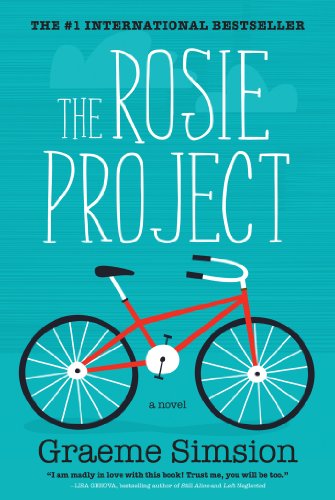
Review of THE ROSIE PROJECT by Graeme Simsion

Advent Book Calendar – Day 19
Since I started by blog, I’ve done an annual Advent Book Calendar highlighting books I have enjoyed and authors I really like.  This year I thought I’d do an Advent Book Calendar with a twist; for each day leading up to Christmas, I’m going to post a review of a book to which I’ve given only one star (Throw a book at this one) or two stars (Don’t put this book in your book bag).  Though I would not recommend these books, others have disagreed with me.  Each book, on Goodreads, has received a 3 or 4 Star average rating.

Review of The Rosie Project by 
2 Stars
This is another book I read only because it was chosen by my library book club. Fluff! It’s described as a romantic comedy and I have enough problems with that formulaic genre, but then the book goes further and has little romance and even less comedy.

Don Tillman is a 39-year-old geneticist with (undiagnosed) Asperger’s. He devises a plan to find himself a wife. While involved with this project, he meets Rosie who enlists his genetic expertise to help her identify her biological father. Of course, Rosie and Don develop an unlikely relationship.

Lovers of romantic comedy are obviously the ones writing the rave reviews. The book certainly has all the elements of the genre: the seemingly ill-suited couple who insist they have a just-friends relationship which inevitably develops into something more, the prevalence of chance and coincidence, the predictable plot, the comic set-pieces, the moments of less-than-profound epiphanies, and the love-conquers-all theme. And there’s a sequel which will undoubtedly continue to use the formula.

Some people rave about Don and how he is a unique character. Countless examples of Don can be found in popular culture. Don has been around in the guise of Shel(Don) Cooper on The Big Bang Theory since 2007. How about characters on Bones and Criminal Minds? And all of Don’s musings about love and logic are certainly reminiscent of Mr. Spock on Star Trek. In terms of books, what about The Incident of the Dog in the Nighttime?

But for me it is not just a lack of originality in character that is the problem; Don is not realistic as someone with an autism spectrum disorder. He possesses every attribute of an "Aspie"? Then, after decades of rigid behaviour, he is able to change? In a very short period of time he abandons his scheduling and learns to read facial expressions and social cues?! An autistic person is not someone with a “normal” personality trapped inside, a personality that can be released by the love of another.

The author seems to want people to realize that people’s differences should be appreciated and accepted; those who demonstrate “variations in human brain function” and do not fit “constructed social norms” (6) should not be ridiculed and shunned. Yet at the same time, the author expects readers to laugh at Don and his inability to function in social situations?! We are supposed to believe that just because Don is accustomed to ridicule and rejection, he doesn’t suffer when others laugh at him? Surely no reader believes Don is not capable of love so why would he/she believe he is not capable of feeling hurt? Why not show the ridiculousness of societal “norms”?

This book is the type which will appeal to readers who want pure escapism. I found it barely entertaining and certainly not memorable.

Monday, December 18, 2017

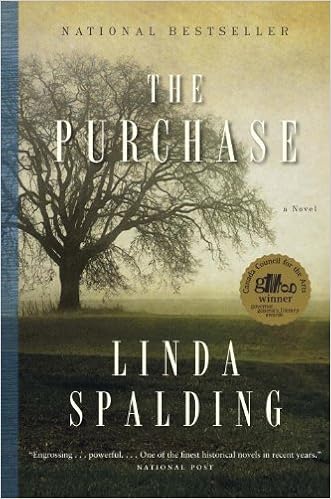
Review of THE PURCHASE by Linda Spalding

Advent Book Calendar – Day 18
Since I started by blog, I’ve done an annual Advent Book Calendar highlighting books I have enjoyed and authors I really like.  This year I thought I’d do an Advent Book Calendar with a twist; for each day leading up to Christmas, I’m going to post a review of a book to which I’ve given only one star (Throw a book at this one) or two stars (Don’t put this book in your book bag).  Though I would not recommend these books, others have disagreed with me.  Each book, on Goodreads, has received a 3 or 4 Star average rating.

Review of The Purchase by Linda Spalding
1 Star
This novel appears on two 2012 award lists: the Governor General’s Award for Fiction and the Rogers Writers’ Trust Fiction Prize. I’m not certain why. The reviews I’ve read tend to be overwhelmingly positive, but I soon tired of it and struggled to finish.

The book begins in Pennsylvania at the end of the eighteenth century. Daniel Dickinson and his young family are exiled from their Quaker community when, after his wife’s death, he hastily marries a 15-year-old indentured servant girl. They end up in south Virginia but Daniel is in no way prepared to build a new life for his family in the wilderness. To add to his problems, he purchases a young slave boy despite his abolitionist beliefs. This event is a catalyst for a long series of tragic events in the lives of family members and neighbours over multiple generations. The long-term effects of that purchase on Daniel’s children are detailed.

A major theme is that of freedom, specifically whether anyone really has freedom. The black slaves are the obvious examples of people lacking freedom, but almost everyone is enslaved somehow because of religious beliefs or prevailing societal expectations. For example, Daniel’s Quaker pacifism leaves him unable to defend himself and others against violent neighbours.

One of the problems I had with the book is the character of Daniel. The motivation of much of his behaviour is not sufficiently explained. Why, for example, does he quickly marry Ruth when he seems to have no reason to do so, especially since that decision results in his family being shunned and banished? Though Daniel is an abolitionist and “his moral nature was unchanged,” at the auction he “felt his right arm go up as if pulled by a string” when a slave boy is being sold? Then, when his son is dying, he stops enroute to the doctor’s to reclaim a horse? Daniel’s treatment of Ruth seems unChristian as is his unforgiving attitude to his children, especially considering how he was treated by his own father.

And Daniel is not the only problem character. Mary and Bett are supposedly the best of friends, yet Mary takes credit for Bett’s healing skills and doesn’t give her freedom? Mary knows she needs Bett to help her with ill patients, yet she still goes to home visits by herself when she could easily have made an excuse for bringing Bett with her? Jemima adopts a way of life that will serve only to alienate her from everyone, including her family?

I found the book a harrowing read. Daniel encounters failure after failure. He betrays his moral code, albeit inadvertently, and it seems that he is continuously punished for his sin and so is his family. I guess I have difficulty with the Biblical admonishment “The sins of the father shall be visited upon the sons.”

I will continue to scan reviews to see if anyone satisfactorily addresses my concerns and enlightens me to the merits of the book; thus far I remain unconvinced. I am not, however, motivated to re-read the book; in fact, it is a purchase I wish I had not made.

Sunday, December 17, 2017

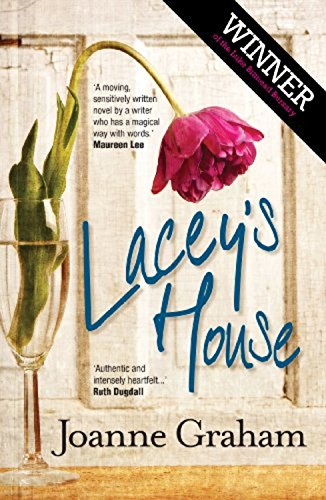
Review of LACEY'S HOUSE by Joanne Graham

Advent Book Calendar – Day 17
Since I started by blog, I’ve done an annual Advent Book Calendar highlighting books I have enjoyed and authors I really like.  This year I thought I’d do an Advent Book Calendar with a twist; for each day leading up to Christmas, I’m going to post a review of a book to which I’ve given only one star (Throw a book at this one) or two stars (Don’t put this book in your book bag).  Though I would not recommend these books, others have disagreed with me.  Each book, on Goodreads, has received a 3 or 4 Star average rating.

Review of Lacey’s House by Joanne Graham
2 Stars 
Rachel is a young woman with a difficult past; Lacey, a simple woman viewed by most people as a mad old woman, had an even more difficult past. The two become neighbours and develop a friendship as they share their tales of loss. Lacey’s story, however, raises questions when Rachel discovers facts that totally contradict Lacey’s version of events from her past.

The novel is structured around chapters that alternate between the two protagonists. Rachel’s chapters are written in first person point of view whereas Lacey’s are in third person limited omniscient point of view. The advantage of this approach is that the reader becomes aware of the thoughts and feelings of both women and so comes to understand the reasons for their behaviour. This is especially important for an understanding of Lacey whose grasp of reality sometimes seems tenuous.

Rachel proves to be a dynamic character. She comes to terms with her past as she shares her story with Lacey and listens to hers in turn. Lacey’s life story serves to put Rachel’s own experiences into perspective and makes her realize she must take certain steps to avoid a future that could be as difficult as her past.

There are some twists but generally the plot is very predictable. Lacey’s visit to a lawyer, for example, foreshadows the inevitable ending. Likewise, certain topics of conversation keep cropping up and they indicate the direction events will take.

The theme is clearly stated: “it is easier to imagine a life without flaws, without difficulty than to accept a desperate reality you are powerless to change.” Both women do that, Lacey more so because of her circumstances. Of course this is a very human coping mechanism so readers should be able to relate.

Life in a small rural village is portrayed realistically. The author seems to understand how small towns function: the gossiping and rumor-mongering, the unwillingness to accept those who are even slightly different, the respect given to the village doctor.

This book is not really the literary fiction I normally read so I am perhaps not best qualified to judge its quality. I can, however, imagine it being made into a Hallmark movie.

Note: I received a copy of this book from the publisher via NetGalley.

Saturday, December 16, 2017

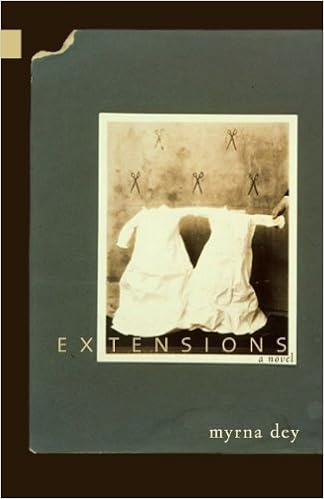
Review of EXTENSIONS by Myrna Dey

Advent Book Calendar – Day 16
Since I started by blog, I’ve done an annual Advent Book Calendar highlighting books I have enjoyed and authors I really like.  This year I thought I’d do an Advent Book Calendar with a twist; for each day leading up to Christmas, I’m going to post a review of a book to which I’ve given only one star (Throw a book at this one) or two stars (Don’t put this book in your book bag).  Though I would not recommend these books, others have disagreed with me.  Each book, on Goodreads, has received a 3 or 4 Star average rating.

Review of Extensions by Myrna Dey
1 Star
This book caught my attention because it was The Reader's Choice for the Scotiabank Giller Prize.

Arabella Dryvynsydes, an RCMP officer, feels adrift after the death of her mother and a romantic breakup. By chance she finds a photograph of her grandmother and her twin sister at a garage sale in rural Saskatchewan. Arabella sets out to discover how the photo, taken 100 years earlier on Vancouver Island, found its way there. She also acquires a few letters written by her great-grandmother to her siblings in Wales, letters in which she describes the poverty and loneliness of life in a Vancouver Island mining town. Gradually Arabella uncovers family secrets as she also solves crime cases.

A problem with the book is the many chance occurrences and coincidences. The plot seems less driven by character than by a plot graph developed by the author. All of Arabella's encounters and experiences connect somehow to her search for information about her maternal ancestors. For example, she takes a history course, although she had never previously shown much interest in academics, and, conveniently, she is able to use her great-grandmother's letters for a term paper and eventually to solve a historical mystery. One of the letters, to which she gains access only towards the end of the book, helps her to solve a murder she is investigating.

Many of the characters are sketched in broad strokes and are unconvincing. People keep secrets and fabricate lies with insufficient motivation to justify their actions. A couple of great-aunts are totally vindictive and malicious and seem to have no redeeming qualities, while another is too good to be true. Several relatives are so lacking in ordinary human curiosity that they don't read family documents bequeathed to them; that total lack of interest means secrets remain buried even longer, only to be uncovered by Arabella of course.

The theme is rather obvious: "we are never as far removed from one another as we like to think" (247). In case the reader fails to understand, an explanation is given: "And what was I but an extension, through Dad, of [my paternal grandmother]. Just as this elderly cousin coasted on what her mother had gone through and passed on, so were our comfortable lives determined by what [my grandmother] had borne, distilled, and set in motion . . ." (245).

I did enjoy reading about the history of mining on Vancouver Island; about this history I knew virtually nothing, and the book has inspired me to do some further research.

The mechanical construction of the plot and the flawed characterization leave no doubt that this is a debut novel. It may have won the Reader's Choice Award, but I suspect that win was more the result of an organized voting campaign than the literary merits of the book itself.

Friday, December 15, 2017

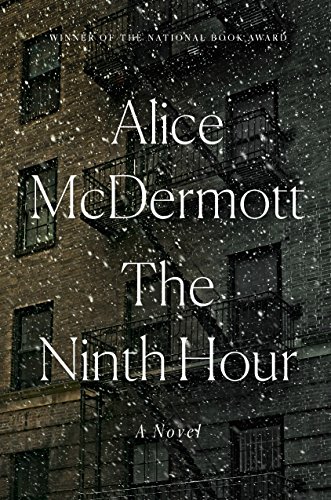
Review of THE NINTH HOUR by Alice McDermott

3.5 Stars
Set in early 20th-century Brooklyn, this novel focuses on the Little Nursing Sisters of the Sick Poor and a mother and her daughter whom the nuns have helped.  Annie, a young widow, is given work in the convent’s laundry and her daughter Sally is virtually raised there.  As a young woman, Sally considers joining the sisterhood but the reader knows she does not truly have a vocation because one of Sally’s children intermittently narrates the story. 

It is the characterization of the nuns which stands out for me.  They are seen as they work amongst the poor and wretched of the city; they are both nurses and social workers in the service of the indigent and sick.  It is their task “to enter the homes of strangers, mostly the sick and the elderly, to breeze into their apartments and to sail comfortably through their rooms, to open their linen closets or china cabinets or bureau drawers – to peer into their toilets or the soiled handkerchiefs clutched in their hands.”  They enter places “unprepared for visitors, arrested, as things so often were by crisis and tragedy, in the midst of what should have been a private hour.”  As they visit invalids and shut-ins, details of what they see are not spared; bodily fluids are abundant.  It is clear that these nuns are a dying breed:  “The call to sanctity and self-sacrifice, the delusion and superstition it required, fading from the world even then.”

Each of the nuns emerges as a strong individual with a distinct personality.  Though they perform numerous good deeds and are compassionate women, they are flawed human beings.  Sister St. Saviour turns a cold shoulder to God; “It was the way a bitter old wife might turn her back on a faithless husband.”  And she openly states, “’It would be a different Church if I were running it.’”  Sister Lucy “lived with a small, tight knot of fury at the center of her chest.”  And St. Jeanne claims, “’I lost heaven a long time ago’” because of a deed she performed out of love.  It is refreshing to see nuns be willing to flout the rules when they feel it is best.  One sister has little respect for the rules of church and society because she believes many of them “complicated the lives of women:  Catholic women in particular and poor women in general.”  The nuns are even willing to sin and face the consequences later.   One who bends the rules makes a bargain with God:  “Hold it against the good I’ve done, she prayed.  We’ll sort it out when I see You.” 

The book examines, in detail, the human condition.  Everyone faces hunger of some sort, whether it be physical hunger or “a hunger to be comforted.”  People want to be loved though it is repeated that for the world’s ills, “Love’s a tonic, . . . not a cure.”  People strive to live a good life in their chosen role; Sister Illuminata, for example, labours in the laundry day after day because she believes herself to have been called “to become, in a ghastly world, the pure, clean antidote to filth.”  Everyone faces death:  “A terrible stillness would overtake them all, come what may.  A terrible silence would stop their breaths, one way or another.” 

This book is not full of action and adventure, but those who appreciate realistic characterization and an examination of real life will find much to admire. 

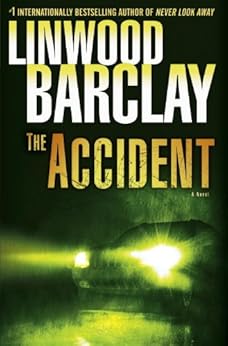
Review of THE ACCIDENT by Linwood Barclay

Advent Book Calendar – Day 15
Since I started by blog, I’ve done an annual Advent Book Calendar highlighting books I have enjoyed and authors I really like.  This year I thought I’d do an Advent Book Calendar with a twist; for each day leading up to Christmas, I’m going to post a review of a book to which I’ve given only one star (Throw a book at this one) or two stars (Don’t put this book in your book bag).  Though I would not recommend these books, others have disagreed with me.  Each book, on Goodreads, has received a 3 or 4 Star average rating.

Review of The Accident by Linwood Barclay
2 Stars
Glen Barber's wife Sheila is killed in an accident in which there are two other fatalities. Indications are that she caused the accident by driving while impaired. Glen has difficulty believing that Sheila was responsible since she was not an irresponsible drinker. He decides, therefore, to investigate his wife's death.

Besides grieving for his wife, Glen has several other problems. He has to protect his 8-year-old daughter from bullies; he is being sued by the family of the two victims in his wife's accident; his mother-in-law is trying to take his daughter to live with her; his construction business is suffering because of the poor economy and a fire at one of his building sites; several of his employees have personal problems.

The book is certainly suspenseful. Murders pile up as the plot twists and turns. Suspense is also created by the author's switching from one plot line to another at crucial points.

The major problem with the book is that there is an excess of villains. Everyone connected to Glen seems involved in murder or some type of criminal activity. Who knew that so much evil existed in suburban Connecticut!

Another weakness is that the motivation of characters is sometimes insufficient to justify their actions. Not everyone faced with financial woes will naively become involved with organized crime. In particular, the ultimate explanation given for Sheila's death is unsatisfactory.

This is the first book I've read by Linwood Barclay; based on my impressions, I won't rush to read his other books, although I'll probably give him another try when I've exhausted my "Must Read" list.

Thursday, December 14, 2017

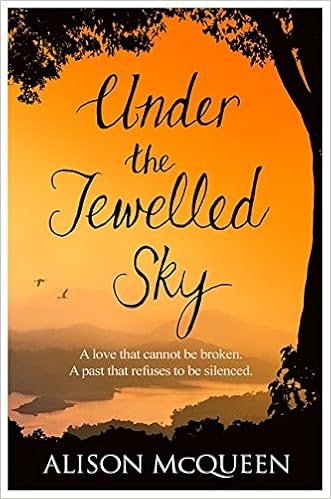
Review of UNDER THE JEWELLED SKY by Alison McQueen

Advent Book Calendar – Day 14
Since I started by blog, I’ve done an annual Advent Book Calendar highlighting books I have enjoyed and authors I really like.  This year I thought I’d do an Advent Book Calendar with a twist; for each day leading up to Christmas, I’m going to post a review of a book to which I’ve given only one star (Throw a book at this one) or two stars (Don’t put this book in your book bag).  Though I would not recommend these books, others have disagreed with me.  Each book, on Goodreads, has received a 3 or 4 Star average rating.

Review of Under the Jewelled Sky by Alison McQueen
2 Stars
I will preface my review by stating that historical romance is not my preferred genre. When I requested this title, I found it classified under literary fiction.

Sophie Grainger arrives in India in 1957 with her diplomat husband. This is not her first time in the subcontinent since she lived there ten years earlier when her father was a maharaja’s physician. During her first stay in India, she had an unconventional relationship with Jag, the son of an Indian servant, and the repercussions of that relationship follow her during her second sojourn: “memories have a habit of storing themselves up, like shoving things into the back of a closet. They’ll live there for so long as you care to leave them, and then, many years from now, you might find yourself cleaning out that closet one day and out they will tumble, all your memories of yesteryear.”

Characters are problematic in this novel. Many tend to be either too good or too evil to be believable. Veronica Schofield, Sophie’s mother, is part of the latter group. She is shallow, hypocritical, and abusive; one is hard pressed to find a positive quality. Jag, on the other hand, is just the opposite. He may be the romantic hero but surely there must be something this man cannot do? How many times does he cross a large swath of India? Even minor characters are unbelievable. Jag’s aunt, for instance, is just so loving and accepting of everyone. These characters are just not realistic.

The number of coincidences is also an issue. In a country with “four hundred million people,” Jag’s uncle locates Joy? In the midst of the Partition which saw the displacement of millions, Jag is chosen to work in the same clinic as Dr. Schofield? The author tends to emphasize the star-crossed lovers element a bit too much. Sophie is the one to initiate a kiss and then she and Jag totally discard all the values of their upbringing? Jag’s behaviour while a guard at the residential enclave does not ring true. Why doesn’t he identify himself sooner when he surmises the state of Sophie and Lucien’s marriage?

The historical element, on the other hand, is not emphasized sufficiently. The upheaval of the Partition is not conveyed very strongly. There is an attempt to show some of this during Jag’s stay at the refugee camp, but general descriptions such as “this unimaginable scene of human tragedy” do little to give a real understanding of the suffering of the displaced.

This novel would probably appeal to those readers who enjoy historical romances. It has the exotic location and the everlasting love that knows no bounds of time and space.