Ranked a Top Canadian Book Blog
Twitter: @DCYakabuski
Facebook: Doreen Yakabuski
Instagram: doreenyakabuski
Threads: doreenyakabuski
Substack: @doreenyakabuski
Bluesky: @dcyakabuski.bsky.social

Sunday, January 14, 2018

Review of THE CHILD FINDER by Rene Denfeld

3 Stars
Naomi devotes her life to finding missing children.  Her latest case involves Madison Culver who went missing three years earlier.  Naomi’s search is focused on the Skookum National Forest in Oregon where 5-year-old Madison wandered away from her family during a Christmas tree hunt.  Naomi is not just searching for a lost girl; she is also looking for her past.  She herself was an abducted child though she has no memories from before her escape. 

There is not much suspense because we are given Madison’s point of view.  She is being held by a man whom she just calls Mr. B.  She reinvents herself as the Snow Girl from a favourite fairy tale.  When Naomi thinks about abducted children, she reflects that “the ones who did the best in the long run made a safe place inside their very own minds.  Sometimes they even pretended they were someone else.  Naomi didn’t believe in resilience.  She believed in imagination.”  It does not take a genius to figure out Madison’s fate.  It is also very obvious who Mr. B actually is.  There is a final scene where danger is used to create suspense, but, again, the outcome is predictable.

The author can be commended for not treating child victimization and abuse as entertainment.  References to Madison’s treatment are indirect; there is no graphic, gratuitous violence.  Instead, we have oblique but telling statements:  “Mr. B’s hands were gentle – when he was setting the traps” and “He was wise and kind when he wasn’t angry with her.”  Denfeld also manages to show compassion for Mr. B.  As details of his past are revealed, the reader cannot but feel some sympathy and understanding for a damaged person.  Mr. B is not to be seen as totally evil:  “Madison didn’t understand that people can be good and bad. . . . She didn’t know that when you have that kind of bad inside you, it is not like your goodness is hiding it.  It is more like the badness and the goodness are all mixed together.”

I did not find Naomi a character with whom I could connect though her tenacity is admirable.  She is relentless in her investigations, but her obsession means that she has few friends and remains distant with her foster family.  She doesn’t even spend time with her foster mother when she is dying; Naomi just leaves her foster brother to look after the woman who adopted her!  She is even warned, “’We all need a sense of purpose . . . Be careful the purpose doesn’t destroy you.’”  Naomi is close to very few people, but all three men in her life fall in love with her?!

There are touches of sentimentality that detract from the quality of the writing.  One of Naomi’s male admirers feels rejected “But he wasn’t about to give up.  His heart told him so.”  There are statements like, “Her entire life she had been running from terrifying shadows she could no longer see – and in escape she ran straight into life. ”  And Naomi is seen as “the wind traveling over the field, always searching, never stopping, and never knowing that true piece is when you curl around one little piece of something.  One little fern.  One little frond.  One person to love.”

The message is one of hope.  Though we live in a fragmented world where “People had a way of appearing and disappearing in one another’s lives” and though “America was an iceberg shattered into a billion fragments, and on each stood a person, rotating like an ice floe in a storm,” there is hope because “No matter how far you have run, no matter how long you have been lost, it is never too late to be found.”

I can’t believe the number of 5-star reviews this book has received.  In my view, it is just average. 

Tuesday, January 9, 2018

Review of WOMAN AT 1,000 DEGREES by Hallgrímur Helgason (New Release)

3.5 Stars
Herbjörg Maria (Herra) Björnsson is 80 years old and living in Reykjavík; she begins the narrative of her life with an interesting opening:  “I live here alone in a garage, together with a laptop computer and an old hand grenade.  It’s pretty cozy.”   What follows is a look back at her life with a focus on the years of World War II when her experiences shaped her character and life thereafter. 

It is the characterization of Herra that stands out.  From the beginning she emerges as a feisty, witty woman but then we see her selfishness which will have some readers turning away.  She describes her uninhibited lifestyle:  “I was independent, had few scruples, and didn’t let anything hold me back – dogma, men, or gossip.  I traveled around and took casual jobs, looked after my own interests, had children and lost one, but didn’t let the other ones tie me down, took them with me or left them behind, just kept moving and refused to allow myself to be drawn into marriage and to be bored to death, although that was the toughest part, of course.”  Even as an octogenarian, she engages in questionable behaviour.  For instance, she has a number of fake identities on social media and uses them to spy on a daughter-in-law and to mercilessly flirt with an Australian man who is obsessed with bodybuilding. 

Those readers who don’t let Herra’s negative traits deter them from continuing through her narrative come to understand her and have sympathy for her.  For instance, she never fits in:  “I was wrong everywhere I went.  To Åse [my Norwegian friend] I was too Danish.  At school [in Denmark] I was too German.  And to everyone too Icelandic.  I never fitted in.  At any time in my life.  In Argentina after the war, people thought I was German and looked at me askance.  In Germany, when they realized I’d been to Argentina, people looked at me askance.  And at home I was a Nazi, in America a Communist, and on a trip to the Soviet Union I was accused of ‘capitalistic behaviour.’  In Iceland I was too traveled, on my travels too Icelandic. . . . Women told me I drank like a man, men like a slut.  In my flings I was deemed too keen; in my relationships too frigid.  I couldn’t fit in any damned where and was therefore always looking for the next party.  I was a relentless fugitive on the run.”  But it is her horrific experiences in war-ravaged Europe that result in trauma so profound that all her future relationships suffer.  Her explanation to her sons is not an understatement:  “’Tell them that their mother did her best, but my eighth life wouldn’t allow for . . . for more.’”  The title may refer to the temperature used by a crematorium to burn a human body, but it is also an apt metaphor for what Herra endures.

It is during the war that Herra learns about the extent of man’s inhumanity.  As Herra witnesses, women are certainly capable of brutal behaviour, but it is the treatment she receives from men that leaves her with little tolerance for members of the male sex.  She comes to agree with the observations of an acquaintance who advises her to beware of men because “’All men are Germans’” and to not become a woman because “’Women have such a rough time.  Just be a person.  Not a woman. . . . to be a woman is like being . . . it’s just a disease. . . . To be a woman is a disease.  A deadly disease.’”   She also comes to believe that virtually all women have been raped:  “No doubt Mom, Grandma, Great-Grandma, and all their foremothers had been raped . . . In farms, in barns, in ditches, on hills, on heaths, in bedrooms, in kitchens, in larders, at balls, in woods, on ships, in castles, cabins, gardens, and the Garden of Eden.”   Having been abandoned by one or both parents at different times, Herra didn’t have model parents but could her negligence of her sons be at least partially attributed to their gender?

The novel moves back and forth through time as befits the disjointed memories of an old woman, but this technique does present some challenges for the reader.  Of course, to maintain reader interest, the most shocking revelation is saved for the end.  At times, the book does drag.  There is considerable commentary about Icelanders and their culture; several times there is reference to the Icelandic tradition of silence:  “the tyranny of Mr. Silence, the despot who ruled Iceland in the twentieth century.”   Having only visited Iceland once and not being too familiar with Icelandic history, this pre-occupation with silence doesn’t mean much to me.

The touches of humour are wonderful.  Herra finds walking painful so describes her path to the toilet as her Via Dolorosa:  “My dream is to be hooked up to a catheter and a bedpan, but my application got stuck in the system.  There’s constipation everywhere.”  There is more than one example of satire in the author’s having the wife of an Icelandic car importer, a Mrs. Fortuneson, name an automobile a Chèvre au lait, “’making the American car maker sound like a fancy French hors d’oeuvre.”  The episode where Herra calls a crematorium to make an appointment for disposal of her body is hilarious. 

I’ve always enjoyed books where an elderly person examines his/her life, and this title will be added to my list of notable examples of this type.

Note:  I received an eARC of this book from the publisher via NetGalley.

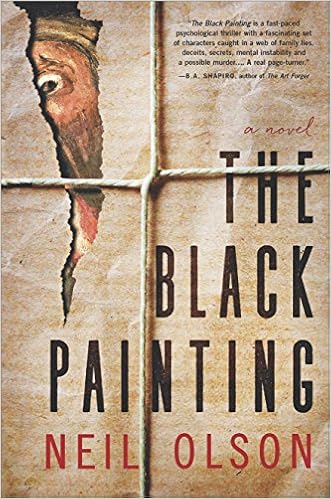
Review of THE BLACK PAINTING by Neil Olson (New Release)

2 Stars
The three children and four grandchildren of Alfred Morse, a wealthy art collector, have been called to his home on the Connecticut coast.  Teresa, one of the grandchildren, finds him dead in his study; he has a horrified expression on his face which is turned towards the spot where a Goya self-portrait once hung.  That painting, believed by several of the family members to be so disturbing that it caused misfortune or death, was stolen 15 years earlier.  Teaming up with Dave Webster, a private investigator hired by one of her uncles, Teresa sets out to find out what caused her grandfather’s death and who stole the painting. 

The book piqued my interest because of its use of one of Francisco Goya’s Black Paintings.  The twist added, however, stretched my credulity.  I know that those paintings are dark and disturbing, but I find it difficult to believe that a self-portrait could be so horrific that it could cause death.  People actually believe a painting can be cursed?    There is also the added problem of a plot which lacks focus.  There are a number of sub-plots so the narrative meanders.  There are sex scenes that do not develop character or advance the plot; they seem included only for titillation.  People like Marc, Teresa’s ex-boyfriend, are mentioned as if they might be important but then are never referred to again.  Then there are statements like “She had been hearing Ramón’s voice in her head a lot for the last two days” even though there has been no prior mention of this preoccupation.  There are also several fight scenes; at times it is difficult to know who is fighting whom.  The feeling given is one of disjointedness; even the dialogue gives this impression.  For instance, Dave mentions, “’You would have a hard time convincing [Pete] of [how lucky he is]’” and Teresa replies with “’I’ve been dreaming of my dad [Ramón] a lot lately.’” 

Another major problem is characterization.  The seven family members all remain flat characters so it is difficult to differentiate amongst them or to connect to them.  There is an attempt at direct characterization (“Teresa was good at reading people”) but this description is inaccurate.  The family as a whole can only be described as dysfunctional; everyone has issues with everyone else and no one trusts anyone.  Not one of them is likeable.  And because the characters are not developed, I found myself not caring about what happened to them. 

The book is repetitive in its use of certain elements.  People keep meeting in the woods and mysterious figures are constantly seen roaming there.  Then there’s the spooky house and the mysterious housekeeper who knows a great deal but won’t talk.  Teresa conveniently forgets and remembers things:  “Who had said that?  Where had Teresa just heard it?” and “then a vision pushed in upon her” and “How the hell could she have forgotten?  Yet she had, completely, until now” and “Another vision intruded on Teresa’s mind.”  Other characters also have strange memory lapses; one person cannot remember a cousin’s address:  “’I slept on a bench.  When I woke up I remembered the address, so I went there.’”  Using memories in this way is not a sophisticated literary technique. 

The long lists of questions also become tiresome.  Teresa, in particular, thinks in long sequences of questions:  “What had they forgotten, and what had their imaginations created over the years? And how would they ever know now which was which?” and “Had her mother known? What would she think, what would the aunts and uncles think? Would they be as indulgent as her cousins?” and “Who had her father really been, and what had he done that severed him from his family?  What did her visions mean, or did they mean anything?  Would she be the same person without them?  Was she brave enough to find out?” and “What was he doing here? What had he learned, and why did he make Teresa so uneasy?” and “What was he doing now? Had Philip dismissed him or was he still on the case?  If so, why had he not contacted Teresa?” and “Was it in Philip and Miranda, as well?  And if so, how had she and James avoided it?” and “What was wrong with her?  What was wrong with all of them?  What was this demon in the blood of the entire family?”  And this is not an exhaustive list!

This is not a book I can recommend.  Plot, characterization and writing style all have issues.  There are no thrills to be found in this thriller.

Note:  I received an eARC of this book from the publisher via NetGalley.

Monday, January 8, 2018

Canada Reads 2018 - Longlist

CBC Radio announced the longlist for Canada Reads 2018.  There are 15 titles:

Saints and Misfits by S.K. Ali
The Boat People by Sharon Bala
Suzanne by Anaïs Barbeau-Lavalette, translated by Rhonda Mullins
Brother by David Chariandy
Tomboy Survival Guide by Ivan Coyote
Precious Cargo by Craig Davidson
The Marrow Thieves by Cherie Dimaline
American War by Omar El Akkad
Scarborough by Catherine Hernandez
The Measure of a Man by JJ Lee
Out Standing in the Field by Sandra Perron
The Clothesline Swing by Ahmad Danny Ramadan
Forgiveness by Mark Sakamoto
Dance, Gladys, Dance by Cassie Stocks
Seven Fallen Feathers by Tanya Talaga

This year’s theme is One Book to Open Your Eyes so the books chosen are to challenge readers to look differently at themselves, their neighbours and the world around them.  The only one I’ve read thus far is The Marrow Thieves by Cherie Dimaline; my review will be posted on February 6.

The final five books will be announced January 30, 2018, and the debates will take place March 26-29, 2018.

For further information about the authors and their books, go to http://www.cbc.ca/books/canadareads/the-canada-reads-2018-longlist-is-here-1.4471348. 

Wednesday, January 3, 2018

2017 Costa Book Awards

Here are two works of fiction to check out; they’re the winners of the Novel and First Novel categories of the Costa Book Awards.  The Costa Book Awards is one of the UK's most prestigious and popular literary prizes and recognizes books written by authors based in the UK and Ireland.  Uniquely, the prize has five categories - First Novel, Novel, Biography, Poetry and Children's Book - with one of the five winning books selected as the overall Costa Book of the Year.  It is the only prize which places children’s books alongside adult books in this way. 

Novel Category Winner:
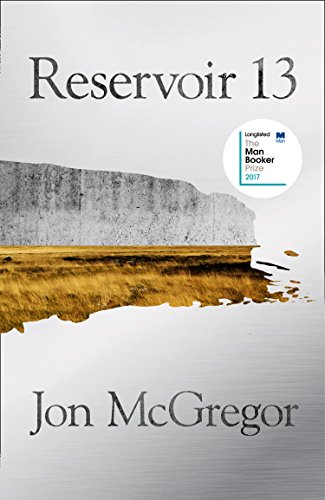
Reservoir 13 by Roy McGregor
Midwinter in the early years of this century.  A teenage girl on holiday has gone missing in the hills at the heart of England.  The villagers are called up to join the search, fanning out across the moors as the police set up roadblocks and a crowd of news reporters descends on their usually quiet home.  Meanwhile, there is work that must still be done: cows milked, fences repaired, stone cut, pints poured, beds made, sermons written, a pantomime rehearsed.  The search for the missing girl goes on, but so does everyday life.  As it must.  Reservoir 13 explores the rhythms of the natural world and the repeated human gift for violence, unfolding over thirteen years as the aftershocks of a stranger’s tragedy refuse to subside.

First Novel Category Winner:
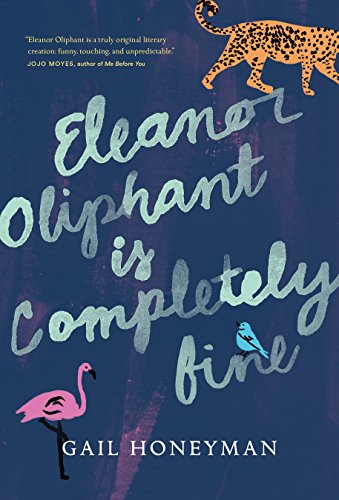
Eleanor Oliphant Is Completely Fine by Gail Honeyman

Meet Eleanor Oliphant struggles with appropriate social skills and tends to say exactly what she's thinking.  Nothing is missing in her carefully timetabled life of avoiding unnecessary human contact, where weekends are punctuated by frozen pizza, vodka, and phone chats with Mummy.  But everything changes when Eleanor meets Raymond, the bumbling and deeply unhygienic IT guy from her office. When she and Raymond together save Sammy, an elderly gentleman who has fallen, the three rescue one another from the lives of isolation they have each been living.  Ultimately, it is Raymond's big heart that will help Eleanor find the way to repairing her own profoundly damaged one.

For more information about winning books and authors, go to https://www.costa.co.uk/media/487568/2017-awards.pdf.

The Costa Book of the Year will be announced on January 30, 2018.

Tuesday, January 2, 2018

Review of THE MUSIC SHOP by Rachel Joyce (New Release)

4 Stars
Frank Adair, “a gentle bear of a man,” owns a music shop on Unity Street in an unnamed city in England.  It is 1988 and sales of CDs are overtaking sales of vinyl but Frank refuses to sell the former.  He is a music therapist in that he can find the perfect piece that each customer needs; he may not give customers what they request, but he is invariably correct in giving them what they need.  One day, Ilse Brauchmann, a mysterious German woman, appears and turns Frank’s world upside down. 

This book reminded me of The Little Paris Bookshop by Nina George in which Monsieur Perdu, the protagonist, is a literary apothecary who prescribes novels; using his intuitive feel for the exact book a reader needs, Perdu mends broken hearts and souls.  Frank is an equivalent musical apothecary who prescribes music to help people “through illness, grief, loss of confidence, and loss of jobs, as well as the more daily things like football results and the weather.”

Frank has “endless patience” with others and their troubles and his life’s mission is to help people:  “he had a kind of empathy for everyone.”  Though he listens to others’ feelings all the time, he tends to maintain a distance from people:  “He was perfectly fine with emotions, so long as they belonged to other people. . .  . Easier to disconnect from that part of life and turn his back on love altogether.  Easier to find what he needed in music.”  His goal is to “run a small shop in a dead-end street, without the complications of love or ties – . . . [to] put everything into serving ordinary people and avoid receiving anything in return.”  One friend observes that “Frank was so busy loving other people he had no room to accommodate the fact that someone might turn round one day and love him back.” 

Frank reminded me of the protagonist in The Storied Life of A. J. Fikry by Gabrielle Zevin.  Like Fikry’s life, Frank’s is altered by the arrival of a woman at his shop, someone who challenges him to become more involved in life.  A friend tells Frank, “’Helping someone is entirely different from being involved.  Helping is all on your own terms. . . . You expect other people to change, Frank.  But what about you?  What are you afraid of?’”  Unfortunately, Frank does not seem capable of the type of personal transformation that Fikry undergoes.  Also, like Fikry’s world, Frank’s is rapidly changing.  Not only are CDs replacing vinyl records, but a development company is trying to buy all the buildings on Unity Street in order to demolish them and build new housing. 

There is a cast of quirky but endearing characters, most of whom are fellow shopkeepers on Unity Street.  In some ways they are forgotten people living on the margins of society:  an ex-priest, a female tattooist, a Polish baker who talks to his dead wife when he bakes, and twin brothers who own a funeral business and sometimes hold hands like children.  The most memorable for me is Kit, the exuberant klutz who serves as Frank’s shop assistant.   

There are some wonderful touches of humour.  For his shop, Frank buys a rundown building which needs a lot of work but he is undeterred:  “He admitted to the estate agent he didn’t have any experience with DIY but guessed it couldn’t be so hard if you got a book from the library.”  Feeling very nervous while meeting a woman, Frank decides “to focus on the button of her white blouse, third one down.  It was a perfectly ordinary little button.  Nothing could go amiss if he looked there.”  Kit and the waitress in the Singing Teapot café provide comic scenes as well. 

Though I enjoy music, I am not very knowledgeable about the subject.  This book is actually very informative.  In the flashbacks to Frank’s childhood when his mother taught him how to listen to music, there are also anecdotes about various composers and musicians.  When I didn’t recognize a piece of music mentioned, I found myself downloading it and listening to it as Frank advises.  In the end, Frank gives music lessons to the reader as well as to customers.  And of course music teaches about life:  Jazz was about the spaces between notes.  It was about what happened when you listened to the thing inside you.  The gaps and the cracks.  Because that was where life really happened: when you were brave enough to free-fall.”

This is a charming, gentle read.  Though sentimental in places, it emphasizes the healing powers of love and music.  Readers who enjoyed Joyce’s The Unlikely Pilgrimage of Harold Fry and The Love Song of Miss Queenie Hennessy or Helen Simonson’s Major Pettigrew’s Last Stand will definitely be enchanted by this novel as well.

Note:  I received an eARC of this book from the publisher via NetGalley.

Monday, January 1, 2018

Schatje's Reading Resolution for 2018

In 2017, I posted 365 entries on this blog; that’s one entry for each day of the year.  I enjoyed being so diligent (or is that obsessive-compulsive), but I’ve discovered that, not surprisingly, all that posting took away from my reading time.  For instance, in 2016, when I posted less often, I read and reviewed 75 books; in 2017, I read and reviewed only 63 books – a dozen fewer! 

For 2018 I’ve decided to post much less, mostly just reviews of the books I read.  Besides reviews, prominent literary award long/shortlists and winners will be mentioned, though I expect that I will blog only once or twice a week.    

So my one and only resolution for the upcoming year is to read more.  It may be too ambitious a goal, but I will aim for  75 books.