Ranked a Top Canadian Book Blog
Twitter: @DCYakabuski
Facebook: Doreen Yakabuski
Instagram: doreenyakabuski
Threads: doreenyakabuski
Substack: @doreenyakabuski
Bluesky: @dcyakabuski.bsky.social

Sunday, November 22, 2020

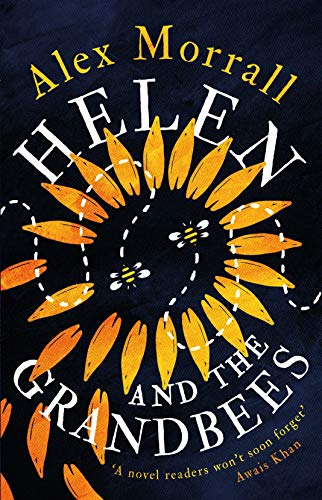
Review of HELEN AND THE GRANDBEES by Alex Morrall

 4 Stars

Social services took away Lily – Helen’s child/her “bee” – because she was unable to properly care for her:  “The System took her to ‘Better parents, older parents, ones with a similar ethnic background’.”  Twenty years later, Lily (now known as Ingrid) arrives at Helen’s door.  Slowly, the two build a relationship, though strains develop when Lily wants information about her father and grandparents, information Helen refuses to share.  Helen loves her grandchildren Aisha and Ryan, her grandbees, and when Lily’s choices put them in danger, Helen has to confront her past to protect them. 

Helen is a unique narrator.  Trauma in her past has left her mentally fragile; she has spent time not in the hospital but “in the other building.  The one next door.  The mental ward.”  Slowly it emerges that she requires sleeping pills, anti-anxiety drugs, and antidepressants.  Because of events in her childhood and adolescence, she suffers from post-traumatic stress.  To cope, she has tried to bury her past but when Lily keeps prodding for information, Helen becomes severely anxious.  To complicate her situation, Helen knows that she may lose Lily once again if she doesn’t give her what she wants. 

Because Helen is the narrator, what happened to her in the past is not directly mentioned.  It is not difficult, however, to determine what occurred.  Sufficient information is revealed by her fragmented memories, nightmares, and triggers.  Only to Lily does the truth not seem to be obvious, but then she doesn’t ever directly ask why Helen doesn’t want to talk about her family.  It is to Aisha that Helen says, “’Maybe I don’t tell you because I love you?’”

Whereas Helen is endearing, I found Lily difficult to like.  Constantly discontented, she moves from one relationship to another.  She divorces her first husband because she becomes bored with him!  I became increasingly frustrated with her choices, especially when they obviously impact her son and daughter.  She is so selfish and self-centred that she cannot see the effect her constant questions have on her mother.  She puts her need to know ahead of any concerns about why her mother might not want to discuss Lily’s heritage.  Helen perhaps has more understanding of Lily’s behaviour:  “maybe my secrets are what gives Lily-Bee the discontent, because she is looking for something I cannot tell her.  She is looking for something that I cannot solve for her, so she looks in other places to find the things I cannot give her.  She turns to the arms of different men so that she knows where she is going, even if she doesn’t know where she comes from.” 

The novel touches on a number of difficult subjects, but all are treated sensitively.  For me, it is the portrayal of mental illness that stands out.  Helen has all the symptoms of post-traumatic stress disorder and because she hasn’t received help and support, she sees her life as “a broken-up jigsaw, no roots, no branches, no sky, no ground, no horizon, but the blankness never went away.”  She tries to cope as best she can, trying to live a better life.  She believes Lily was taken away because Helen wasn’t able to keep her home clean so now she obsesses about cleanliness.  Her capacity for love is such that it leaves Lilly confused and admitting, “I really don’t know what to do with all that love.”

The theme is that love can overcome fear.  Helen must face her worst fears in order to protect her grandchildren from danger.  In the process, she also helps herself; she thinks “the pieces of my life [are] almost forming a complete whole.  I have started to see the picture that is my broken jigsaw, and there are only a few more pieces to add here and there.”

This novel has a dynamic protagonist whom the reader will come to admire; it thoughtfully examines mental illness; it has an uplifting message; and it is written in a captivating style.  There is much to recommend and little to criticize. 

Note:  I received a digital galley from the publisher via NetGalley.

Thursday, November 19, 2020

2020 Booker Prize Winner


Last month, when I reviewed Shuggie Bain by Douglas Stuart, I began my review by stating,  "This novel has been shortlisted for the 2020 Booker Prize, and I will be disappointed if it does not win."

Today the winner was announced and it is indeed this wonderful novel.  Here's my review:  https://schatjesshelves.blogspot.com/2020/10/review-of-shuggie-bain-by-douglas-stuart.html

A deserving win!

Wednesday, November 18, 2020

Review of INDIANS ON VACATION by Thomas King

 3.5 Stars

Bird Mavrias and his partner Mimi are in Prague.  The two take in the typical tourist sites which Mimi is eager to see though Bird is less engaged.  Between descriptions of their days in the Czech capital, Bird flashes back to previous travels in Europe and North America.  Interspersed are observations of life from an Indigenous perspective and commentary on social issues like immigration and systemic racism.

Bird struggles with inner demons which Mimi has named so they’ve become travel companions: Eugene illustrates Bird’s self-loathing; Kitty catastrophizes and illustrates how Bird often expects the worst to happen; Didi and Desi represent  Bird’s depression and despair; and Chip is the proverbial chip on Bird’s shoulder.  These personifications accompany Bird wherever he goes and wonderfully illuminate Bird’s mental state. 

Mimi and Bird are a wonderfully realistic couple.  Being in their golden years, they’ve spent much of their lives together.  In many ways, they are opposites.  Bird is the reluctant traveller who prefers not to leave his comfort zone while Mimi loves to explore the world.  They know each other well and make allowances for their differences.  Their relationship is not perfect, as some flashbacks reveal, but it is underpinned by genuine love and affection. 

The travellers take a day trip to Budapest where they come across Syrian refugees in the main train station.  What they see puts a pall over their visit to Hungary because they can’t think of what to do to help.  Mimi suggests picking up some pastries to give to the migrants!  Throughout the novel, there is repeated reference to there being so much injustice in the world and a lack of action to resolve serious issues. 

There is a lot of King’s typically wry humour but the serious outweighs the comic touches.  Aging has brought Bird a number of health concerns.  Discussions of Indian agents and subjects like residential schools and the Sixties Scoop emphasize the tragedy of the Indigenous experience and the existence of systemic racism.  One reason for Bird’s melancholy is that he doesn’t believe his writing as a journalist has brought about positive change. 

Like tourist wanderings, the book at times seems aimless.  It is not.  It entertains while educating and commenting on social issues that remain unresolved.  Perhaps we need to stop acting like tourists and take concrete action to address these issues. 

Saturday, November 14, 2020

Review of THE KINGDOM by Jo Nesbø (New Release)

 3.5 Stars

This example of Nordic Noir is written by the creator of the Harry Hole series, but this book is very different.  It is a crime novel but it is also very much a family drama focusing on the bond between brothers.

When he is 15 years old, Roy Opgard is told by his father that he must always look after his younger brother Carl:  “’You and me, we’re alike, Roy.  We’re tougher than people like Mum and Carl.  So we have to look after them.  Always.  . . . We’re family.  We’ve got each other and nobody else.  Friends, sweethearts, neighbours, the locals, the state.  All that’s an illusion, it’s not worth a candle the day something really matters.  Then it’s us against them, Roy.  Us against absolutely everybody else.’”  Roy takes seriously the responsibility to protect his brother, especially after they are orphaned.  Carl gets into trouble and Roy rushes in to help and clean up the mess.  Once Carl leaves for North America, Roy focuses on managing a gas station in the small village of Os and living a quiet life on the mountain farm his father called The Kingdom.  Then, 15 years later, Carl returns with Shannon, his architect wife.  The two have big plans to build a mountain resort, though the sketchy financing plan necessitates the involvement of virtually every villager.  It quickly becomes clear that Roy will have to revert to his role as protector:  “I suspected the reason for this sudden and unannounced homecoming was . . . [that] he needed his big brother’s help.”  More than once, Roy is faced with having to decide how much he is willing to do to help Carl.

Almost from the beginning it is obvious that both boys suffered trauma in their childhoods, trauma which has had a lasting emotional impact.  Of course, this trauma has been kept a secret from everyone, though it seems some people in the village have suspicions.  Even the reader is initially kept in the dark as to exactly what happened.  However, when that first secret is revealed, it emerges that there are other secrets - in fact, layers of secrets and lies.  At times, the number of secrets becomes almost overwhelming. 

The two brothers are foil characters.  Roy, the narrator, is an introvert and loner; his ambition is to own his own service station.  He has a strong sense of duty, and his love for and loyalty to his brother are obvious; he feels he has incurred a debt to his brother which “I was going to have to go on paying until I died.”  Carl is the extrovert, a social charmer.  He dreams on a large scale, though his impulsive nature often gets him into trouble.  The two work together when necessary, but Roy begins to mistrust his brother when he learns that Carl is not always completely truthful and forthcoming.  There is also underlying jealousy; Roy admits, “’I’ve been jealous [of Carl] since I was five years old.’”  The complexity of the relationship between the two creates suspense.  We know Roy doesn’t fully trust Carl, but does Carl completely trust his brother? 

This is a lengthy novel and it starts slowly.  Then the pace picks up and the reader will be breathing quickly because of the many twists and turns:  “Almost nothing is impossible.  It’s just a question of time, and then everything happens.”   Unfortunately, I did find myself shaking my head in disbelief after a while because there’s “a pile of wrecked cars and corpses that just grew and grew.”

The book does urge readers to consider what they would do to protect family.  Roy and Carl’s father says, “’It is the ability not to take the path of least resistance but the path of highest morality that separates humans from animals’” but suggests that they may have to be collateral damage, “unintentional fatalities, but necessary” in a war endangering family.   Shannon points out, “’morality as a motivating force is overrated in us humans.   . . .  We shape morality so that it suits our purposes when we feel our group is under threat.  Family vendettas and genocides throughout history are not the work of monsters but of human beings like us who believed they were acting in a way that was morally correct.’”  She admits, “’I love the ones I love and do what I have to in order to protect them.  Even if that means doing bad things.’”  Would you?

This dark and atmospheric novel has interesting characters with both internal and external conflicts.  Once tension begins, there’s little lessening.  It engages the reader in questions of morality and responsibility for and loyalty to family.  The amount of betrayal, obsession and violence stretches credibility but would work well in an action-packed film adaptation. 

Note:  I received an eARC from the publisher via NetGalley.

Tuesday, November 10, 2020

Review of LITTLE CRUELTIES by Liz Nugent (New Release)

 4 Stars

At the centre of this dysfunctional family drama are three Irish brothers:  William, Brian, and Luke Drumm.  The novel opens with one of the three dead, but the reader does not know which one.  Each of the three tells his story, but it becomes clear that they all acquired resentments and jealousies in childhood and carried them into adulthood:  “Three is an odd number, so there had always been two against one, although we all switched sides regularly.  Nobody would ever have described us as close.”  The narrative focuses on their rivalries and betrayals. 

In the prologue, the reader is told that one brother died suddenly and horrifically; his body was “smashed and broken.”  Both survivors may have been involved in the death because both seem to think “this outcome was all for the best.”  The mystery as to the identity of the dead man is complicated by the fact that all three are flawed and have done things which could lead to a violent death.  And each has a motive to want the other brothers out of the picture. 

None of the three is particularly likeable.  William, the eldest, becomes a film producer, but he is more memorable as a philanderer and misogynist.  Brian, the middle brother, has difficulty finding his niche but gradually becomes a master manipulator who is pre-occupied with the acquisition of money.  Luke, the youngest, is the most sympathetic of the three; he becomes a pop star but struggles with mental illness and addiction. 

Each of the three is affected by their upbringing, specifically the treatment received from their mother Melissa.  A singer and actress, she is a vain narcissist who sees everyone as inferior to her.  William’s arrogance can be seen as stemming from the fact that Melissa makes it abundantly clear he is her favourite son.  Brian is treated indifferently and perhaps sees financial success as a way of gaining more of Melissa’s attention.  Luke is sensitive and his mother’s obvious lack of love for him leaves him fragile.

Since each brother narrates his own story, some events are seen from more than one perspective.  Since William tells his story first, the reader may sympathize with him; however, once the perspective of another brother is given, the reader’s feelings may change.  Some readers might complain about repetitiveness, but I enjoyed the additional insight into behaviour and the depth of character development. 

The one complaint I have about the individual stories is that they all have unique, non-linear timelines (e.g. William:  1994, 1985, 1992, 1978 . . . ; Brian:  1978, 1993, 1979, 1976 . . . ; Luke:  1977, 1989, 1984, 1995 . . .).  I could find little reason for this rather chaotic arrangement. 

Liz Nugent is known for her crime fiction, but this book does not have the amount of suspense found in that genre.  This novel touches on a variety of topics:  dysfunctional families, mental illness, addiction, sexuality, #MeToo.  I particularly liked how it demonstrated the effects of upbringing and traumatic events on personality and behaviour. 

Note:  I received an eARC from the publisher via NetGalley.

Friday, November 6, 2020

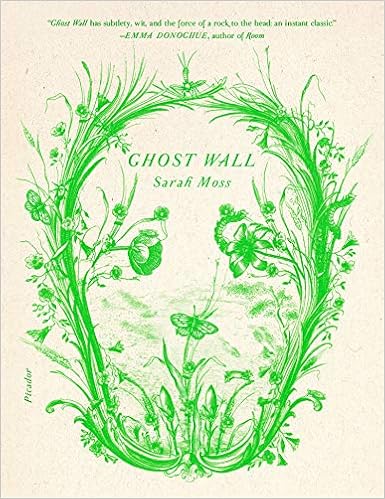
Review of GHOST WALL by Sarah Moss

 4.5 Stars

The book begins with a scene reminiscent of "The Lottery" by Shirley Jackson.  It’s a powerful opening to a short, suspenseful novel that packs a punch. 

The protagonist is 17-year-old Sulevia (Silvie) Hampton.  Her father Bill, an amateur historian, insisted that Silvie and her mother join him in rural Northumberland to re-enact the life of Iron Age Britons.   Bill is especially fascinated with the bog people.  Because of his “self-taught expertise in outdoor survival, foraging, and mountaincraft,” he was invited to join a professor and three of his students in an experimental archaeology program for two weeks.  Dressing in tunics, the participants forage for food and even build a ghost wall, a defensive palisade crowned by animal skulls. 

Bill is obsessed with authenticity so, for example, he wants everyone to sleep in the roundhouse “on the splintery bunks . . . padded with three deerskins.”  The professor is less concerned:  “Professor Slade said, ah well, after all, authenticity was impossible and not really the goal anyway, the point was to have a flavour of Iron Age life.”  The students are even less committed and not above bringing in contraband food.  Molly, the one female student, is most lackadaisical; she even refuses to take part in certain activities like butchering rabbits.  When the others are not enthusiastic about authenticity or the professor disagrees with him, Bill is not happy and his typical reaction is noteworthy:  “Dad didn’t say anything.  He lifted his chin, locked eyes with the fire.  Mum hunched on her rock, touched her arm where I’d seen the bruise earlier.”

Bill’s attitudes are relics of the past.  He expresses racist and xenophobic views.  He is also a misogynist:  he tends to be almost totally dismissive of women and their views.  Even menstruation he sees as a failing:  “in the old days women weren’t going around forever bleeding all over the place anyway, all those doings started later in life when there was less to eat and everyone better for it.”  He doesn’t like his wife or daughter buying tampons because “Women managed well enough, he said, back in the day, without spending money on all that, ends up on the beaches in the end, right mucky.”  He constantly scolds his wife for being late with meals she is expected to make on an open fire.  He criticizes her for being fat but doesn’t like her exercising; she enjoyed swimming and attending a fitness class but “Dad hadn’t liked her doing either.  Surprised you’d want people seeing you in your swimming costume, shape you’re in, he’d said.” 

Molly doesn’t behave submissively.  For instance, Molly refuses to eat the rabbit stew.  In response, Bill mutters, “You’ll eat what you’re given, girl. . . . picky lasses went hungry, back then, . . . it weren’t for the likes of you to say who gets what.”  Silvie hates when Molly challenges Bill:  “My stomach clenched.  Stop it, you don’t know what you’re stirring up, you have no idea how this goes, you can’t speak to him like that.”  Since he cannot punish Molly, Silvie and her mother become the targets of his violence. 

Silvie is a well-developed character.  She is very knowledgeable about the natural world so she can identify plants and knows their uses.  She is proud of her outdoor skills.  She is also spirited and has some rebellious tendencies which antagonize her father.  As is often the case with victims of abuse, she defends her abuser.  She does have happy memories of good times with her father when she was younger.  Seeing his daughter growing up obviously upsets Bill.  He often accuses her of behaving inappropriately in front of the male students.  When she innocently asks if she can sleep in a tent like the students, Bill’s response is telling:  “Don’t be daft, he said, of course you can’t sleep wi’ the lads, shame on you. . . . I did not know what my father thought I might want to do, but he devoted considerable attention to making sure I couldn’t do it.”  Interestingly, it seems that Silvie’s nascent sexual interest lies elsewhere. 

Silvie is really trapped.  Does her father see the ghost wall as a way of keeping her trapped?  When the group discusses what they would sacrifice to the bog “if you were really scared or really desperate for something,” Bill looks at his daughter:  “I felt Dad’s gaze on me and knew with a shiver what he was thinking.  My daughter.  Break her and stake her to the bog, stop her before she gets away.”  Silvie’s encounters with the students, especially Molly, show her a way out.  She admits, “University would have been a way of escaping” but she doesn’t know how to ask the questions she really wants to voice:  “How do you leave home, how do you get away, how do you not go back?”

One of the major themes is expressed by the professor:  “there’s no steady increase in rationalism over the centuries, it’s a mistake to think that they had primitive minds and we don’t.”  Like so many of the boys in Lord of the Flies, the men become infused with tribal passions:  “the Prof drumming with his head thrown back to the moon, at Dad himself sitting straight as if in church and joining a wordless chant, the two sceptical boys in the end not exchanging glances but intent on the bone-faces on high and swaying to rough music.”  They also become transfixed by a desire to “kill things and talk about fighting.”  The women usually do the foraging while the men set off “on some mission of violence against the local fauna.”  Certainly, the author suggests a connection between ancient sacrificing rituals and present-day abuse.

The style of the book is not traditional.  Speech indicators like paragraphing and quotation marks are not used.  As a result there are some confusing passages:  “Come on, she said, come and talk.  Mum needs these, I said, Dad said.  Yes, well, she said, I say.  Come on.  Tell me what they said.”  Comma splices and sentence fragments abound:  “Haven’t you been listening, people don’t bother to hurt what they don’t love.  To sacrifice it.”  Dialect is also employed:  “I’ve some kecks you can take while you’re about it.  But give us dinner first, we’re all clemmed.” 

Though a quick read, this book has a lasting impact because it is so thought-provoking.  It is a coming-of-age tale but so much more; it challenges the reader to think about domestic abuse, toxic patriarchy, class prejudices, connections between ancient and modern societies, and the various meanings of walls.

Monday, November 2, 2020

Review of MISS BENSON'S BEETLE by Rachel Joyce (New Release)

 3.5 Stars

Most of the novel is set in 1950.  Margery Benson, a 46-year-old spinster schoolteacher, abandons her job in a dramatic way after a humiliating experience.  On a whim, she decides to travel to New Caledonia to find the legendary golden beetle her father had told her about just before his sudden death.  When left with no other option, Margery hires Enid Pretty as her assistant.  Enid has none of the qualifications Margery wanted but in the course of their adventures, the two unlikely companions forge a strong friendship.

Some of the interest in the novel is that the two women are foil characters.  Margery is plain, frumpish, introverted, and judgmental whereas Enid is attractive, flamboyant, extroverted, and undiscriminating.  At the beginning, Margery hates Enid’s company; on the 5-week, transoceanic voyage, Margery feels “stuck in a very small space with the world’s most talkative woman.”  It takes a while for Margery to realize that there is more to Enid than appearances suggest; she proves to have skills that the ill-prepared Margery needs and even if Enid is chatty, she has secrets. 

Though the purpose of the journey is to find a (perhaps mythical) gold flower beetle, it is really a journey of self-discovery.  Margery feels like a misfit in society:  “She would always be on the outside.”  Her life is dull and boring because “It was so easy to find yourself doing the things in life you weren’t passionate about, to stick with them even when you didn’t want them and they hurt.”  Enid tells her, “’Just because you’ve never done  something doesn’t mean you can’t start’” and Margery comes to realize that it’s not too late for a second chance:  she had “the strangest sense that everything she wanted was ahead and available, so long as she was brave enough to claim it.”  She finds unknown reserves of endurance and courage.  She sees the wisdom of Enid’s comment that “’We are not the things that happened to us.  We can be what we like.’”

In many ways, the novel is about female empowerment.  Margery finds happiness when she realizes, “I’m not here because I am someone’s wife or sister.  I am here because this is what I want, and now I have a place for my work.”  In fact, Margery and Enid become objects of resentment for one woman because “they had found a way to be themselves.”  And the novel ends with a final comment that “the real failure as a woman was not even to try.”

This is an adventure story; the women face many obstacles:  some like passport photos and lost luggage are minor, but others like cyclones and illnesses are life-threatening.  Some of the adventures are improbable and almost slapstick, requiring some suspension of disbelief. 

On the other hand, serious topics are addressed:  homosexuality, suicide, and sexual abuse.  Certainly the lasting effects of war are highlighted.  Margery is haunted by what happened to her family during World War I.  Another character was a prisoner of war in Burma during World War II; suffering with PTSD, he thinks, “war was not over just because someone signed a truce.  It was inside him.  And when a thing like war was inside you, it never left.” 

This book would make an entertaining movie.  It has some wonderful touches of humour (Enid calling Margery “Marge as if she was a highly processed alternative to butter”) and farcical adventures (setting up a tent for the first time) but also a heart-warming message about friendship and second chances.  Though not perfect, with some pacing issues in the middle, the book is a good read for pandemic times when we need “moments of joy.  [Fortunately] even at its worst, life will offer such moments,” and this book provides some of these. 

Note:  I received a digital galley from the publisher via NetGalley.  This book will be published tomorrow.