Ranked a Top Canadian Book Blog
Twitter: @DCYakabuski
Facebook: Doreen Yakabuski
Instagram: doreenyakabuski
Threads: doreenyakabuski
Substack: @doreenyakabuski
Bluesky: @dcyakabuski.bsky.social

Wednesday, December 16, 2020

Review of BIG GIRL, SMALL TOWN by Michelle Gallen

 4 Stars

Twenty-seven-year-old Majella O’Neill is an overweight reclusive who lives with her alcoholic mother in Aghybogey, a small town in Northern Ireland near the Irish Republic border.  She works in a fish-and-chip shop called A Salt and Battered!  The novel depicts a week of her life.

The book is set in 2003, five years after the Good Friday Agreement that ended most of the violence of the Troubles; however, the legacy of the Troubles looms over Aghybogey which remains a community divided between Taigs (Catholics) and Prods (Protestants), with little contact between the groups.  Certainly, Majella's family has been affected:  years ago her uncle died in a bomb explosion and her father “disappeared”; recently her grandmother died because of a beating. 

The book begins with a list of things Majella dislikes which extends to “ninety-seven items, with subcategories for each item.”    There are seven chapters, organized by day of the week and chronologically by time, but within each chapter there are sub-headings based on Majella’s dislikes.  For example, “4:04 p.m. - Item 12.2: Conversations: Rhetorical questions” and “7:15 p.m. - Item 3.4: Noise: Shite singing” and “10:00 p.m. - Item 8.4: Jokes: Repeated jokes” and “11:07 p.m. - Item 4.1: Bright lights: Fluorescent bulbs” are some of the subtitles in the Monday chapter.   This structure effectively elaborates items on Majella’s list.

The character sketch of Majella is the book’s greatest strength.  Though the term is never used, it is quite clear that she is on the autism spectrum.  She craves routine, enjoys repetitive actions, has difficulty reading faces for emotions, and finds social situations awkward.  To relieve stress, she has a habit of rocking and flicking her fingers.  She dislikes change so the monotonous routine of her job is perfect for her.  She tends to be gruff and straight to the point but is also kind-hearted. 

Majella’s observations of life in Aghybogey and her comments about its residents are astute.  The tensions between the Catholics and Protestants are mentioned often.   Though she is Catholic, Majella sees flaws in her religion too.  A priest tells Majella they have not been able to find her father to notify him that his mother has died:  “the Catholic Church had feelers stretching into every home that hung a crucifix on its wall, a reach wider, deeper, creepier than the police.”  One of Majella’s co-workers is Polish and though everyone accepts them because they’re hardworking, she knows that in truth, “the Poles were welcomed because they were Not Prods.  Every Pole who came over to Northern Ireland tipped the scales another wee bit lower in favor of the Catholic side.  Majella reckoned it’d be a different story if the Poles were Muslim.”  And typical of a small town, before the day is over, everyone knows that Majella went to a lawyer for a reading of the grandmother’s will and even knows the contents of that will.

The dialogue is phonetic.   For example, Majella greets customers with “’What can ah get chew?’”  Some dialect does present some confusion.  Oxters, craic, gurning, minging, boke, stocious, guldered, cleastered, rifted and redd are some of the words that had me checking a dictionary.  Like Majella’s Polish co-worker, I learned some new words for drunk:  blootered, lamped, mouldy, peeshed, lashed, stoven, langered, goothered, and gee-eyed

There is considerable humour.  Someone who has drunk too much can be described as “full as a sheugh” or “full as a bingo bus” or “full as a Catholic school”!  Some of the humour arises from Majella’s literalness.  When Marty complains about a constantly flickering fluorescent light by saying, “’Well, fuck me if ah don’t take a hammer tae that light the nights,’” Majella’s thought process is hilarious:  “Majella knew Marty didn’t have a hammer and so wasn’t likely to attack the light.  She was not sure of the relationship between him not hammering the light and her having to fuck him.”  When a woman wants to build bridges across community divisions, Majella has to be told that the bridges are not literal bridges:  “This struck Majella as a much more difficult engineering project, one complicated by the fact that although most people would see the need for rebuilding the literal bridges, no one had an eye for invisible bridges.  Majella herself did wonder why no one had considered drawbridges in the whole scheme of things, which could serve as bridges when the need arose.”

This is not an action-packed novel.  It focuses on life in a small Irish town as seen through the eyes of an usual protagonist who simply wants to live an untroubled life.  Majella will remain with the reader long after the book is closed.

Saturday, December 12, 2020

Review of THE DARKNESS by Ragnar Jónasson

 2.5 Stars

This is the first instalment of the Hulda Hermansdóttir Icelandic crime fiction trilogy.

Sixty-four year old Hulda is nearing retirement.  Wanting to make the most of her remaining time as detective, she sets out to investigate the case of Elena, a Russian asylum-seeker whose body washed up on shore.  Her death, about a year earlier, was deemed a suicide but Hulda thinks the initial investigation was sloppy.  Very quickly, Hulda is convinced Elena was murdered.

The most interesting part of the book is the character of Hulda.  Other than the Vera Stanhope series by Ann Cleeves, police procedurals do not tend to focus on older female detectives.  Throughout her career, Hulda has faced challenges as a woman in a male-dominated field.  Nonetheless, she loves her job and worries about adjusting to retirement.  From the beginning, there are hints that Hulda has dark secrets which are only slowly revealed.

It is the nature of these secrets that kept my interest.  The case Hulda investigates is bland and simplistic.  The clues are so obvious, beginning with the revelation that Elena spoke very little English.  Only a totally inattentive reader would not identify the murderer from the very first clue.  The murderer and his motive are stereotypical.  There is no nuance.  The writer seems to lack imagination because there are no twists and investigative leads just appear fortuitously.  The ending will come as a shock but it is manipulative because this is the first book of the series. 

Though Hulda is an interesting character, there are problems with her portrayal, particularly as concerns her work.  Regardless of the situation and her understandable empathy, Hulda’s decision concerning the woman she is interviewing at the beginning makes no sense.  A dedicated career police officer would not behave as she does.  Hulda’s repeated disregard for procedure calls into question her experience.  She has limited time to conclude the investigation but she lets herself sleep in for two days?!  She ignores phone calls and more than once turns off her phone though “she liked to be available day and night.  You couldn’t always, or maybe ever, conduct complex police investigations within normal office hours.”  And a supposedly intelligent and experienced investigator misses the obvious and instead focuses on someone just because of his appearance?!  She comes across as a bumbling amateur instead of the intelligent, seasoned investigator she is supposed to be. 

Interspersed with Hulda’s investigation is the story of a single mother in 1948 struggling to care for her illegitimate daughter.  Considering Hulda’s conversation with Pétur during their first interaction in the novel, it is not difficult to guess who this woman is.  The question is why so much attention is given to the woman’s story.  The details seem unnecessary.    The story also has the effect of lessening the tension that the reader would feel if the narrative had focused on Hulda’s investigation. 

There are unrealistic scenes.  The suicide of a 13-year-old would not be thoroughly investigated?  Even if there is an underlying medical condition, wouldn’t an autopsy be performed when someone dies unexpectedly?  Medication can easily be replaced with a useless substitute without anyone suspecting? 

At best, this is a mediocre contribution to the genre of Nordic noir.

Tuesday, December 8, 2020

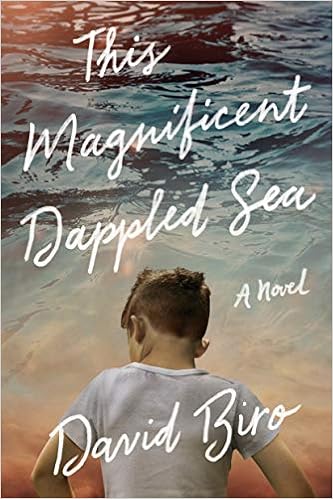
Review of THIS MAGNIFICENT DAPPLED SEA by David Biro

 3 Stars

In 1992, Luca Taviano lives with his grandparents Letizia and Giovanni “in Favola, a tiny, out-of-the-way town in the hills of Piedmont – a town of fewer than three hundred people.”  He is diagnosed with leukemia which does not respond to conventional treatment.  A nurse, Nina Vocelli, becomes very attached to the spirited 9-year-old boy and risks her job to seek out other medical options for him.  When a bone marrow transplant is recommended, it is discovered that Luca’s genes are typically found in Ashkenazi Jews.  In fact, a possible donor is found in Brooklyn, but Rabbi Joseph Neiman’s wife objects to her husband donating his bone marrow to an Italian; during World War II, her father was held in an Italian detention camp and her grandparents were shipped to Auschwitz because an Italian woman identified them as Jewish.  What is the connection between an Italian Catholic boy and an American Jewish man? 

The theme of the novel is that we are all connected.  Its title refers to the “magnificent dappled sea of bone marrow.”  After the transplant, Luca "felt like his marrow donor was living inside him, that all his blood donors were living inside him.”  But of course Luca is also connected to many others with whom he shares no genes.  Rabbi Joseph, who works with a priest and an imam to build bridges between religions, decides, “Even if he weren’t directly related to Luca Taviano – or the relatedness went too far back to track or even if there was never one at all and the genetic similarities happened by pure chance – they were still related.  The Catholic boy in Favola and the Jewish rabbi in Brooklyn shared important genes, and now they shared the same blood.  They might not be members of the same tribe as defined by today’s sectarian standards, but they were members of the same tribe on a more fundamental level.  Here was the perfect example of the blurring of boundaries that separated people:  we are all connected.”

Pacing is a bit of an issue, and there are gaps in plotting.  At times the plot moves very slowly as even minor events are described in detail.  Later, major events are merely mentioned and their impact on Luca left unexplored.  At the beginning, there is a great deal of focus on Nina’s affair with the married Dr. Matteo Crespi; later, we are told that Nina “moved in with Matteo” with no explanation of what happened to his wife.  One minute Rabbi Joseph’s son is behaving criminally and the next minute he undergoes a transformation?  Characters that feature fairly prominently just disappear from the plot.  And at least two characters manage to convince authorities to “make an exception” and “bend the rules”? 

It is obvious that the book was written by a doctor.  Who else would write passages like “An assistant cleaned the skin with iodine and handed the surgeon a fifty-cubic-centimeter syringe fitted with a long, large-bore needle” and the bone marrow “contained stem cells – large, purple spheres with thin blue rims that didn’t look much different from Luca’s malignant lymphoblasts” and “the blood cells began to materialize, red and blue and shades in between, different shapes and sizes, representing distinct lineages and stages of development.”  At times the tone is rather didactic:  “But on the spectrum of human sbagli [mistakes], there was a lot worse than Nina’s recklessness.  There were husbands who beat their wives, like Zev Saferstein; men who killed other men, like the Mafiosi who murdered the brave judges in Sicily; the old Italian woman who sold out Sarah Neiman’s grandparents for a few thousand lira; the Italian Fascists who worked with the Nazis, rounding up Jews and sending them to concentration camps.”

The novel tells an interesting story, but it would benefit from revision to tighten the plot.  More focus on only what is most important to the main narrative would strengthen the book’s impact. 

Note:  I received an eARC from the publisher via NetGalley.

Friday, December 4, 2020

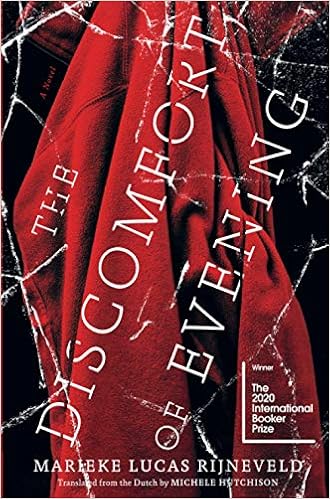
Review of THE DISCOMFORT OF EVENING by Marieke Lucas Rijneveld

 3.5 Stars

The title can be seen as an understatement because a reader will experience more than just brief discomfort when reading this book.  Opening the pages of the novel (the winner of the 2020 International Booker Prize) means entering a world of pain from which there is virtually no reprieve.

The Mulder family belongs to the strict Dutch Reformed Church.  When the eldest son Matthies dies after falling through the ice while ice skating, the family falls apart.  The parents retreat into silence so the remaining three children are left to deal with their emotions and confusion.  Ten-year-old Jas, the middle child, is the narrator describing growing up in the aftermath of loss and unexpressed grief.  Emotional turmoil is unspoken but becomes displayed in increasingly disturbing ways. 

The mother starves herself, eating less and less, whereas the father grows more distant from his family.  Jas comments that, “Mum and Dad are there, but at the same time they aren’t.”  Jas’ mother avoids touching her and her father doesn’t see her:  “He looks at the ground or up at the sky more than at the things at eye height.  At my current size I’m right between those things, and I’ll either have to make myself bigger or smaller to be seen by him.”  Jas remembers a comment:  “According to our teacher, eye contact isn’t necessary for love, touch is more than enough.  I wondered then what you should call it when both of them are lacking:  eye contact and touch.” 

Because the children are neglected, “Mum and Dad don’t see our tics.  They don’t realize that the fewer rules there are, the more we start inventing for ourselves.”  Unable to verbally express their emotions, they manifest them in physical terms.  Obbe, for example, obsessively bashes his head against his bedframe and starts abusing animals.  Jas sticks a thumb tack in her navel and develops chronic constipation.  Forbidden to discuss their brother’s death, they try to understand the mechanics of death and what Matthies might have experienced by performing experiments on animals and each other.  Though curious about death, they also fear it.  They perform sacrifices to keep death away from the family.  Anxious about when death might come for her, Jas (whose name means “jacket” in Dutch) refuses to take off her coat which she thinks of as her protective layer; in the pockets she stores “all the things I want to hang on to, the things I’m collecting to become heavier.”  As time passes, their behaviour becomes more and more disturbed; cruelty and acts of violence express the pain and loss not mentioned. 

Since Jas is the narrator, the language is appropriately plain.  Childish similes abound:  when cows are slaughtered because of foot and mouth disease, Jas describes a loader picking up the carcasses “like cuddly toys at the fair”; “I imagined the diarrhoea splattering onto the grass like the caramel sauce my granny poured onto the rice pudding”; when she blushes, “I feel my cheeks fill with colour like the circles after multiple-choice questions.”  The subject matter reflects Jas’ age as well.  As a young girl, she has limited knowledge of the world so often resorts to magical thinking:  if her pet toads breed, then her alienated parents might once again become intimate.  Like any pre-pubescent, she is fascinated by bodily functions and body fluids.  She and her siblings also have a natural curiosity about sex but it does not develop in a healthy way.  Since sex is a topic that is not discussed in the home, the children engage in sexual games and experiment with masturbation without recognizing what it is.  At times the narrative is disjointed and episodic but this lack of cohesiveness is also appropriate to the narrator.

This novel is certainly not for everyone.  It is dark and mournful.  Scenes of torture and abuse are graphically described - I was reminded of the work of the Dutch painter Hieronymus Bosch.  Readers should prepare themselves for an intense, unsettling book.

Monday, November 30, 2020

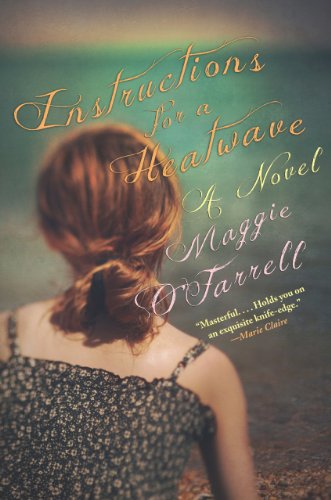
Review of INSTRUCTIONS FOR A HEATWAVE by Maggie O'Farrell

 4 Stars

In the summer of 1976, England is in the middle of a heatwave that has resulted in drought and water restrictions.  Robert Riordan, recently retired, goes out to buy a newspaper and doesn’t return.  Gretta, his wife, contacts their three adult children who return to their childhood home.  As they try to support their mother and figure out where their father went, they revisit and air resentments and grievances, and reveal secrets. 

It is not only Robert that needs to be found.  Each of the siblings needs to find him/herself.  Michael Francis, the only son, works unhappily as a teacher while his marriage seems to be disintegrating.  Monica, who has never wanted children, is married to an older man with two difficult daughters.  Aoife, living in New York, struggles as a photographer’s assistant because she is dyslexic, though she has managed to hide her illiteracy from everyone.  Monica and Aoife have not spoken in years because of a misunderstanding. 

What I found unsettling is the lack of urgency over Robert’s disappearance.  No one ever expresses real fear at his vanishing.  Wouldn’t someone worry that he was in danger, especially because he has always been so dependable and his behaviour so predictable?  His disappearance is obviously a catalyst for the unplanned family reunion and once all are together, their relationships take precedence and what has happened to Robert becomes a secondary concern. 

It occurred to me that Robert may have just wanted a reprieve from Gretta.  She is loud and voluble and a drama queen.  A hypochondriac and devoutly religious, she is difficult and demanding.  For the quiet Robert, living with her must not have been easy.  It turns out, however, that Robert has a lot of secrets which his family slowly uncover.

O’Farrell excels at characterization.  Each family member is complicated and flawed, in other words, very realistic.  Each is haunted by his/her upbringing and deserving of empathy; at the same time, the reader will often be frustrated by their behaviour.  Once reunited, they fall back into old patterns of bickering rather than communicating.

The use of the heatwave is very effective:  “a heatwave will act upon people.  It lays them bare, it wears down their guard.  They start behaving not unusually but unguardedly.  They act not so much out of character but deep within it.”  The rising temperatures parallel the increasing family tension.  The drought parallels the characters’ feelings of thirst, feelings that they are not being given access to the types of lives they want.   

The theme is that family ties may bruise as much as they bind, but it is important to forgive, regardless of the transgressions.  Robert’s attempts to forgive inadvertently lead his children to acts of forgiveness.

This family drama has useful instructions for all of us, regardless of the weather. 

Friday, November 27, 2020

NOVELS FOR THE BOOK LOVER ON YOUR CHRISTMAS LIST


Novels for the Book Lover on Your Christmas List

I wrote this article for my hometown newspaper: https://madvalleycurrent.com/2020/11/26/novels-for-book-lover-on-your-christmas-list/

Like most avid readers, I always mention books in my annual letter to Santa.  If you want to please a reader on your Christmas list, consider gifting one of these.  Or be Santa to yourself and buy one or more to help you through the long winter ahead.


Hamnet and Judith by Maggie O’Farrell

Very loosely based on the life of William Shakespeare and his wife, the book begins by imagining their courtship and the early years of their marriage and then focuses on their coping with a devastating tragedy.  An eloquent study of grief, it is one of the most emotionally powerful novels I’ve ever read.


The Pull of the Stars
by Emma Donoghue

Set in Dublin during the 1918 flu pandemic, this novel covers three days in a maternity ward for pregnant women who have contracted the flu.  The plight of poor women is highlighted, but readers will find much that is uncannily similar to the current Covid-19 pandemic.


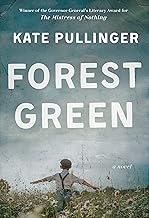
Forest Green
by Kate Pullinger

The protagonist, Arthur Lunn, is living on the streets of Vancouver.  Via flashbacks, we are told the story of how he came to be in this situation.  The novel examines how childhood trauma can shape a person’s life and reminds us that we should feel compassion for the downtrodden who all have their stories.


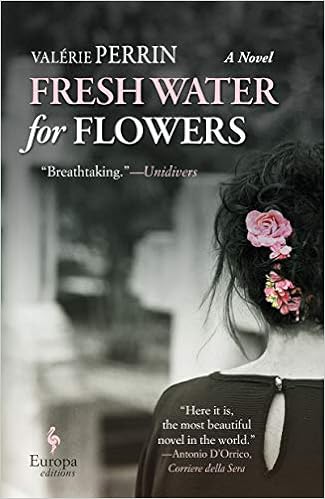
Fresh Water for Flowers
by Valérie Perrin

Violette, the caretaker of a cemetery in France, is visited by a man wanting to understand why his mother asked to be buried with a man unknown to her family.  As Violette sets out to solve that mystery, she examines her own life with the husband who has abandoned her.  This book has something for everyone:  mystery, tragedy, romance, humour, and a life-affirming message.


Miss Benson’s Beetle
by Rachel Joyce

A spinster schoolteacher abandons her job and travels to New Caledonia to find a legendary golden beetle.  Accompanied by a totally unqualified assistant, she sets off on an adventure which becomes a journey of self-discovery.  Though hilarious at times, the book also addresses serious topics and ends with a heart-warming message about friendship and second chances. 


Shuggie Bain
by Douglas Stuart

This book portrays the complex relationship between an alcoholic parent and a child.  Its bleakness and grittiness make this book not for the faint of heart, but it is breathtakingly realistic, empathetic, and powerful.  The novel recently won the prestigious Booker Prize and deservedly so. 


The Mystery of Henri Pick
by David Foenkinos

This feel-good book, part comedy and part mystery with a dash of romance, is for lovers of books.  In a library which houses manuscripts rejected by publishers, a young editor finds a literary gem purportedly written by a now-deceased pizzeria owner who supposedly never read.  Once the book is published, interest in this unlikely writer rises to a fevered pitch, and the lives of many people are changed. 


Snow
by John Banville

Near Christmas in 1957, an Irish priest is brutally murdered.  Inspector Strafford, the detective in charge of the investigation, faces obstruction from the Catholic Church which publicizes the death as an accident.  This police procedural becomes a commentary on Ireland’s social and religious history.


Helen and the Grandbees
by Alex Morrall

Helen, the narrator, is mentally fragile because of childhood trauma.  She copes by trying to forget her past.  When her daughter Lily, taken away by social services twenty years earlier, finds Helen and starts prodding for information about Lily’s past, Helen becomes very anxious and must make some difficult decisions.  This book is outstanding for its sensitive examination of mental illness. 


Redhead by the Side of the Road
by Anne Tyler

Micah Mortimer lives alone, keeps to himself, and has a routine etched in stone.   Unfortunately, people disrupt his life and shatter his comfortable existence.  During the pandemic, many aspects of our lives have become chaotic so it’s interesting to see Micah learning to live with disorder. 


Complete reviews of all these books can be found at https://schatjesshelves.blogspot.com/.

                                        Happy Holidays and Happy Reading!


Thursday, November 26, 2020

Review of FRESH WATER FOR FLOWERS by Valérie Perrin

 4.5 Stars

I’m not sure where I first heard of this title, but I’m so glad I did.  It’s magical.

When we encounter the protagonist, Violette Trenet, she is 49 years old and the caretaker of a cemetery in Bourgogne in east-central France.  Abandoned at birth and shunted between foster home placements, she married young.  Her partner, the handsome Philippe Toussaint, soon showed that his “birdsong didn’t live up to the plumage” because he was lazy and manipulative and a philanderer.   Though Violette’s life brightened with the birth of a daughter Léonine, the marriage was not a happy one.  Philippe left the work to his wife and daily went for motorbike rides; twenty years earlier, shortly after they took over the cemetery job in 1997, he left and didn’t return.  Violette doesn’t mourn his absence.

One day, a police detective Julien Seul arrives at the cemetery with a mystery.  His mother Irène, who recently passed away, requested to have her ashes buried with Gabriel Prudent, a man unknown to Julien but buried in Violette’s cemetery.  This encounter between Julien and Violette leads to uncovering the story of Irène and Gabriel but also leads to Violette examining her life with Philippe and discovering what happened to him. 

Violette is a very interesting main character.  She has many strengths:  she teaches herself to read, shoulders the work of two adults, raises her daughter as a virtual single parent, and makes a good life for herself after tragedy.  Her kindness leads to the creation of wonderful friendships.  She serves as a confidante and provides comfort to the bereaved:   “I get tears, confidences, anger, sighs, despair.”   She treats the deceased with respect:  “Maintaining it is all about caring for the dead who lie within it.  It’s about respecting them.  And if they weren’t respected in life, at least they are in death.  I’m sure plenty of bastards lie here.  But death doesn’t differentiate between the good and the wicked.  And anyhow, who hasn’t been a bastard at least once in their life?”  She does her job with love and pride, even recording everyone’s funeral and tending graves, tasks she isn’t required to do:  “’if we had to do only what was part of our job, life would be sad.’”  She is someone whom many, including the reader, come to admire. 

The book has something for everyone.  There’s more than one mystery with several twists.  There’s a heartbreaking tragedy.  There’s romance.  And despite the death and sadness, there is humour.  A scene describing how Violette scares away some misbehaving young people from the cemetery is hilarious.  And the overall message is life-affirming; at one point Violette falls into a deep depression but eventually she returns to tending her garden and gives “fresh water to the flowers.”   She decides, “My present life is a present from heaven.  As I say to myself every morning, when I open my eyes.  I have been unhappy, destroyed even.  Nonexistent.  Drained.  I was like my closest neighbors, but worse.  . . .  But since I’ve never had a taste for unhappiness, I decided it wouldn’t last.  Unhappiness has to stop someday.”

Each chapter begins with an epitaph which could appear on a tombstone:  “The darkness has to intensify for the first star to appear” and “You’re no longer where you were, but you’re everywhere that I am” and “May your rest be as sweet as your heart was kind” and “Sleep, Nana, sleep, but may you still hear our childish laughter up there in highest Heaven” and “The leaves fall, the seasons pass, only memory is eternal.”

I loved the writing style.  I was hooked from the very beginning:  “My closest neighbors don’t quake in their boots.  They have no worries, don’t fall in love, don’t bite their nails, don’t believe in chance, make no promises, or noise, don’t have social security, don’t cry, don’t search for their keys, their glasses, the remote control, their children, happiness.  . . .  They’re not ass-kissers, ambitious, grudge-bearers, dandies, petty, generous, jealous, scruffy, clean, awesome, funny, addicted, stingy, cheerful, crafty, violent, lovers, whiners, hypocrites, gentle, tough, feeble, nasty, liars, thieves, gamblers, strivers, idlers, believers, perverts, optimists.  They’re dead.”  And some of the similes are wonderful!  For example, when she and Philippe are barely speaking, Violette comments, “our dialogues were as flat as Tutankhamun’s brain scan.”  And her unpleasant and unhappy in-laws she describes as “Two gherkins in a jar of vinegar.”

This book, a meditation on life, love, and loss, is wonderful.  At turns heart-breaking and heart-warming, it will not leave the reader unaffected.