Ranked a Top Canadian Book Blog
Twitter: @DCYakabuski
Facebook: Doreen Yakabuski
Instagram: doreenyakabuski
Threads: doreenyakabuski
Substack: @doreenyakabuski
Bluesky: @dcyakabuski.bsky.social

Friday, May 13, 2022

Review of THE MEMORY KEEPER OF KYIV by Erin Litteken (New Release)

 3.5 Stars

I recently read Red Famine:  Stalin’s War on Ukraine by Anna Applebaum (https://schatjesshelves.blogspot.com/2022/03/review-of-red-famine-stalins-war-on.html), a book which Erin Litteken recommends in her Author’s Note at the end of The Memory Keeper of Kyiv.  As I read Litteken’s novel, I felt like she had taken note of all the tragedies Ukrainians experienced during the famine (as described by Applebaum) and had all these tragedies happen to the novel’s Shevchenko family or people close to them. 

The novel has two storylines which are narrated in alternating chapters.  In September 1929 in Ukraine, 16-year-old Katya is living happily with her family (Tato, Mama and sister Alina) and falling in love with Pavlo, a neighbour.  Then Stalin’s activists arrive to persuade villagers of the advantages of collectivization.  From then until July 1934, various of Katya’s relatives are arrested and deported or executed or starved.  In 2004 Illinois, 31-year-old Cassie is grieving the death of her husband.  Anna, Cassie’s mother, convinces Cassie and her 5-year-old daughter Birdie to move in with Bobby, Cassie’s 92-year-old grandmother, to help care for her.  Bobby gives Cassie a journal she kept when she was a young girl; because it is written in Ukrainian, Cassie enlists the help of Nick Koval, a handsome neighbour, to translate it with her.  Cassie learns about her grandmother’s experiences during the Holodomor. 

Katya’s sections are compelling.  They are not an easy read because people suffered in unimaginable ways.  If I had not read the non-fiction book Red Famine, I might have thought that some of the events described in the novel are exaggerated and unbelievable. 

Cassie’s chapters are much less engrossing.  She is in mourning, but compared to Katya and what she endures, Cassie seems so whiny and full of self-pity.  Her story has so many characteristics of a Hallmark movie:  a dead spouse, a single mom, a perfectly behaving child, and a handsome, single neighbour.  Cassie’s chapters do provide a break from Katya’s heart-breaking story, but after a while, I just became impatient. 

Part of the problem is that Cassie is irritating because she is so clueless.  She studied history in university and mentions trying “for years to interview Bobby for different research papers”; however, when her grandmother didn’t co-operate, she never bothered to research life in Ukraine during the time her grandmother would have lived there?  Cassie doesn’t know that Katya is Bobby?!  Cassie never heard the Christian name of her grandfather?  (And Anna didn’t know her father’s Christian name?!)  When Cassie is given Bobby’s journal, she doesn’t seem so anxious to learn what is in it. 

There are a number of issues that bothered me.  Cassie’s narrative really slows down the novel’s pace.  Then, because readers learn Katya’s story before Cassie does, there is needless repetition when she catches up.  The present timeline is very predictable; from the moment Nick is introduced, the narrative arc is obvious.  Another problem is that secondary characters appear and then disappear; they’re used only to advance the plot and are then dismissed.  Olha’s wedding opens Katya’s story, but her fate is never mentioned.  Vasyl appears, disappears, and then reappears at a convenient time.  Prokyp is another such plot device.  Is the sentimental Epilogue really needed?  Finally, how many naps do Birdie and Bobby take?  To remove them from events, the author has then constantly taking naps.

The theme is clearly stated:  “’people can move on from loss.  You can still have a life, even when you think there’s nothing left, because there is always something to live for.’”  This is the lesson Bobby learned and the lesson she tries to teach her granddaughter. 

Despite its literary weaknesses, this is an important novel because it shows the horrors of the Holodomor in a more emotionally compelling way than non-fiction might.  It also provides a perspective on the relationship between Russia and Ukraine, and may give one reason why Ukrainians are fighting so bravely and so determinedly against the Russian invasion. 

Note:  I received a digital galley from the publisher via NetGalley.

Tuesday, May 10, 2022

Review of THE COLOR OF OUR SKY by Amita Trasi

 3 Stars

This novel is a female version of The Kite Runner set in India; it focuses on the friendship between two girls, Mukta and Tara.  Mukta is the Hassan character and Tara is Amir in Khaled Hosseini’s novel.

Born to a temple prostitute, Mukta is intended to follow her mother’s profession, but she is rescued and moves into an upper-class household with a daughter Tara who is two years younger than Mukta.  The two girls develop a strong bond over five years.  Then, when Mukta is fifteen, she is kidnapped and Tara moves to the U.S. with her father.  Eleven years later, Tara returns to India determined to find her childhood friend.

Chapters alternate between the two girls.  Mukta narrates the past, beginning in 1986 when she is living with her mother and grandmother in a village which adheres to the Devadasi tradition, which “dedicates” girls to a life of sex work in the name of religion.  Tara narrates the present, beginning in 2004 when she comes to India to begin her search.  Eventually the two plotlines converge. 

The plot is fairly predictable.  What is intended to be a twist is not really one because Mukta’s description of past events clearly foreshadows the revelation, especially when coupled with Tara’s description of her father’s actions.  I was also not surprised by the romance element or the rather melodramatic ending. 

Tara is not a character with whom I could connect.  She comes across as self-centred; her search for Mukta is not so much motivated by love as by guilt and a need for redemption.  The constant repetition of her feelings of guilt becomes tiresome, especially when it is obvious almost from the beginning that she is not responsible for Mukta’s fate.  Tara certainly does not seem deserving of Mukta’s trust and loyalty. 

Mukta is the one who possesses all the positive traits.  She is humble and kind and unfailingly loyal.  Obviously, her tendency to almost deify Tara stems from Mukta’s low self-esteem.  Despite Tara’s mistreatment of her, Mukta focuses on Tara as her saviour.  Considering all that Mukta experiences, she forgives easily and always remains optimistic.  In fact, she becomes almost unbelievable in her goodness. 

Another issue with characterization is that secondary characters are often just dropped from the narrative with no explanation.  Once they have served their purpose, they are simply dismissed.  For instance, Madam shows herself to be very determined to keep her property, but we are supposed to believe that she will not pursue Mukta or Asha?  A grandmother appears for a chapter and then, for all intents and purposes, disappears?

I learned a lot more about India’s caste system, especially the Devadasi tradition.  I was inspired to do further research and discovered the impact of British rule:  traditionally Devadasis were celibate but the loss of their means of support and patronage when kings, the patrons of temples, lost their power forced them to become temple prostitutes.  Colonialism has been such a scourge for so many!

This was an audiobook for me, and I must admit it was an enjoyable companion on morning walks.  I was sufficiently interested to keep listening, though it is predictable and not without its flaws.  Definitely, on the escapist/interpretive spectrum, it is much closer to escapist literature.

Friday, May 6, 2022

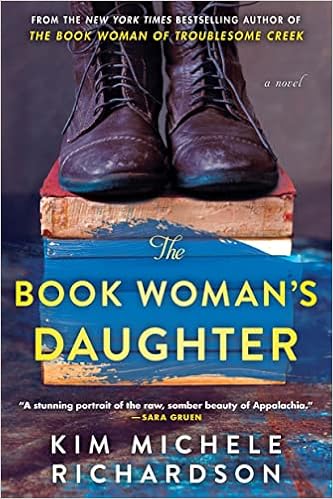
Review of THE BOOK WOMAN'S DAUGHTER by Kim Michele Richardson (New Release)

 2.5 Stars

This is a sequel to The Book Woman of Troublesome Creek.  Like most sequels, it is a disappointment.

When the parents of sixteen-year-old Honey Lovett are imprisoned for breaking miscegenation laws, Honey’s future is in jeopardy.  Wanting to avoid going to an orphans’ home or being sent to the House of Reform, she needs a guardian.  When that arrangement is not an option, she decides to seek emancipation which would leave her free and independent.  To show she is capable of caring for herself, she follows her mother’s footsteps and becomes an outreach librarian, a job which brings her into contact with new friends and enemies. 

The Book Woman of Troublesome Creek reveals so much about the Blue People of Kentucky, the Kentucky Pack Horse Library Project, and life in Appalachian Kentucky.  The Book Woman’s Daughter, however, offers few new historical elements; it merely recycles information already known to readers of the first book.

The one addition is female characters in male-dominated jobs:  Pearl is a fire tower ranger and Bonnie is a coal miner.  Unfortunately, these characters end up seeming like mere plot devices to emphasize the struggles of women living in a world dominated by men.  The book’s message is that “’Laws about females never make a lick of sense because they’re made and run by men and meant to keep us in bondage’” so women must be courageous to stand up against injustice and inequality.

There were several elements that irritated me.  First there’s the repetition:  How many times must we be told that Junia is stubborn and doesn’t like men?  How many threatening encounters must Honey have with Perry Gillis once he is clearly identified as her enemy?  Then there are the plot holes:  The office of Honey’s lawyer is open after 6 p.m. on a Sunday?  Honey writes down “the directions for the nurse to find Retta’s home” but doesn’t leave the note and has to return later?  Why would the doctor’s wife rely on Honey for books since there is a public library in town?  What’s with the pre-occupation with clean clothes:  Before spending a night with Doc and his wife, Honey goes home to “’pack clean clothes’” and then tells Doc that she “’packed my clean dress’” but then finds that Doc’s wife laundered and folded her clothes overnight?

Finally, there’s the portrayal of Honey.  The author wants her to be a brave heroine so she has Honey save a child.  The author wants her to be intelligent so Honey, not her lawyer, first mentions emancipation.  But then she is so stupid that she doesn’t tie up Junia, a mule who tends to run away?  And after overhearing a conversation which clearly indicates the speakers’ intentions, she wonders “what Gillis and his kin were up to”?  Honey’s father gives her a clear answer about dating, but she says, “’I haven’t received permission yet.  I might need to call Papa again’’?!  She will disobey Gillis and give his wife an “immoral” book, thereby endangering herself and Guyla Belle, but won’t date without permission?  What is particularly annoying is that Honey, though she claims she loves books, seldom reads! 

Having really liked The Book Woman of Troublesome Creek, I looked forward to The Book Woman’s Daughter.  However, I found little to enjoy.  The narrative arc is obvious from the beginning; the protagonist behaves inconsistently though we are to admire her; and scenes have unnecessary melodramatic flourishes.  The first book offers substantial historical information but, other than brief references to Moonlight Schools, Hallie Daggett and female fire lookouts, and the Frontier Nursing Service, the second book tediously repeats historical facts from the first.  I think readers might enjoy The Book Woman’s Daughter more if they’ve not read The Book Woman of Troublesome Creek.

Note:  I received a digital galley from the publisher via NetGalley.

Tuesday, May 3, 2022

Review of ALL THE LOVERS IN THE NIGHT by Mieko Kawakami (New Release)

3 Stars

Though I’m not a reader who needs a plot-driven story, this novel’s slow pace left my mind numbed. 

Fuyuko Irie, 34, is a freelance proofreader in Tokyo.  She describes the entirety of her life in a few words:  “I live alone.  I’ve been living in the same apartment forever.  . . . I like to go out on a walk once a year on my birthday . . . I have no friends to talk to on a regular basis.”  Her life revolves around her work.  Seeing her reflection one day, she sees “the dictionary definition of a miserable person.”  The person with whom she has the most contact is Hijiri Ishikawa, an editor whose personality and lifestyle are totally different.  Desperately lonely, Fuyuko starts to drink to ease her discomfort in the outside world.  During this time, she meets Mitsutsuka, a physics teacher who is 24 years her senior, with whom she establishes a friendship. 

The glacial pace is the result of monologues.  There are the lengthy monologues delivered by secondary characters.  Hijiri, for example, goes on and on, speaking virtually non-stop because Fuyuko says little.  When Fuyuko meets Noriko, a former classmate, and Kyoko, a former colleague, it is these women who dominate the conversations with seemingly endless discussion of topics that interest them.  Exchanges with Mitsutsuka are vague philosophical discussions or focus on the physics of light and colour.  And then Fuyuko’s internal monologues analyzing her thoughts and emotions become repetitive and tedious.  More than once I found my eyes glazing over. 

The book is a character study of its protagonist.  We learn that Fuyuko was always an introvert who was socially awkward, but a traumatic event leaves her fragile self-esteem in tatters.  She becomes totally passive, eventually admitting that “I’d done nothing with my life, glossing over it all.  I was so scared of being hurt that I’d done nothing.  I was so scared of failing, of being hurt, that I chose nothing.  I did nothing.”  I appreciated that she is a dynamic character who learns that “’we can forget pretty much anything’” and a pain can exist in memory “growing weaker by the day” so it can eventually be lost entirely. 

Because of its themes of isolation and loneliness, this novel reminded me of Eleanor Oliphant is Completely Fine by Gail Honeyman.  Eleanor's transformational journey towards a fuller understanding of self and life is more compelling. 

Note:  I received a digital galley from the publisher via NetGalley.
Sunday, May 1, 2022

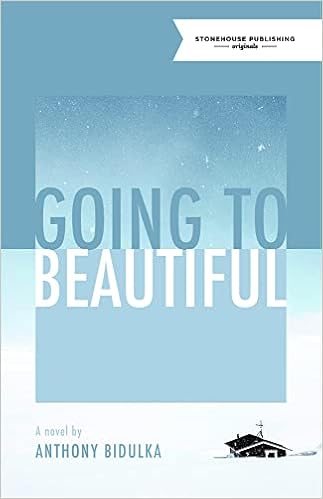
Review of GOING TO BEAUTIFUL by Anthony Bidulka (New Release)

 4 Stars

This is my first time reading an Anthony Bidulka book, though a couple of friends have raved about his Russell Quant series.  Having been impressed with Going to Beautiful, I think I’ll be checking out his other offerings. 

Jake Hardy, a celebrity chef, is left reeling after the sudden death of his husband of thirty years, Eddie Kravets.  After a difficult year, Jake finds himself travelling to Beautiful, Saskatchewan, where it seems that Eddie was born.  Accompanied by his friend and neighbour Baz, “a transgender bon vivant socialite,” Jake sets out to find Eddie’s family and to learn why Eddie never spoke of his family or hometown.   Beautiful turns out to be a small town near Saskatoon with close-knit residents mostly of Ukrainian descent.  From these residents, Jake learns about Eddie’s family but he also discovers dark secrets kept hidden for decades. 

From the beginning I was charmed by Jake, the narrator.  His voice and sense of humour are so appealing.  He is suffering with the flu but describes himself as being “felled by the plague, the severity of which had heretofore been unknown to mankind.”  To elicit sympathy and extort some mint chocolate ice cream, he leaves an “impressive pile of decongestants (oral and nasal), antihistamines, analgesics, antipyretics, cough suppressants, and expectorants” for Eddie to see.  Awakened by a doorbell, he rages, “How dare Eddie allow someone to use the doorbell when I was on my deathbed?  I cursed the ruckus and made a mental note to begin divorce proceedings as soon as I was better.”  Jake is immediately relatable:  if the reader is not like Jake, he/she will know someone like him. 

Jake is not the only delightful character.  Baz (Sebastienne Venkata Santhosh Kumar Sengupta) is a woman I’d love to meet.  Not only is she the type of loyal and trustworthy friend everyone needs, but her idiosyncrasies endear her to the reader.  How wonderful it is that the protagonist (55 years old) and his sidekick (78 years of age) are older people.  The various inhabitants of Beautiful are unique and well-developed so the reader knows what to expect whenever one reappears.  Gwen, for instance, will be having a drink and her conversation will be smattered with off-colour jokes and profanities.

Bidulka perfectly captures small-town life.  Having grown up in a small town, I know how well everyone knows everyone, how quickly news and gossip spread, and how townspeople will come together to lend a helping hand.  I couldn’t help but get nostalgic when I read about the three types of cookies Jake is served during a visit to a farm.  And I’m craving some chokecherry jam!

The author’s love of the prairies resonates in his descriptions, and his pride in his Ukrainian heritage is palpable.  I grew up in a town where most people were of Kashubian descent so my first language was Kashubian.   Bidulka includes snippets of Ukrainian in the novel, and I was amazed by how similar Ukrainian and Kashubian are; I easily recognized phrases like Yak cya mahyesh? and Xto tahm? and words like vdoma, sveenya, dobrey, and dyakuyu.

This book has something for almost everyone.  There’s more than one mystery about Eddie, there’s romance (a wonderfully unconventional relationship), and there’s ample humour.  I particularly loved the gentle, subtle humour:  a gathering of men is “like a low-budget, male version of The View”; designer gloves and scarves not intended for cold prairie winters “weren’t worth the tissue paper they’d been nestled in when we bought them”; and a convent on first appearance might be from The Sound of Music or The Rocky Horror Picture Show or the Bates Motel.  A flirtatious farmer elicits a response from Jake:  “Old MacDonald had more than a farm, he had moves.”  And there’s Jake Hardy’s tongue-in-cheek comment:  “I was someone looking for a quiet place to meet with Judah Kravchenko, not one of the Hardy Boys.”

Though my review is overwhelmingly positive, I must point out that the book is not perfect.  I question the inclusion of Sister Genowefa’s story; that subplot seems unnecessary.  What could have been included is a resident who was not so welcoming and open-minded.  “Beauty can disguise a great many ugly things,” but homophobia and transphobia don’t exist in Beautiful?  Though it makes for a satisfying ending, the epilogue does wrap things up very neatly, almost too neatly.  However, I don’t mind if these objections are dismissed as caviling. 

I loved the affirmative messages in the novel:  it applauds people taking time “to celebrate the abundance of life and practice gratitude”; it recommends that one “lead with joy and joy will follow”; and it reminds us that “no matter how dark a soul, no matter how tortured, everyone deserves love.”  The world is not totally devoid of hope and goodness. 

This is a thoroughly enjoyable read.  I highly recommend it. 

Thursday, April 28, 2022

Review of FREEFALL by Jessica Barry

2.5 Stars 

This was the book read for our latest book club meeting.  It was not one of our top choices and it is certainly not something I’d recommend to other readers or book clubs.

Allison Carpenter survives a plane crash in the Colorado Rockies.  The plane was piloted by Ben Gardner, her fiancé, but he dies in the accident.  Instead of waiting for rescue, Allison decides she must run because she is certain someone nefarious will be looking for her.  By the time authorities find the wreckage, fire has consumed it.  Though only the pilot’s body is found, authorities are convinced that Allison died.  In Owl’s Creek, Maine, Maggie is devastated by the news of her daughter’s death.  They had been estranged for the last two years and Maggie didn’t even know about Allison’s engagement to a wealthy pharmaceutical executive.  She has difficulty accepting her daughter’s death and begins researching her daughter’s life to learn as much as she can about her past two years. 

The novel is a quick read.  Short chapters alternate between Maggie and Allison.  The reader follows Allison’s struggle to survive during which she flashes back to her life over the last two years.  Conveniently, these flashbacks are in chronological order!  Maggie’s chapters show her actions after learning about her daughter’s fate; she too has flashbacks, mostly focused on the reasons for the estrangement. 

There are also a few brief sections from the point of view of the man who is pursuing Allison.  Though he is known only as The Man, he has almost superhuman abilities.  He knows exactly where to find the plane wreckage before authorities locate it and has no difficulty following Allison.  He even knows when someone assists her. 

And The Man’s behaviour is not the only thing that is unbelievable.  Allison’s survival is almost miraculous.  For example, she is supposedly injured quite badly with a gash on her left leg that goes “down to the bone,” yet she runs all night before applying rubbing alcohol to it?  Then there are the other illogical actions.  If you want to talk to someone, is the most logical option to simply hang around that person’s former workplace?  A person is killed in a motel room where the body would easily be found and there are no consequences?  The plot is shallow and full of predictable twists.  For instance, the first page includes such a description that gives such an obvious clue that the appearance of a person towards the end is not in the least unexpected.    

Allison’s predicament didn’t arouse my sympathy.  She just strikes me as vain and shallow.  She falls in love with Ben because he is handsome and rich.  Despite what her mother thinks, Allison seems to have few principles; those she has, she dispenses with to become Ben’s arm candy.  She lets herself be manipulated in such obvious ways.  I understand that the journey she undertakes is also a journey to find herself once again, but we are supposed to believe she lost herself so quickly?  Does she really believe she might be able to land a plane because she has seen Ben do it so often?!

There are elements that particularly irritated me.  Why, for instance, is everyone’s perfume or cologne described:  “There was a smell coming off him, something musky and citrusy” and “I could smell hair spray mixed with perfume. Shalimar” and “the faint traces of her perfume, bergamot and vanilla” and “that aftershave of his, a spicy musk undercut with the sharpness of citrus”?  What’s with the repetition that older people don’t understand technology:  “Most of my friends didn’t understand how the internet worked and only the most savvy had Facebook accounts”?  I dislike when novels rely on portraying police or other authorities as incompetent.  When Maggie is told that the coroner has declared Allison dead, she thinks, “It felt negligent to me, and reckless.  How could they declare my daughter dead without a single scrap of evidence?”  Exactly!  This would not happen.  And the author doesn't know that DNA analysis is used to identify bodies?  

The novel does have some depth in its exploration of a mother-daughter relationship and society’s expectations of females, but this is not sufficient to raise the quality of the novel for me.  There are just too many plot holes and too little verisimilitude. 

Monday, April 25, 2022

Review of THE SHOT by Sarah Sultoon

 4 Stars

Though set at the beginning of the 21st century in London, South Asia, the Middle East, and Northeast Africa, this book is very topical especially because of the war in Ukraine. 

The book focuses on two characters who work for the same news organization based in London.  Samira (Sami) Nassar is a young, inexperienced graphics producer working the nightshift who aspires to become a field journalist.  Kris is the network’s star cameraman who has been to various combat zones.  Because Sami can speak some Arabic, she finds herself paired with Kris and sent to Afghanistan, Iraq, and Sudan.  Sami quickly proves to have an instinct for stories which show the impact of war on ordinary people in the war-torn regions.  She sees first-hand the darkness of war but fails to see its impact on those with whom she works. 

Chapters alternate between Sami (first-person narration) and Kris (third-person narration).  The two are very different personalities.  Sami is idealistic, believing she can make a difference in the world by “giving voice to the voiceless, holding power to account, [and] shining a light into the darkness.”  Ambitious, she is anxious to prove herself.  Kris, the seasoned photojournalist, is cynical about what journalists can accomplish but finds himself unable to adjust to life away from combat zones.  Even after being injured, he yearns to return to conflict regions.  What Sami and Kris share are childhood traumas; though different in nature, these traumas become strong motivators which explain their choices. 

The novel is not an easy read because it depicts the horrors of war, especially its impact on civilians.  Bibi, Ahmed, and Yousra, three people Sami interviews, have stories of overwhelming loss which cannot but move the reader to tears.  But the book also focuses on the emotional damage suffered by war correspondents in the face of what they see and their helplessness to help the victims.  People can turn off the news, but Kris says, “’I can’t turn it off.  I can never fucking turn it off . . . I can’t even turn it down.’” 

The book suggests that the news industry is not always supportive of those who witness horrors while gathering news.  For example, journalists risk their lives to bring viewers images and stories of people’s suffering “only for the paymasters to look away when they brought home the evidence.”  Kris speaks of a tragedy he recorded:  “We told everyone about that, the world even screamed bloody murder, but nobody did a damn thing about it, not a one.  And the business made more money off my pictures than went to the relief effort.”  The author suggests that news companies want impactful stories without recognizing the cost to the people collecting those stories.  Since Sarah Sultoon is an award-winning journalist and international news executive at CNN with extensive experience in conflict zones, her perspective is enlightening. 

My interest never wavered.  The plot has considerable action and suspense.  Often I experienced a feeling that something was not right, but I didn’t always pay sufficient attention and so I was shocked by what is revealed near the end.  Of course, thinking back, I realize I shouldn’t have been because there are hints.  I think a re-reading would emphasize the author’s masterful subtlety. 

Promotional material for the book claims “You'll never look at a news report in the same way again.”  I agree.  When I look at war footage, I’ll be thinking of more victims than just those pictured.  This is a thought-provoking book which I highly recommend to book clubs because there is so much to discuss.  The book even ends with an invitation to the reader:  “But who is really to blame?  Where does the true fault lie?  You decide.  You’ve got all the facts now.”  I will be giving these questions more thought, but I do know for certain that this is one excellent book.