Ranked a Top Canadian Book Blog
Twitter: @DCYakabuski
Facebook: Doreen Yakabuski
Instagram: doreenyakabuski
Threads: doreenyakabuski
Substack: @doreenyakabuski
Bluesky: @dcyakabuski.bsky.social

Monday, May 22, 2023

Review of OVERKILL by Vanda Symon

3 Stars

I decided it was time to find a new mystery/detective series to listen to on my morning walks and opted for this book, the first in the Sam Shephard series set in New Zealand.  I read Symon’s Faceless last year and really liked it so I thought I’d check out her police procedural series. 

The body of Gabby Knowes is found on the riverbank in Mataura.  She left her young daughter Angel and a farewell note for her husband Lochie at home, so suicide seems to be the logical conclusion.  From the prologue, the reader knows that she was murdered, and it doesn’t take Sam Shephard, the sole-charge police constable in the rural town, to determine that Gabby is a murder victim.  Things are complicated, however, because Sam and Lochie were in a long-term relationship before their breakup and Lochie’s subsequent marriage.  Because of this prior relationship, she is suspended from duty and is added to the list of suspects.  Undeterred, she pursues the case on her own.

Because this is the first installment in the series, character development is key.  Sam is young and inexperienced, and that definitely affects her behaviour.  I found it difficult to believe that she doesn’t inform her superiors of her past relationship with Lochie.  And her failure to secure the house suggests a lack of knowledge about proper procedure.  She is eager and that’s a plus, but she tends to be reckless.  Once she has identified the murderer, she goes alone to confront him?!  I loved her feisty attitude, though her outspokenness does get her into difficulties with higher-ranking officers. 

Sam does let her personal feelings affect her investigation.  She still seems to have feelings for Lochie and seems jealous of Gabby.  Fortunately, Sam does show some personal growth, admitting that she behaved inappropriately after the breakup and may have misjudged Gabby.  The role of Sam’s roommate Maggie seems to be to call out Sam on her sometimes immature behaviour. 

The book begins on a high note.  Unfortunately, the same level of tension is not achieved afterwards.  There is actually not much suspense until the final scene.  Some scenes, like Sam’s trying to change a flat tire go on and on unnecessarily.  The motive for the murder seems a little unconvincing, though perhaps that’s the reason for the title. 

The portrayal of life in rural New Zealand and the book’s touches of humour made me think of The Brokenwood Mysteries, a television series set in a small town in the countryside of New Zealand.  The protagonist is Detective Inspector Mike Shepherd so even the names are similar. 

This is a fairly standard police procedural.  I’m hoping that Sam shows less impetuosity and more maturity in subsequent titles. 

Thursday, May 18, 2023

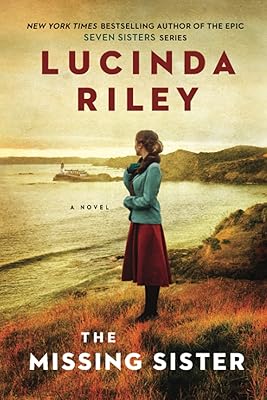
Review of THE MISSING SISTER by Lucinda Riley

 2 Stars

This is the seventh book in The Seven Sisters series to which I have been listening on my morning walks.

Six girls were adopted by Pa Salt, an ultra-wealthy man.  After he dies, each daughter is given a letter and a clue to her true heritage.   Each daughter’s journey is the subject of a novel.  This one is devoted to the seventh sister, known as the missing sister because Pa Salt never found her. 

The sisters are given a clue, a star-shaped emerald ring, which they are told will identify the missing sister.  They believe her name is Mary McDougal, and their search for her takes them to New Zealand, Canada, England, France, and Ireland.  Interspersed with their goose chase is Mary’s story.  Having fled Ireland 37 years earlier, she decides it is time to find some answers to questions that have troubled her for all that time. 

Mary, known as Merry, is not an engaging character.  She is such a bland personality.  She is almost 60 years of age, yet she has been running away for over half her life and has made no effort to determine if her fears are baseless.  She was given a diary to read but didn’t bother to read it in all that time?  She is constantly feeling overwhelmed:  every time she receives a new piece of information, she needs a drink and/or a nap.  How many times must we be told about how tired she is?  She constantly tells her son and daughter that she’ll explain things to them later.  I wanted to yell at her to grow a spine!

There are some ridiculous plot points.  The way that the sisters set out to find Mary makes no sense.  Instead of chasing her around the world, why not send an email explaining the situation?  The globetrotting seems to have been included so that each sister can take part in the hunt.  Of course their intense desire to drag a person who has no knowledge of their family to a memorial ceremony for a man she never knew is a bit bizarre. 

And the sisters come across as so stupid.  They keep insisting that Mary-Kate, Mary’s daughter, must be the missing sister.  Yet Mary is the one who owned the ring, though she gifted it to her daughter.  The fact that Mary is nicknamed Merry (to suggest Merope, one of the seven Pleiades) doesn’t give them pause to think?! 

The book is needlessly lengthy.  We are given the diary of Nuala Murphy, a young woman in 1920s Ireland.   In the previous novels, such historical documents prove to be connected to a sister’s biological family.  That is not the case here, so is the author just giving readers a history lesson about the country of her birth, specifically the Irish War for Independence from the British?  There’s a lot of information about a family who adopted Mary, so why is there so little information about Pa Salt, the man who adopted the sisters?  Don’t get me started on how little the adopted sisters know about their father!

There seems to be a lot of padding.  Every sister has to be given her moment in the spotlight and her story repeated.  So many trivial conversations should have been edited.  It’s not just what the sisters talk about, it’s their forced and unnatural way of talking that is annoying.  Dialogue is not the author’s strong suit.  And would a mother who is nursing be drinking so liberally and asking a pregnant woman to join her?

I dislike the cheap literary devices used.  At the beginning, Mary doesn’t mention the names of the important men in her life (Ambrose, Bobby, Peter) and the nature of their relationship with her.  I guess this vagueness is supposed to create suspense.  Then there’s the convenient disappearance of the family lawyer, Georg Hoffman.  He just can’t be reached for the entire time?!  I wouldn’t want him for my lawyer.  I hate allusions that are supposed to suggest a non-existent thematic depth:  are we not supposed to notice that Bobby’s surname Noiro is Orion spelled backwards?  A wrong address seems a too-easy explanation for a no-show.  And a 37-year fear is dismissed in a few sentences of dialogue.

I think the author wanted to portray the sisters as strong women so why did she feel it necessary that every female have a love interest?  Even the widowed cannot be left long without a male companion.  In this book alone, Ally, Mary-Kate, and Mary are paired with possible romantic partners. 

Readers looking for closure to the series will not find it here.  The missing sister is found, but there are so many new questions.  And does it make sense that Pa Salt would leave his story with the missing sister who might never be found and so would not be able to tell the other sisters?  The last book in the series, Atlas:  The Story of Pa Salt was released last week.  I’m conflicted about whether I can listen to this last book.  I can only hope that the author’s son, Harry Whittaker, will have avoided some of the weaknesses found in the previous installments.   

Monday, May 15, 2023

Review of POD by Laline Paull

3 Stars

I came across this unusual novel on the longlist for the 2023 Women’s Prize for Fiction. 

The novel is written from the perspective of various sea creatures including Ea, a spinner dolphin who cannot spin; Google, a captive military-trained bottlenose dolphin; a humpback whale; a humphead wrasse; and a remora which attaches itself to Ea.  Disastrous events bring these characters together.  Though there’s even a love-at-first-sight romance, the focus is on survival as marine lives are threatened “in this warm and fatal ocean filled with metal demons, who drank blood, spewed filth and whose song was sonic torture.” This is not the world of Flipper

The purpose of the book is to draw attention to the damage humans are causing to the oceans and the marine life that calls them home.  Reference is made to human activities like offshore drilling, over-fishing, and shark-finning.  Humans are responsible for sound pollution, oil spills, ocean acidification, and toxic waste dumping.  As a consequence, the entire marine ecosystem is being negatively affected:  habitats are degraded, food webs damaged, and the health of sea animals threatened.  There are detailed descriptions of bleached coral reefs (“all that was left of ancient coral cities was white ruin”) and the Great Pacific Garbage Patch (Sea Of Tamas). 

In sections it seems as if the worst parts of humanity are replicated in bottlenose dolphins.  Among their behaviours are examples of sexual assault, misogyny, drug usage, and violent power struggles.  Is the message that humans have caused cetaceans to “fall into deep depressive states, or become randomly and violently aggressive”?  They resort to abnormal behaviour in order to survive?  (My husband and I have scheduled a dolphin-watching boat tour in the Sado Estuary in Portugal, but I’m now conflicted about the experience.)

Because there are so many characters, it is difficult to emotionally connect to all of them.  The wrasse is a confusing character.  I know that this fish can undergo a sex change and that seems to be what is happening at the end.  Since such transformations are normal, what’s the big deal?  It almost seems like the author wanted to include a transgender character?  The remora, or suckerfish, is likewise confusing.  At times he seems to serve as comic relief? 

The message of the book is important.  Just as no one wants to heed the warning song of the Rorqual, humans are also deniers, wanting to “continue to enjoy the bounty of life, refusing to worry.”  Unfortunately, as imaginative as this novel is, it comes across as muddled and chaotic.  The anthropomorphism doesn’t work for me. 

Thursday, May 11, 2023

Review of MAGMA by Thóra Hjōrleifsdóttir

 4 Stars

This is a short novel but it’s an intense read.  It describes how easily an abusive partner can take advantage of a vulnerable victim. 

Lilja is a 20-year-old university student in Reykjavík.  She becomes involved with a slightly older graduate student, and eventually the two move in together.  Theirs is an unhealthy relationship as the unnamed man slowly but repeatedly challenges and then violates her boundaries.  Gradually she increasingly substitutes her abuser’s opinions for her own so she disappears:  “He’s peeled me like an onion.  Surrounded by the leavings of my own sallow skin, I’ve dwindled to nothing, and my eyes smart.”

The book consists of brief vignettes; few chapters are longer than a page.  Lilja is the narrator and what she writes reads like diary entries. 

Lilja is young and romantically inexperienced.  Her first sexual relationship was traumatic, an experience that left her terribly insecure and therefore makes her susceptible to the attentions of a handsome, intelligent charmer. 

Though he may be handsome and intelligent, he has few positive traits.   He is a total narcissist who believes others should fulfill his desires and he should never have to do anything he doesn’t want to do.  Lilja has poor self-esteem whereas her abuser has a superiority complex, believing he is better than everyone else.  His upbringing may have something to do with his attitude:  his mother comes to clean and do his laundry. 

He is also a master manipulator; he works slowly and quietly but persuasively.  He is attentive at times but will also belittle her to diminish further her feelings of self-worth.  He always compares her to a previous girlfriend and makes comments like, “’You’re really fine, but if you were a bit more of a fighter and bothered to exercise, you’d be a perfect ten.’”  He often treats her with indifference so she tries harder to please him.  He gets upset when he hears she had previous sexual relationships but he sleeps with multiple women, thereby implying that she must do as he wishes or he’ll leave her.  He coerces her to stop smoking by threatening “for every cigarette [she smokes] . . . he’s going to fuck eight women.”  He isolates her from her family and friends, who could serve as a support system for her, by complaining that she doesn’t spend enough time with him. 

Because Lilja desperately wants love, she becomes emotionally dependent on him.  She believes women must make sacrifices for love so she does, though her mental and physical distress when she agrees to some of his demands is obvious.  She makes excuses for him and even blames herself:  for instance, if she’d been with him one evening, he’d not have slept with another woman.   The reader keeps hoping that she’ll leave him.  Lilja admits, “The very best thing for me would be to end it with him” but her willpower lasts “For about fifteen minutes.” 

The ending can be interpreted as hopeful and I’d like to see it as such, but I fear that she is not strong enough to see her way out of the darkness. 

This book can be read in one sitting, but it is an uncomfortable, unsettling read.  Nonetheless, I recommend it for its authentic portrayal of a toxic relationship.

Monday, May 8, 2023

Review of LIKE THE APPEARANCE OF HORSES by Andrew Krivak (New Release)

3 Stars

This is the third of the Dardan Trilogy.  The first book, The Sojourn, tells the story of the formative years of Jozef Vinich; the second, The Signal Flame, begins in 1972 after Jozef’s death and focuses on his widowed daughter Hannah and her son Bo.  This installment returns to 1933 while Jozef is still alive. 

Bexhet Konar arrives in Dardan, Pennsylvania, looking for Jozef, the man who saved his life at the end of World War I.  Jozef welcomes Bexhet (Becks) into his family; eventually he marries Hannah and they have two sons, Bo and Samuel.  The second part of the novel is about Samuel who has served two tours of duty in Vietnam where he becomes a prisoner of war. 

The unifying theme of the trilogy is the effects of war on those who serve and those who are left behind.  Jozef fought in World War II, Becks serves in World War II, Samuel serves two tours in Vietnam, and Jozef’s great-grandson Burne is mentioned as being in both Afghanistan and Iraq.  Men return from battle changed people, unable to reconnect with their families – if they return at all.  The family members left behind worry and grieve.  There is heartbreak for everyone.  And there seems no end to war:  the last chapter is from Hannah’s perspective and she thinks, “Yes.  There is a war there.  Another one the boy has gone to.  Isn’t there always a war?”

There are some sections which are problematic.  Becks’ wartime experiences, especially his trek from France to Hungary, are described in too much detail.  Then his arrival at the kampania site stretches credulity; not only does he manage to find it, but the timing seems contrived.  The episode involving Sam and Kira is strange.  She takes him to a place that “is not a good place, but it is the only place I know”?  Mystical elements seldom appeal to me, and the ones in this novel don’t.  Certainly, the mythology that the Romani create around Becks also seems incredible.  Sam’s meeting with Doc Moore is so coincidental as to be “astounding.” 

The style is similar to that found in the previous two books.  The author has several very long sentences whose meaning is sometimes lost in verbosity.   100+-word sentences are not unusual.  Though grammatically correct, these convoluted sentences require the reader to stop and re-read.  Readers must also be prepared for some challenging vocabulary like fossorial and obliquity.

This is not my favourite of the trilogy, but now that it is complete, it might be interesting to re-read all three books in order.

See my review of The Sojourn at https://schatjesshelves.blogspot.com/2017/01/review-of-sojourn-by-andrew-krivak.html and my review of The Signal Flame at https://schatjesshelves.blogspot.com/2017/01/review-of-sojourn-by-andrew-krivak.html.

Note:  I received a digital galley from the publisher via NetGalley.

Thursday, May 4, 2023

Review of THE SUN SISTER by Lucinda Riley

 2 Stars

This is the sixth book in The Seven Sisters series to which I am listening on my morning walks.

Six girls were adopted by Pa Salt, an ultra-wealthy man.  After he dies, each daughter is given a letter and a clue to her true heritage.   Each daughter’s journey is the subject of a novel.  The Sun Sister is the story of the sixth daughter, Electra.

Electra is a world-famous supermodel living in New York.  Though beautiful and rich, she has difficulty coping with the stresses of her professional life and has turned to drugs and alcohol.  Stella Jackson, a woman who claims to be Electra’s grandmother, turns up and proceeds to tell her the story of Cecily Huntley-Morgan, a New York socialite who travels to Kenya.  Cecily marries a cattle farmer with close friendships with members of the Maasai.  Thus begins the story connecting Electra with her ancestors. 

Electra is not a likeable or believable character.  She is shallow, selfish, self-centred, and stupid.  Though she is in her mid-twenties, she behaves like a moody teenager.  She is Black but doesn’t know about African food, isn’t sure if Kenya is in Africa, wasn’t raised in the U.S. so claims she doesn’t know anything about the civil rights movement, and states that she only recently discovered she is of African heritage?!  Then she is convinced to go into a rehabilitation centre where she succeeds easily at giving up her addictions.  Not only does she never relapse, she undergoes an almost miraculous character change. 

As with the other books, there’s more focus on distant relatives and Electra’s biological parents receive short shrift.  And there is little information about the culture and traditions of the Maasai.  Instead, the focus is on the colonists, Whites living in Kenya who seem to do nothing but party and drink.  If I were Black, I think I might object to the simplistic portrayal of black characters.  A Muslim character is included but she too is unbelievable – too perfect.  She seems to have been introduced as a reaction to the events of 9/11.

This is the longest book of the series so far and it could certainly be shorter.  Parts really drag.  I often found myself distracted.

Though my patience is being sorely tested, I am dedicated to finishing the series because of the amount of time I've invested in it and just because I’m stubborn!

Monday, May 1, 2023

Review of AFTER STORY by Larissa Behrendt

 3.5 Stars

Though it deals with Australia’s Indigenous peoples, this book had me thinking about Canada’s First Nations people.

Jasmine, an idealistic Indigenous lawyer, takes her mother Della on a literary tour of England.  Della, recently widowed, is no stranger to tragedy:  25 years earlier, her eldest daughter Brittany disappeared.  Jasmine thinks of the trip as an opportunity to reconnect with her mother with whom she hasn’t been close after she left for university.  

The literary tour is the framing device.  Each chapter, devoted to one day of the tour, has two sections giving alternating first person perspectives of Jasmine and Della.  Della, fairly uneducated, has never left her small town, whereas Jasmine is university-educated and worldly.   Reading their thoughts about what they think is significant about what they see is interesting. 

This structure can be somewhat repetitive but there are distinct differences in Della and Jasmine’s reactions to what they see.  Della lacks literary knowledge but is intelligent and observant.  She always compares what she sees and learns to her experiences back home, and questions the wisdom of the British when compared to the knowledge and achievements of her Indigenous ancestors.  Jasmine, on the other hand, is familiar with British writers and focuses on how the life experiences of authors influenced their writing.  This leads to considering the effect of childhood trauma and abuse on one of her clients.  Only later does she give thought to the impact of past events on her mother.

The characters are authentic and relatable.  Jasmine’s attempts to escape the small world of her childhood and to prove that she is more than the stereotypes of her people are perfectly understandable.  Likewise, Della’s observations about how her people have been misjudged and mistreated are grounded in her experiences.  She is more interested in the daily lives of people in the past, lives with which she can identify, than in the writings of literary figures. 

I enjoyed seeing the growth of a closer mother-daughter relationship.  Della comes to think about her daughter and what she experienced:  “I’d never thought much about what a big change and adjustment it must have been for her to go to such a new place like a university.”    And Jasmine learns about the trauma her mother suffered as a child.  There is also more self-reflection so Jasmine concludes, “I’d rejected too much of who I was in trying to prove others wrong.”

What bothered me is the book’s tone which often becomes didactic.  The ever-so-frequent comparisons between Indigenous and western culture seem contrived.  Here are some examples of the preachy tone intended to educate the reader:  “An old druid stone impresses people but most don’t even know about the things Aboriginal people built” and “We lasted generation after generation so we must have been doing something right.  And we’re still going – unlike the Romans who made it here, where everything now is buried ruins” and “we were the world’s oldest living culture so ours is a pretty impressive inheritance” and “It was true that Aboriginal people didn’t have pottery but is that the only thing you should judge by?  The Romans had crucifixions and watched people kill each other for sport and had slaves.  Aboriginal people didn’t have any of that and they didn’t go around invading other countries and conquering people.”

As I mentioned, the treatment of Indigenous Australians is similar to that of Canada’s First Nations.  Reference is made to “the government practice of removing Aboriginal children from their families.”  Della mentions that “Aboriginal stories across Australia record events from over seven thousand years ago when the sea levels rose, faithfully handing down the stories for over three hundred generations.”  This comment reminded me of how the Inuit have passed down stories from one generation to the next about the Franklin expedition and the resulting tragedy. These stories directed the Parks Canada team of explorers and archaeologists in their search for the wreckage, leading to the discovery of Erebus in 2014.

As a booklover, I found myself wishing to do such a literary tour.  But I learned more about intergenerational trauma and racist colonialist behaviour than I did about literature.  I don’t mind having my view of the world and history expanded and challenged, but I wish the novel had been less heavy-handed in its attempt to do so.