Ranked a Top Canadian Book Blog
Twitter: @DCYakabuski
Facebook: Doreen Yakabuski
Instagram: doreenyakabuski
Threads: doreenyakabuski
Substack: @doreenyakabuski
Bluesky: @dcyakabuski.bsky.social

Thursday, July 13, 2023

Review of THE RINGMASTER by Vanda Symon

 3 Stars

This, the second in the Sam Shephard series set in New Zealand, begins not long after the ending of Overkill

Sam is now a detective in training in Dunedin and living with her friend Maggie in the home of Maggie’s aunt and uncle.  A university student is found murdered and an investigation ensues.  Sam is kept on the margins of the case because her superior, DI Johns, holds a grudge because of their previous encounters and is determined not to give her anything but the most menial of tasks.  Nonetheless, Sam uncovers other deaths in other communities that occurred when a travelling circus was visiting. 

The first-person narrator is Sam.  Her personality is as developed in the first book.  She is brash and sarcastic, and it is inevitable that her outspokenness will get her into trouble.  Of course, her frustration at the pointless jobs she is assigned is understandable and I couldn’t help but cheer her on when she stands up to her bully.  It is obvious, however, that Sam is vulnerable beneath her tough exterior.  She has lots of self-doubt and needs the support of others.  Her relentlessness is extraordinary.  Her involvement in an event involving an incident at the circus emphasizes both her strengths and empathy.

There are some elements that annoyed or bothered me.   One is the many short chapters; there seems little reason for the narrative breaks.  Some events seem unlikely:  the circus owner’s insisting on Sam’s presence during police interviews and Sam’s taking two weapons at the end.  Sam’s mother is an over-the-top character; she is so controlling, unsupportive and manipulative.  The misleading cover photo is manipulative.  The murderer’s identity is not difficult to guess because there are so few suspects.  Unfortunately, the motive lacks credibility; such extreme behaviour requires a stronger motive. 

The ending is sudden.  Much is unexplained.  The stalker angle is never fully explained and neither is Sam’s father’s illness clarified.  Considering what happens, there would inevitably be emotional fallout, but it is never addressed.  Perhaps the next book in the series, Containment, will fill in some gaps?  

Despite its weaknesses, I will continue listening to the series during my morning walks.  The books are entertaining and I’m interested to see how Sam matures in both her personal and professional life. 

Monday, July 10, 2023

Review of YOU CAN'T SEE ME by Eva Björg Ægisdóttir

 4 Stars

This book, a prequel to the Forbidden Iceland series, is set in 2017 before Elma Jónsdóttir joins the Akranes CID.

The wealthy and powerful Snæberg family gathers for a reunion at a luxury, futuristic hotel on Iceland’s remote Snæfellsnes Peninsula.  The point of view of three attendees is given.  Petra, a successful interior designer, is anxious about the gathering for some unknown reason.  Her teenaged daughter Lea has attracted the attention of an unwelcome follower on social media, a follower who seems to be physically stalking her.  Tryggvi is an outsider, tolerated by the family only because he is in a relationship with Oddný, Petra’s aunt.  An additional point of view is that of Irma, a hotel employee who is very excited to see the Snæberg family members up close.

The focus is on the interactions among family members during the reunion on Friday and Saturday.  Interspersed are chapters flashing forward to Sunday when a body has been found in the vicinity of the hotel.  Sævar and Hörður, two detectives from Akranes, have come to investigate.   

Not only do readers not know the identity of the murderer, but the identity of the victim also remains a mystery.  All we know is that the victim is someone attending the reunion.  As various Snæberg family members appear and their personalities are revealed, several potential victims emerge, as do several murder suspects.  Several people have secrets and several behave inappropriately.  There are tensions.  Reference is made to bad consciences, post-traumatic stress, and grief.  As a result, readers are constantly thinking to fit together the pieces of the puzzle.

Having read a considerable number of crime fiction books, I pay particular attention when some event or someone’s behaviour is mentioned more than once.  Consequently, I was able to surmise the connections among some of the characters early on, though because certain details aren’t revealed until later, I didn’t predict the identities of the victim and killer until virtually the end.  The author excels at red herrings and misdirecting the reader.

Of course having a large cast of characters helps the obfuscation.  To the author’s credit, she ensures that the major characters are distinctive; certainly, each narrator has a distinct voice.  It is only the biological relationships that I needed to clarify more than once, and the Snæberg family tree at the beginning was helpful in this regard.

The title of the book is perfect.  It suggests members of the hotel staff that are often dismissed as “part of the hotel furniture.”  It suggests people who have secrets hidden even from loved ones.  It can refer to public personae adopted online which do not reflect reality.  And after all, “there are black sheep in every family, even those who appear perfect on the surface.”

There are some coincidences which bothered me; the presence of one person in particular seems very much a chance.  And one character does indeed need “a good helping of luck”!

I was thoroughly entertained so I definitely recommend this book.  Its cliff-hanging chapter endings will have you reading all night.  The novel can be read as a standalone but anyone who hasn’t yet encountered the Forbidden Iceland series will be motivated to continue with The Creak on the Stairs (https://schatjesshelves.blogspot.com/2021/08/review-of-creak-on-stairs-by-eva-bjorg.html), Girls Who Lie (https://schatjesshelves.blogspot.com/2021/11/review-of-girls-who-lie-by-eva-bjorg.html), and Night Shadows (https://schatjesshelves.blogspot.com/2022/07/review-of-night-shadows-by-eva-bjorg.html). 

Sunday, July 9, 2023

Summer Reading Suggestions

Here's my latest article for my hometown newspaper, The Madawaska Valley Current:  https://madvalleycurrent.com/2023/07/09/summer-reading-suggestions-2/


The hot days of summer have well and truly arrived.  That’s a good reason to forego physical activity and find a cool place to read a good book.  Here are some titles I’ve enjoyed which might pique your interest. 

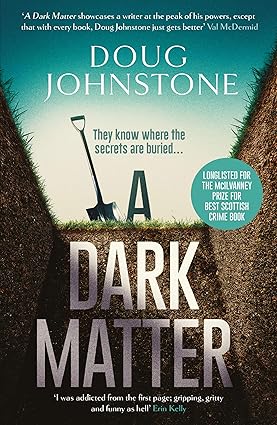
A Dark Matter by Doug Johnstone

If you’re a lover of mysteries, you should get to know the Skelfs, three women from one family.  Dorothy is 70 years of age, her daughter Jenny is in her mid-40s, and her granddaughter Hannah is 20.  After the death of the family patriarch, the three take over the family’s funeral home and private investigator business in Edinburgh.  Each woman has a case to solve.  Dorothy sets out to find out why her husband had been paying an unknown woman a stipend every month for years.  Jenny is hired by a woman to find proof that her husband is cheating on her.  And when her roommate Mel goes missing, Hannah is determined to find her.  There are currently four books in the series which gets better with each instalment.  A Dark Matter is followed by The Big Chill, The Great Silence, and Black Hearts.


Demon Copperhead by Barbara Kingsolver

If you like to check out award-winning books, this is the one for you.  It won the Pulitzer Prize, the Women’s Prize for Fiction, and seemingly every major news outlet’s year-end roundup.  Damon Fields, aka Demon Copperhead, is born to a widowed, teenaged, rehab-prone mother in a single-wide trailer in southwest Virginia.  His impoverished childhood is not easy, especially after his mother becomes involved with an abusive man.  Then from the age of 11, Demon finds himself within the foster care system which has him bouncing from one dysfunctional family to another.  Will he be able to escape the brutal life that seems to be his destiny?


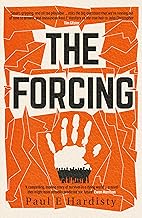
The Forcing by Paul E. Hardisty

If you favour speculative fiction, this dystopian thriller from a Canadian environmental scientist should be on your to-read list.  Angry at years of denial and inaction to address issues such as climate change which threatened the world, a government of young people has taken control of a unified North America.  All those older than a prescribed age are held responsible for the state of the planet so are punished by having their assets confiscated before they are forcibly relocated to abandoned towns in the southern U.S.  The narrator David and his wife May are moved from Calgary to Brownwood, Texas.  There they share an apartment with five other people.  Conditions are harsh in what is really an internment camp, but it’s his witnessing some violent incidents which convinces David they must escape.  This book’s realism is what is most terrifying. 


Stolen by Ann-Helén Laestadius

If you enjoy reading translated books from around the world, this award-winning novel translated from Swedish might appeal.  Focusing on the Sámi living in northern Sweden, the novel opens with Elsa, the 9-year-old daughter of a reindeer herder, witnessing the killing of her beloved reindeer Nástegallu by Robert Isaksson.  Because he threatens death if she speaks, she remains silent about his identity.  In the second part, Elsa is 19.  Reindeer continue to be slaughtered, but the police do nothing.  Frustrated with inaction, Elsa speaks to the media, but her outspokenness results only in her becoming more of a target for Isaksson so that her life is in danger.  The book is very informative about Sámi culture.


Canadian fiction is a particular interest of mine, so I have to recommend some recent novels by Canadian writers:


Far Cry by Alissa York

Most of the novel is set at a fish cannery on the northwest coast of British Columbia.  It is 1922.  Anders Viken, the camp’s storekeeper during salmon fishing season and its watchman during the winter, is writing an account of his life beginning with his departure from his home in Norway when he was a young man.  His story is intended for 18-year-old Kit Starratt for whom he is an honorary uncle.  Kit’s mother Bobbie recently disappeared and her father Frank was found drowned near his boat.  Having known Kit’s parents for years, Anders also tells of how Bobbie and Frank met and details important events in their lives together.  York is a master storyteller, and her novel includes historical detail, a love story, and a mystery. 


Snow Road Station by Elizabeth Hay


This novel features an older protagonist examining the relationships in her life and coming to terms with aging.  Lulu Blake, 62, has been an actor her entire life.  Then in 2008, while starring in a play in Ottawa, she forgets her lines.  Ashamed and panicked, she flees to Snow Road Station, a tiny village in eastern Ontario, where she stays with her best friend Nan.  A family wedding and maple sugaring keep her occupied as she contemplates what she really wants to do with her life.  The book has lyrical prose and thematic depth.  And it even mentions Killaloe!


The Good Women of Safe Harbour by Bobbi French


Fifty-eight-year-old Frances Delaney has just received a terminal cancer diagnosis.  As she thinks back on her life, we learn about her childhood in a small Newfoundland fishing village.  A number of tragedies led to her leaving to St. John’s where she worked as a housekeeper.  With the help of Edie, the teenaged daughter of her last employer, Frances returns to Safe Harbour where she reconnects with Annie Malone, her childhood friend from whom she has been estranged for 40 years.  Despite many sad moments, the book is also joyful and life-affirming. 


 The Berry Pickers by Amanda Peters


There is a dual narrative.  Joe, dying from cancer, tells the story of his sister Ruthie’s disappearance decades earlier when he and his family travelled as usual to Maine to pick blueberries.  Her mysterious vanishing has a devastating impact on Joe’s entire life.   In alternating chapters we meet Norma who grows up in an affluent family in, though her father is emotionally distant and her mother is suffocatingly protective.  Norma always has a sense of disconnection from her family and is troubled by dreams that she quickly learns no one wants her to mention.  After the death of both parents, she discovers family secrets which set her looking for the full truth.  The plot is predictable, but it’s the novel’s examination of the effects of trauma and the treatment of First Nations peoples that impresses. 


Complete reviews of all books mentioned (and many more) can be found on my blog at https://schatjesshelves.blogspot.com/. 


Happy Reading!


Thursday, July 6, 2023

Review of THE FASCINATION by Essie Fox

4 Stars

Gothic fiction is not my usual genre, but this book, set in late-Victorian England, kept me entertained.

Keziah and Tilly Lovell are identical twins, except that Tilly has not grown since the age of 5.  The girls’ father, a charlatan, sells his 15-year-old daughters to a man known as Captain who accepts them into his “family” of outcasts.  Meanwhile, Theo, grandson of Lord Seabrook, a man who has an obsession with “freaks,” is evicted from his childhood home when Lord Seabrook remarries.  His hopes of becoming a doctor are thereby ended, but he finds employment in Dr. Summerwell’s Museum of Anatomy in London.  When Theo meets Captain and the twins, their lives become entwined in surprising ways, but also in ways that put them all in danger.  

Chapters alternate between Keziah and Theo’s perspectives.  As a result, the reader comes to know them the best because their thoughts are given.  There is a diverse cast of other characters, several of whom are considered freaks because they are little people, have a cleft palate, or are excessively hirsute.  Their backstories are gradually revealed, and each emerges as a sympathetic character.  It is the characters who are “normal” in appearance who prove to be the real monsters; some of them are personifications of pure evil.  The morally depraved behaviour of some of these latter characters is almost unbelievable. 

The theme examines what it means to be different, other than what is considered “normal.”  In Victorian England, physical differences marked a person as a curiousity which made him/her both grotesque and fascinating.  Differences also made a person vulnerable to exploitation.  All the characters in the novel who are considered oddities face prejudice and injustice. 

The novel shows the darker underworld of Victorian entertainment, exposing the grim realities beneath the glamour; one character describes a fair:  “’that fair looks very tawdry in the cold ‘ard light of day . . . Like some old whore, all painted up, she shines as bright as Christmas glitter in the hours of the night, but come the dawn she drops her drawers and what is lying underneath is not the most alluring sight.’”  In this world, full of deception and squalor, “freaks” are used to titillate the audience. 

The contrast to this world is the community which Captain has established.  In this chosen family, people receive understanding and support and friendship and love.  Members have a sense of trust, belonging and security.  Obviously this community is intended to illustrate what happens when people are accepted. 

Though the novel is set in a different time period, its theme is relevant to our time.  There seems to be an increasing tendency for people to judge and exclude those who are different in some way.  It is a good time to be reminded that, despite superficial differences, we are all humans who long to be accepted. 

Lovers of gothic fiction will find the typical characteristics of the genre:  an atmosphere of mystery and suspense, omens and visions, events that suggest a supernatural connection, and women in distress.  The number of coincidences, unexpected connections between a small number of people, bothered me, but the prominence of coincidence in Victorian novels (including those of Charles Dickens, Miss Miller’s hero) influences me to be more accepting of them in this novel set in the Victorian era. 

One element that surprised me is the big reveal on the last page.  Was this really supposed to be a shock to the reader?  I suspected this from the fourth page, and there are many hints throughout so there seems undue emphasis on this revelation.  Perhaps it’s just a narrative device to emphasize the blindness of shallow people?

The book is well-researched so has a great sense of time and place.  Though it includes some difficult topics like emotional and physical abuse, drug dependency, dark secrets and deceptions, moral corruption, sexual perversion, and violence, the novel suggests a better world is possible.  

Monday, July 3, 2023

Review of THIRTY DAYS OF DARKNESS by Jenny Lund Madsen

3 Stars

This book has received many positive reviews, so I’m in the minority, but it just didn’t resonate with me.  As I was reading, I kept thinking that it was intended as a parody of crime fiction, since it offers little that is original and relies so heavily on the tropes of that genre.  But the book is being marketed as the first in a new series?

Hannah Krause-Bendix is an established literary writer in Denmark.  Though disdainful of crime fiction, she accepts the challenge to write a crime novel in 30 days.  Her editor sends her to a remote village in Iceland where she is the houseguest of a woman named Ella.  Shortly after Hannah’s arrival, the body of Thor, Ella’s nephew, is pulled from the water.  Looking for inspiration, Hannah inserts herself into the investigation.

Hannah is not a likeable character.  She is a judgmental, arrogant, and rude.  She behaves appallingly, even breaking into her host’s study, though she hopes that Ella won’t notice her vandalism.  When she starts investigating, she proves to be rash, insensitive, and inept.  The author goes to lengths to show that Hannah does experience personal growth:  she becomes less standoffish both personally and professionally.  She becomes less self-centred, even starting to show concern for others, and less dismissive of commercial fiction.  My problem is not an unlikeable protagonist but the fact that she is 45 years of age.  Some of her behaviour is more appropriate to a teenager than a middle-aged person.    

I understand that some readers find comfort in the use of the tropes of crime fiction, but I found that this book follows so many of them that the book feels imitative and unoriginal.  Of course, Hannah is going to have a drinking problem.  Of course Viktor, the town’s sole policeman, is not going to be up to the task.  Of course there will be a blizzard which will isolate the town.  More than once I thought of Trapped.  The only thing that surprised me is that Hannah doesn’t research these tropes to help her in her writing.    

More than one event stretched my credulity.  We are supposed to accept the arrival of Hannah’s nemesis in this remote town as plausible?  Vigdis and Ella are supposed to be close, yet Vigdis knows so little about her sister?  Seriously injured people are able to undertake physically demanding tasks?  Some of the murderer’s actions seem ridiculous and the motive for so much mayhem seems weak:  the killer’s willingness to kill someone who was so obviously also a victim makes no sense. 

I love Nordic crime fiction, but this example fell flat for me; the plot is unimaginative and borders on the absurd, and most of the characters remain one-dimensional.  Hannah describes crime fiction as formulaic and unoriginal; unfortunately, that describes this book for me.  

But as I said at the beginning, I'm in the minority.  The novel won the Harald Mogensen Prize for Best Danish Crime Novel of the year and was shortlisted for the Glass Key Award.  

Thursday, June 29, 2023

Review of THE IMPOSTERS by Tom Rachman

4 Stars

Dora Frenhofer, an aging novelist, sees in herself signs of mental decline.  Alone in London during the pandemic, she writes what she thinks will be her last novel.  Using people from her own life (like her missing half-brother and her estranged daughter) and even people with whom she has had only brief encounters (such as a deliveryman and an immigrant hired to remove some of her possessions), she writes stories with them as protagonists.  Interspersed among these stories are Dora’s diary entries.

What emerges is a complex character study.  The diary entries might provide the most obvious insight into Dora’s personality, but the stories too reveal much about her as they suggest some of her regrets.  She admits that “What linked those chapters was one character:  a minor novelist in a minor crisis.  This was a version of herself, but with the opportunity to behave differently somehow, to solve something.”  Her relationships with her daughter and a former lover obviously weigh on her mind.  Her character Danny, an anxious, insecure novelist, seems to reflect her own concerns about her own writing and lack of success. 

Dora is not always a likeable character, but in the end it is difficult not to have some sympathy for her.  She is blunt, a trait she attributes to her being Dutch, and often dismissive of people.  She tries to be honest with herself – she acknowledges that she is a difficult and mediocre writer.  She is ambitious and selfish in her pursuit of success as a writer, neglecting others for the sake of her career.  When she meets other people she uses them to extract details she can use in her writing.  Otherwise, she has chosen to isolate herself, “gradually shedding all her companions . . . in pursuit of her writing.”  Now, having sacrificed so much for her art, she is obviously lonely.  She also fears the dementia that her father endured. 

The book is also about writing and the life of writers.  Numerous types of writers make an appearance; they write novels, magazine articles, stand-up comedy routines, restaurant reviews, and memoirs.  Most are insecure and worry about failing.  Danny comments that he is “no more an artist than all the other imposters.”  Dora’s stories show how writers can mine life experiences and transform them into fiction.  And of course there’s the question of whether novelists have a place in today’s world.  Is anyone reading books when there are so many distractions?  Dora wonders, “can this (literature) coexist with that (screens)? . . . all these writers, all yearning to create something of moment despite its near-impossibility – do they too wonder where this fits anymore?”

The lines between Dora’s reality and her imagination are blurred, so readers of this novel are required to think as they read.  Is Dora entirely truthful or is she an unreliable narrator?  Do her stories reflect more accurately the truth about her life and choices and what is most important to her?  Morgan pays a high price because of an article she wrote:  does Dora feel she has lost as much because of her choices?  Does the relationship between Amir and his half-brother Khaled tell us about Dora’s feelings/regrets/hopes about her relationship with her half-brother Theo? 

I enjoy creative, thought-provoking novels like The Imposters.  I’m sure there’s so much that I missed so I may re-read it when time allows.  Like for Dora, “books remain among my pleasures, that anticipation before opening a cover, and anything could be inside, and you’ll never quite predict itI’m still awed at others’ craft, how they patch together words, and produce people,” and Tom Rachman ranks amongst the best in his ability to do exactly that. 

Note:  I received a digital galley from the publisher via NetGalley.

Monday, June 26, 2023

Review of DREAMS OF ARCADIA by Brian Porter (New Release)

3 Stars

Veterinarian Nate Holub, recently divorced, moves from Houston to Hadlow, his father’s hometown in rural East Texas.  The novel details his struggles to adapt to being a country vet working more with large farm animals than family pets.  At the same time he tries to learn more about the accidental death of his father Dennis three decades earlier.  As he reconnects with family, he uncovers some family secrets.

It is obvious that the author has drawn on personal experiences in depicting the life of someone in veterinary practice.  Personally, however, I found the “intricacies of bovine obstetrics” less than appealing reading.  Having worked in a hospital, I’m not squeamish, but some of the details about surgical procedures seem unnecessary:  “After putting on surgical gloves, he picked up his scalpel and made an incision through the scrotal skin to expose the glistening white parietal tunic.  He cut through the tunic and applied gentle pressure to pop the testicle through the opening.  He isolated and stripped the spermatic cord and then crimped it with an emasculator, crushing and cutting the cord simultaneously.  ‘Made sure you don’t leave the tail of the epididymis here.’”  The description of a bovine C-section is even more detailed. 

This type of detail left me wondering about the intended audience for this book.  Is it intended for those in veterinary practice and those interested in the field?  Some of the terminology will not be familiar to the average reader.  Of course the author tries to include something for everyone.  There’s mystery surrounding Dennis’s death, family drama, and even romance.  Then there’s the humour, which often borders on slapstick:  “Nate spit out a leaf and stumbled out of the vehicle” and “he tripped over a potted plant and landed hard, banging his knee on a steppingstone and ripping a hole in his coveralls” and “he knocked over a large bottle of vitamin B12, which fell and shattered, spilling the thick amber liquid all over the counter and floor” and “one of the other dogs jumped on his back and started humping him.  He felt the dog’s breath on his ear, drool running down his neck.”  At times, I was reminded of the James Herriot books. 

I did not find Nate an appealing character.  He has been a vet for 17 years but in so many ways he seems so inexperienced.  Would he really be allowed to go out on calls to farms if he doesn’t know “how to prepare the tranquilizer dart or load the gun”?  He claims to be haunted by questions surrounding his father’s death, but his investigation proceeds at a glacial pace.  He’s an adult, yet he never asked questions before?  There’s little to admire in the way he behaves as a father to his daughters.  He says he’ll have them visit “once his spare bedroom was furnished and the house tidied up” yet almost a year passes before he has them stay with him?  He worries about the distance developing between the girls and him, yet he does little to maintain a close relationship. 

The book could use some judicious editing.  The descriptions of the countryside, for instance, seem to include lists of flowers:  “lantana, winecups, daffodils, spiderwort, daisies” and “Indian paintbrush, evening primrose, dandelions, prairie nymphs” and “Mexican hat and Indian blankets” and “bluebonnets, Indian paintbrush, phlox, evening primrose, dandelions, squaw-weed, and prairie spiderwort.”  Then there are scenes that lack relevance:  Do we need to know about Skeeter Pilat’s competitive barbecuing or the various stories told by locals in Rita’s café or that a meal at family gatherings “usually consisted of barbecued chicken and sausage, along with boiled potatoes, green beans, rolls, fruit salad, deviled eggs, and sweet tea.  For dessert, there was banana pudding, pecan pie, and kolaches – poppy seed, cheese, and pear”?  I understand the need for local colour, but some details are just tangents. 

More than once I found myself losing interest and asking where the novel was going.  It is certainly slow-paced, like Nate’s investigation, and there is little suspense.  There is no great compelling reason to solve the mystery surrounding Dennis’s death; certainly Nate does not walk around like man haunted by the past or he wouldn’t take over a year to get answers to his questions.  Yet the sole purpose of Nate’s queries seems to be so he can learn to not be “mired in the past” so he can “appreciate the present”?   No one is ever in any real danger, though some encounters with large farm animals are portrayed as possibly being dangerous.  Nate is occasionally met with animosity, but real conflicts don’t develop.  The lack of narrative tension is a problem.

The novel did not appeal to me because of its slow pace, detailed descriptions of veterinary procedures, lack of focus and suspense, and a lacklustre protagonist.  The author’s writing style is clear, and he knows veterinary medicine and is familiar with the setting, but I found reading the book a bit of an effort.

Note:  I received a digital galley from the publisher via NetGalley.