Ranked a Top Canadian Book Blog
Twitter: @DCYakabuski
Facebook: Doreen Yakabuski
Instagram: doreenyakabuski
Threads: doreenyakabuski
Substack: @doreenyakabuski
Bluesky: @dcyakabuski.bsky.social

Thursday, August 24, 2023

Review of THE SUN WALKS DOWN by Fiona McFarlane

3 Stars

Despite its evocative prose, this book didn’t resonate with me.

The setting is the span of a week in September of 1883 in the outback of South Australia.  A dust storm sweeps through the small town of Fairly and six-year-old Denny Wallace goes missing from his parents’ nearby farm.  The reader gets to spend the week of the search with various people who live in Fairly and its environs. 

The perspectives of so many people are given:  Denny; Mary, Denny’s mother; Mathew, Denny’s father; Cissy, one of Denny’s five sisters; Robert, the town’s police constable; Minna, Robert’s wife; Wilhelmina, Minna’s mother; Sergeant Foster, who arrives to take charge of the official search; Joanna Axam, the widow of an English aristocrat who started a sheep ranch in the area; George and Ralph Axam, Joanna’s sons; Karl and Bess Rapp, Swedish artists traveling through the area; an Afghan cameleer; the town’s prostitute; Billy Rough, Mathew’s Indigenous farmhand; Mary’s father; Mary’s stepmother; and the local vicar.  And this is not a complete list!

There is actually very little plot, though there is a lot of description of landscape.  What are also included are the anxieties, hopes and dreams, beliefs, accomplishments, and failures of many of the characters.  The problem for me was connecting with any of the characters because the sheer number of them makes that difficult.  Furthermore, few of the characters are likeable.  Everyone seems self-serving.  There’s a woman, a newlywed, who is obsessed with sex, and not only with her husband; there’s a rich woman who has so much yet wants to steal a cloak from an Aboriginal tracker; and there’s a woman who adds to a family’s pain to fulfill her artistic ambitions.  And so many of the white settlers are condescending to the Aboriginal Peoples. 

What I found most interesting was the examination of the relationship between the colonizers and Australia’s Indigenous Peoples.  It is obvious that the Whites have tried to shape the land to their needs, but are largely unsuccessful because of their limited understanding of that land.  The Aboriginals are very much in tune with nature, but the Whites tend to be dismissive and condescending.  Billy, for example, is careful never to antagonize by doing something that might suggest to a white person that he is more skilled.  Sergeant Foster becomes upset when he learns that his native trackers have been given the same wine as he.  Many of the employees on the Axam sheep farm are Aboriginal, but George thinks of them as unreliable:  “He thinks of them as disposed to laziness (they are, for example, disinclined to engage in hard physical labour during the hottest part of a hot day).”  George’s father Henry insisted on teaching Billy skills he felt he’d need in his life at Henry’s side and prevented Billy from speaking his native language and completing his initiation ceremonies and becoming a full elder in his tribe. 

As I stated earlier, I can appreciate how well-written the book is, but the presence of so many characters and so many viewpoints means I found it difficult to connect with anyone.  Except for Denny’s fate, I remained indifferent to what might happen to people.  I would have enjoyed a book focusing on Billy Rough and his role in and perspective on the search for Denny; he seems to have a unique understanding of the sensitive young boy, having “noticed Denny’s watchful way of being in the world . . . the way he speaks to invisible things.”

This book will undoubtedly appeal to some readers, but it didn’t work for me. 

Monday, August 21, 2023

Review of THE END OF DRUM-TIME by Hanna Pylväinen

 4 Stars

This is another book about settlers imposing their religion, values, and laws on Indigenous peoples.  This one is set in the mid-19th century in northern Scandinavia. 

Lars Levi Laestadius is a preacher in a small town near the Arctic Circle.  His goal is to convert the Sámi reindeer herders and their families to Christianity and to break their dependence on alcohol.  Biettar, a leader among the Sámi experiences a religious awakening and leaves his diminished herd to his son Ivvár.  Abandoned and angry, Ivvár comes more frequently into town to purchase alcohol.  He encounters Willa, one of the preacher’s daughters, and the two start a romantic relationship.  She eventually breaks ties with her family to join Ivvár as the Sámi go on their annual spring migration from the tundra to the sea.

This book combines several genres.  It is historical fiction, though Lars Levi Laestadius was a real person:   a Swedish Sámi pastor, he founded the Laestadian pietist revival movement to help his largely Sámi congregations who were being ravaged by alcoholism.  It includes a romance, a love affair which seems ill-fated because Ivvár and Willa come from different cultures.  And there’s the social commentary highlighting the struggles of the Sámi in the face of colonization. 

I felt a sense of foreboding throughout.  A clash is inevitable.  Revered by his followers, Laestadius’ spiritual awakenings make some people uncomfortable.  Ivvár, for instance, cannot understand his father’s behaviour, especially because he was a noaidi and guvhllár, a shaman and a healer.  Authorities in the south also become concerned about Laestadius’ radical Christian ethics and morals.  And the arrival of the dean of the diocese creates more tension as he insists Laestadius cease his temperance teachings and attempts to collect debts from the Sámi, debts owed to the dean’s nephew who manages the general store. 

Earlier this year, I read Stolen by Ann-Helén Laestadius which taught me a great deal about Sámi culture (https://schatjesshelves.blogspot.com/2023/02/review-of-stolen-by-ann-helen.html).  The End of Drum-Time certainly added to my knowledge.  I found myself thoroughly fascinated.  Some characters view the Sámi as primitive, but the author shows how their way of life is perfectly suited to the extreme environment in which they make their home.  Nomadic, they live in harmony with the world around them, their lives largely determined by the reindeer's natural migration and the reindeer owner's tasks during a year.  Reindeer, for the Sámi, are “life itself,” as emphasized by the Sámi proverb which opens the book:  “Let the reindeer decide.”

As with Canada’s First Nations, the Sámi and their way of life were constantly under threat.  Settlers built farms so the Sámi could not let their reindeer graze freely as they had for generations and had to change their migration route.  Settlers introduced alcohol and entire communities were wrecked by alcoholism:  “the settlers of the region from every parentage and path drank at very similar rates to the Sámi; the great difference was that the Sámi were more likely to be punished for their drinking by the authorities, and, moreover, the consequences of drinking were greater for the Sámi because the demands of their life were greater.”  The concept of buying on credit was also introduced.  Then when Sámi could not pay, the setters imposed legal consequences. 

The style of the book may be off-putting for some readers.  The pace, especially at the beginning, is very slow.  Instead of being presented with an action-filled plot, the reader is immersed in Sámi culture and the minds of various characters - including Laestadius; Biettar; Ivvár; Willa; Risten, the daughter of a prosperous herder; Nora, Willa’s sister; and Henrik, the manager of the general store.  (Of course, this immersion proves to be important if the reader is to fully understand characters’ motivations.  Presenting the perspectives of various characters - settlers as well as Sámi, and people with different views of religion - adds breadth to the narrative.)  In addition, sentences tend to be long and winding and there are frequent shifts in point of view, often in the middle of paragraphs. 

I had problems with a couple of elements.  Most of the characters are fully developed so we see their positive traits and their flaws that make them human.  Unfortunately, a villain is introduced late in the story who appears almost cartoonishly evil.  I also found Ivvár difficult to like.  Women tend to fall for him, but I don’t see the appeal.  He is very handsome, but his treatment of women suggests he is self-centered and selfish.  Given Willa’s upbringing, her choices are definitely out of character, as she herself acknowledges. 

Despite these weaknesses, this book is definitely worth reading.

Thursday, August 17, 2023

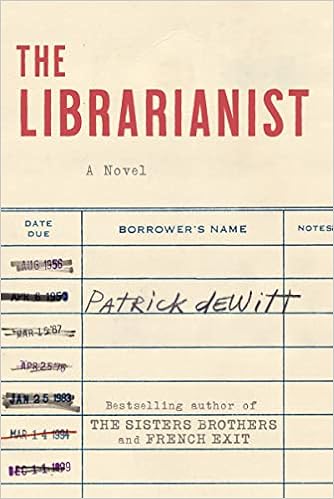
Review of THE LIBRARIANIST by Patrick deWitt

3.5 Stars

Bob Comet, 71, is retired after working for 45 years as a librarian.  He lives alone; though he has no family or friends, he claims not to be unhappy.  His days are spent “reading, cooking, eating, tidying, and walking.” A chance event brings him to an assisted living centre for seniors and he decides to volunteer there.  He makes a shocking discovery about one of the clients at the centre, but also makes friends and becomes part of a community. 

Bob is very much an introvert who is reluctant to engage with other people:  “Bob had long given up on the notion of knowing anyone, or of being known.  He communicated with the world partly by walking through it, but mainly by reading about it.”  His ex-wife “believed Bob was reading beyond the accepted level of personal pleasure and wondered if it wasn’t symptomatic of a spiritual or emotional deformity.  Bob thought her true question was, Why do you read rather than live?”  He comes to recognize that “he hadn’t lived his life to its fuller potential.”

Two flashbacks dominate the story and show that his life had moments of drama and excitement when he encountered colourful characters, risk-takers who showed him a different way of life.  But Bob “had a particular life fixed in his mind” and he remains steadfastly focused on that staid, stable life.  The first flashback is to Bob’s early career as a librarian and his meeting his wife Connie and his best, and only, friend Ethan.  Bob admits that “they had led him away from [his life’s] isolation and study and inward thought” but once they left, “he resumed his progress over that familiar ground.  Bob was quiet within the structure of himself, walled in by books and the stories of the lives of others.” 

The second flashback is to Bob at the age of 11 when he runs away from home and connects with two women who are travelling entertainers.  Ida and June are eccentrics who “adopt” Bob for four days.  This episode has had a lasting impact on Bob:  the book opens with his recurring dream of the Hotel Elba where he stayed with the women, and he admits that this dream always floods his brain with “the feeling of falling in love, and he would wake up in a state of besotted reverence.”  His offering to volunteer at the centre may in part be due to its looking “quite a lot like the Hotel Elba.”

The adventure with Ida and June was for me the least interesting part of the book.  With its witty dialogue between quirky characters, it is entertaining in its own way, but I found it overly long.  Though that escapade is Bob’s fondest memory, it does not seem to have changed or shaped him in any way;  however, the ending suggests that 60 years later he finally realizes how “misshapen and imperfect” his life has been and he takes the advice he was given to “’accept whatever happiness passes your way, and in whatever form.’”  Bob’s epiphany is not a dramatic one, but then it’s appropriate for an unremarkable, ordinary person, an “average Bob.” 

The title of the book is interesting.  Bob’s profession was that of librarian and Bob’s love of reading and books is often mentioned.  However, we learn little of the books that he enjoys.  Only a couple of titles are mentioned and then only in passing.  More than anything he seems to love the orderliness and the quiet of a library:  “He felt uncomplicated love for such things as paper, and pencils, and pencils writing on paper, and erasers and scissors and staples, paper clips, the scent of books, and the words on the pages of the books.”  Just like he likes “’the idea of people,’” perhaps he likes the idea of books.  His preference for the morning quiet in the library before people arrive suggests he would like the library just for himself.  He sees himself as a “tool, a mechanism of the library machinery,” so perhaps the term librarianist is more appropriate than librarian

Readers who have enjoyed deWitt’s previous novels may find that this one is more restrained, though there are still plenty of odd characters (Connie’s father, Miss Ogilvie, Ida and June, Linus) and considerable humour.  I prefer this less outlandish deWitt. 

Monday, August 14, 2023

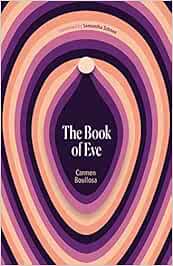
Review of THE BOOK OF EVE by Carmen Boullosa

 3.5 Stars

This is a feminist re-telling of the Book of Genesis.  Told from Eve’s perspective, it challenges the Biblical patriarchal narrative. 

According to Eve, she, not Adam, is the first human; Eden is not a paradise; the knowledge gained by her eating a fruit is essential, not damning; Abel, not Cain, is the villain; Noah never builds an ark; and the Tower of Babel is destroyed by an angry Earth.  Eve’s story, however, is subverted by Adam.  Jealous of Eve, he distorts the truth of creation and places himself at the centre and establishes a religion which sidelines Eve and all women.

Eve’s depiction of Eden is interesting.  She describes it as bland and “a tepid emptiness, a void.”  It is a place with “nothing good, nothing bad, no clothes, no scent, no taste, no words.”  Leaving Eden allows her to realize the beauty of the world and to discover fire, gastronomy, pleasure, and words.  Eve claims that “The apple was the key that set us free.  It made us understand ourselves, making us who we were.”  She states, “the unbitten apple that hung from the branch of the fruit tree would otherwise have rotted.  I gave it meaning because I enjoyed it, and I gave us meaning, too:  feelings, intuition, action, desire, pleasure.”  Cain argues with his father that “’knowledge is a good thing, life is good, how can you say that what Eve has given us is bad?’” 

Eve is a fully-developed character, though at times she seems almost saintly.  She is the narrator so of course her flaws are not highlighted, though she does castigate herself for remaining silent:  “I never should have held my tongue when I had things to say.  Never.”  It is reasonable to question how reliable a narrator she is:  certainly there is a lack of nuance in the depiction of Adam.  Because she experiences pleasure “so effortlessly and simply,” she believes Adam suffers from “clitoris envy.  Males always have it, that unspoken, unexpressed envy of the clitoris.”  In addition, “His belly always lacked what he needed to be able to give birth.”  This jealousy, she asserts, is the foundation of his religiosity and his spiteful concocting of tales in which Eve is “’just the offshoot of a piece of [man], an afterthought, worthless.’”  Since we are not privy to his thoughts and feelings, as we are to Eve’s, Adam’s violence and bizarre behaviour sometimes seem to come out of nowhere.

Just as Eve emphasizes that she is the mother of all, she suggests that Adam is responsible for all the mistreatment of women:  “with his absurd stories Adam planted the seed, ignited the flame that made raping women a right, a necessity, a pleasure, and even a joy, and justified the murder of more than one – beautiful but nameless – only on account of their gender.”  In the end, she states that “being male became equated with causing pain,” all because “They feared us because we could give life . . . they feared our red lips and our beauty, they feared their attraction to us and the boundless pleasure we experienced.”  A litany of rules which women have to follow is presented:  “We lost half of our names.  We had no right to own property.  Children were named after their fathers even though [women] were still responsible for looking after them.  They used sharp stones to excise the clitoris . . . They made up all sorts of rules about good manners and bad manners.  They imposed them on all our households. . . . girls –with or without clitorises – weren’t allowed to attend school. . . . And if they went out in the streets, it was never without a chaperone, and the girls and their mothers had to veil their bodies and faces.”

Besides being critical of men who place themselves above women, the book criticizes humans’ treatment of the planet.  Earth is angry at the arrival of humans:  “’What am I going to do with so many people living off of me!’”  Earth and He (God?) arrive at an agreement so He would help Earth to produce enough.  The agreement also defines “the unforgiveable exceptions to the natural order of things . . . any group that cursed, slandered, or plundered the Earth senselessly would be subjected to lethal heatwaves and freezes.”  As the world becomes more populated, “Earth was even angrier.  What she had known from the beginning was proving true:  the hordes of humanity would strip her bare.  Arrogant, they continued to build upon her surface, ignoring her.”

Despite its serious themes, there are some humourous touches.  Who cannot smile at Eve’s comment that “Adam, who was aware of our nakedness, hid among some plants with very small leaves” or Adam and Eve’s attempts to procreate?

Some readers will find this an uncomfortable read.  It questions the existence of God.  Eve describes only an abstract Thunder who “expressed itself like falling rock, without words, without verbs, without adjectives; like long oooohs and aaaahs emanating from a fearsome throat, like the blows of an axe or shovel or hammer; but not guttural like the sounds a mouth makes; more like a weapon, or gunpowder.”

Though sometimes heavy-handed in its approach, the book does emphasize the power of words and stories:  “The stories Adam invented had triumphed.  And therein lies the power of the word:  it shapes mankind, their customs, their communities.  Words don’t just say things, they do things.”  Certainly the novel should leave readers thinking about how the story in the Book of Genesis, definitely not written by women, has shaped the lives of women. 

Thursday, August 10, 2023

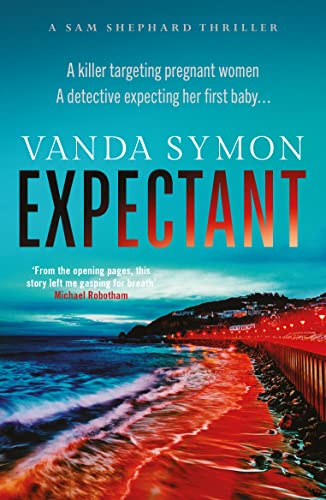
Review of EXPECTANT by Vanda Symon

3.5 Stars

This is the fifth and latest installment in the Sam Shephard series set in Dunedin, New Zealand.  Released earlier this year, it was published 12 years after the previous book, though it picks up just months after the ending of Bound

The novel focuses on a murder and kidnapping case.  A pregnant woman is murdered and her almost-full-term baby missing after having been removed from the womb.  The case resonates with Sam, who is just about to begin her maternity leave, so she is determined to find justice.  Because of her late-stage pregnancy, Sam is given desk work, but what she uncovers proves crucial to solving the case, though not before she puts herself and her unborn child in danger.

People who have read the series will find much that is familiar.  Sam remains as feisty and stubborn as ever, and her wit and sarcasm have not diminished.  Events follow the established pattern:  there’s the inevitable confrontation with her misogynistic boss, and though she is somewhat sidelined, Sam is again the one who steers the investigation into the right direction so the perpetrator is apprehended.  There is also some focus on Sam’s personal life, this time her relationship with her child’s father and her struggles with various changes happening in her life. 

Having read all the previous books, I predicted the ending.  After the reveal of the perpetrator in The Ringmaster, it is not unexpected that there be a direct connection to Sam.  The motive of the killer is credible, but the circumstances of the crimes (place and method) are not so. 

What I was looking for and did not find in this book is an explanation for the bombshell at the end of Bound.  There is a reference to Sam’s mother being required to live with her son and daughter-in-law, but there’s no explanation as to the reasoning behind this “consequence."  I can understand the author not wanting to directly mention the shocking revelation in the previous book and thereby spoil it for those who have not read it, but she should have addressed this issue for readers who have followed the series and would reasonably expect some explanation. 

With its short, snappy chapters, this is a quick read.  I certainly found it kept my interest on my morning walks.

Monday, August 7, 2023

Review of DEAD AND GONE by Joanna Schaffhausen (New Release)

 4 Stars

This is the third in the Detective Annalisa Vega series set in Chicago.  It is a police procedural with elements of a psychological thriller. 

The body of Sam Tran, an ex-policeman turned PI, is discovered and his death is ruled suspicious.  Annalisa is put on the case and believes that the answer to his death will be found in one of his three open cases.  Those include a double homicide from 20 years ago, a missing woman from 30 years ago, and a stalker on the campus of the college Annalisa’s niece Quinn attends.   As Annalisa investigates, she is also dealing with some issues in her personal life. 

With its multiple plot lines, the book is certainly action-packed.  There are actually 6 investigations (Tran’s death, Tran’s three open cases, a string of robberies committed by the Chicken Bandit, and a second double homicide cold case).  The stalker case becomes the focus because the danger is imminent.  What is interesting is that Quinn’s point of view is given, as is that of one of the suspects.  In the end, all the cases are solved though two are not entirely closed. 

There are lots of red herrings and several twists.  Since more than one character is in danger, tension is high.  My interest was maintained throughout.

Annalisa is a likeable character.  She is certainly brave and determined.  Her flaw is taking risky chances; more than once she runs into situations without backup.  Her renewed relationship with her ex-husband adds an interesting dimension because it comes with a couple of complications.  What I appreciated is that her personal life doesn’t distract from the police procedural. 

I like crime fiction which offers more than just suspense and entertainment.  This book does that.  Annalisa, more than once, is faced with a moral dilemma:  following the rules may cause more harm than has already been experienced.  There’s a particular statement that caught my attention:  “How hard it was to live with a broken family.  How little you could do to fix it, no matter how desperately you wanted to.”  This applies to Annalisa because of her complicated relationship with her family but there are also other difficult family relationships in the novel. 

The ending is a surprise though not totally unexpected considering some of Annalisa’s thoughts and feelings.  She dislikes the restrictions placed on her so she can’t do what she wants to do with some cases.  This ending suggests a new turn in further books in the series. 

There is much to recommend this book:  crisp writing, a well-crafted plot, engaging characters, and lots of suspense.  Aside from a stupid assumption about the purchase of a phone and a couple of minor coincidences, there are few flaws.  If you haven’t encountered Annalisa Vega, you should.  And for a fuller understanding of her, start with Gone for Good and Long Gone

Note:  I received an eARC from the publisher via NetGalley.

Thursday, August 3, 2023

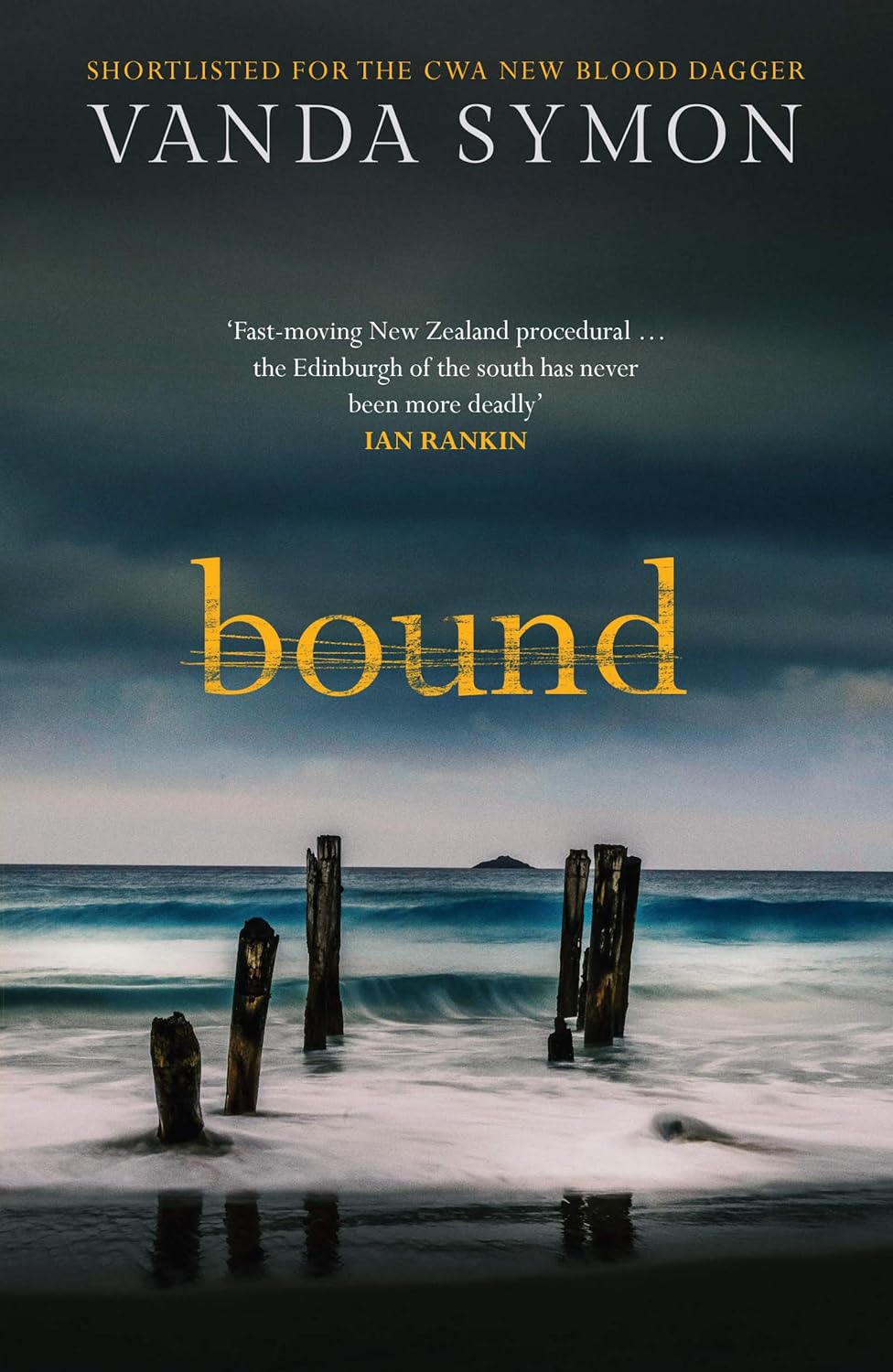
Review of BOUND by Vanda Symon

 3.5 Stars

This is the fourth book in the Sam Shephard series – a great companion on walks.

Following a home invasion, a man is murdered and his wife is bound and gagged, left to watch.  Two of Dunedin’s gangsters, suspected of the police shooting in Containment, are investigated, but Sam’s attention moves elsewhere when the body count continues to rise.

The plot follows the formula used in previous books:  Sam solves the case despite her being blocked and/or sidelined by her boss D. I. Johns.  As in the first three novels, Sam’s personal life provides complications.  This time there’s the illness of her father, the difficult relationship with her mother, and a development which will change Sam’s life forever. 

A favourite scene is Sam’s public challenging of her bullying boss.  However, it is becoming difficult to understand how he is able to get away with his abuse.  Surely such behaviour would not be tolerated in a work place, even a police station, in New Zealand? 

There’s a twist at the end that is unnecessary and just feels so wrong on many levels.  In particular, Sam’s behaviour towards her sister-in-law and her mother doesn’t make sense.  Considering Sam’s thoughts and feelings as revealed earlier, her confrontation is illogical.  I get that Sam is distraught and she does prioritize police work over her personal life, but really!!??

Of course the ambiguity of the ending, with two subplots unresolved, means readers will want to read the next installment.  Expectant is on my iPod ready for tomorrow’s morning walk.