Ranked a Top Canadian Book Blog
Twitter: @DCYakabuski
Facebook: Doreen Yakabuski
Instagram: doreenyakabuski
Threads: doreenyakabuski
Substack: @doreenyakabuski
Bluesky: @dcyakabuski.bsky.social

Wednesday, March 22, 2017

Man Booker International Prize Longlist

The Man Booker International Prize is given to a book in English translation, with a £50,000 prize for the winning title, to be shared equally between author and translator.  Its aim is to encourage more publishing and reading of quality works in translation.

Last week the longlist was released:
Title; Author (Country); Translator
Compass; Mathias Enard (France); Charlotte Mandell
Swallowing Mercury; Wioletta Greg (Poland); Eliza Marciniak
A Horse Walks into a Bar; David Grossman (Israel); Jessica Cohen
War and Turpentine; Stefan Hertmans (Belgium); David McKay
The Unseen; Roy Jacobsen (Norway); Don Bartlett and Don Shaw
The Traitor’s Niche; Ismail Kadare (Albania); John Hodgson
Fish Have no Feet; Jon Kalman Stefansson (Iceland); Phil Roughton
The Explosion Chronicles; Yan Lianke (China); Carlos Rojas
Black Moses; Alain Mabanckou (France); Helen Stevenson
Bricks and Mortar; Clemens Meyer (Germany); Katy Derbyshire
Mirror, Shoulder, Signal; Dorthe Nors (Denmark); Misha Hoekstra
Judas; Amos Oz (Israel); Nicholas de Lange
Fever Dream; Samanta Schweblin (Argentina); Megan McDowell

For more information about the books, go to http://themanbookerprize.com/international.

The shortlist will be announced on April 20 and the winner, June 14. 

Tuesday, March 21, 2017

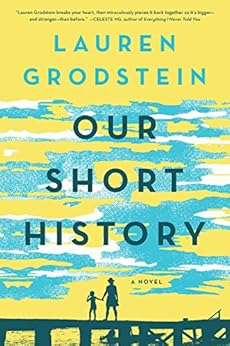
Review of OUR SHORT HISTORY by Lauren Grodstein (New Release)


3 Stars
Karen Neulander is a single mother with Stage 4 ovarian cancer with perhaps two years left to live.  She writes a book for her six-year-old son Jacob, the book we are reading but which is intended for Jacob when he is older.  At Jacob’s request, Karen contacts his biological father Dave whose desire not to have children led to Karen’s breakup with him.  Karen has to deal with her mortality and her fears about what will happen to her son once she dies.

The structural framework of the novel is awkward.  Karen writes the book because “It seems like the right way to tell you everything I want you to know.”  She also clarifies that she will include “whatever wisdom I have, whatever lessons I’d pass on to you later . . . [and] my hope is that whenever you miss me or whenever you just want to know more about the person I was, you’ll be able to open this book and read these pages and remember me.”  Would a mother really keep describing her extreme physical pain?  Why would she include such details about her job as a political consultant and her major client at the moment?  Though the book shows a growth/change in Karen’s thinking, why would she want to show her son the events that led to her epiphany?  Since Karen writes a day-by-day account of events, a diary or journal format would be more appropriate. 

Karen is not a likeable character.  In her professional life, as she admits, she has no qualms about using “dirty tricks” to smear an opponent’s reputation and whitewash her client’s scandals.  She describes her current client as “one of the least trustworthy people I’d ever met” yet she never considers dropping him.  She is very self-centred as well though, given her circumstances, her selfishness is totally understandable.   At times, her only redeeming quality is her love for her son.   Were it not for her terminal cancer diagnosis, it would be difficult to have much sympathy for her.

Karen’s character change is convincing.  Her fierce love for her son makes her capable of change and she has sufficient motivation to do so within the duration of the novel.  Dave’s change is less realistic.  He seems so very different from how Karen describes him.  Not only is he handsome and wealthy with a supportive wife, he seems totally reformed.  His lack of experience means he makes mistakes as a father, but he is so well-meaning and tries so hard to be a good father.  He just seems too good to be true. 

Of course, there is the spectre of unreliability in Karen’s narration.  At the beginning of the book, she states, “I plan to be honest here.  I plan to be excruciatingly, extraordinarily honest.  I will not edit out the truth; I will not try to make myself look better than I really was.  Than I really am.”  But does she really portray Dave as he was or have her emotions negatively coloured her portrayal?  At one point, she writes to Jacob that, “Your father was remembering what he wanted to remember in order to make himself feel better.”  Is the same not true for her?  And again, is it fitting that in her book to her son, Karen writes things like “no matter what else he turned out to be in life your father was also, indubitably, a moron” and “He was lying; your father was a liar”? 

The novel examines parental love.  What does it mean to really love a child?  Unfortunately, Karen’s realization is expected so the ending is predictable; in fact, much of the book feels like waiting for Karen to finally see the light. 

The book is written in a conversational, informal style which makes it easy to read.  It is insightful in some respects but its unwieldy framework detracts from the whole.  

Note:  I received an ARC from the publisher via NetGalley.

Monday, March 20, 2017

Spring Literary Festivals in Canada


Spring begins today so I thought it appropriate to preview spring literary festivals in Canada.  49th Shelf has a list of the various festivals across the country:  https://49thshelf.com/Blog/2017/02/02/Our-Spring-2017-Literary-Festival-Guide.

Chances are there’s one somewhere near you. 

If you want specific information about a favourite festival, a good place to go is The Writers’ Union of Canada website:  https://www.writersunion.ca/canadian-festivals-and-reading-series.

Sunday, March 19, 2017

New F. Scott Fitzgerald Story


Did you enjoy The Great Gatsby or any of F. Scott Fitzgerald’s other novels?  If so, you might be interested in a new story by Fitzgerald written in 1920 but not published.  When he wrote the story, Fitzgerald was twenty-three and had just published This Side of Paradise.

The New Yorker has now made the story entitled, “The I. O. U.” available online.  You can read it at  http://www.newyorker.com/magazine/2017/03/20/the-i-o-u.  If you prefer a print version, pick up a copy of the March 20th magazine.

“The I.O.U.” is a satire written about the way publishers chase sensational stories.  The narrator is just about to publish a nonfiction book about a psychic communicating with his nephew who died in World War I.  Then the publisher meets that nephew on a train.  “Fitzgerald’s story is well timed for today’s atmosphere of media distrust, where the line between fact and fiction is increasingly blurred by presidents and publishers alike” (https://qz.com/931122/f-scott-fitzgerald-new-yorker-publishes-short-story-the-i-o-u-after-nearly-100-years/).


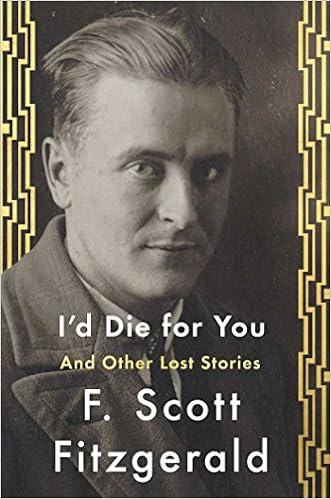
A collection of Fitzgerald’s lost stories entitled I’d Die for You and Other Lost Stories, edited by Anne Margaret Daniel, will be released April 25.  For an interview with the editor, see http://www.newyorker.com/books/page-turner/fiction-this-week-f-scott-fitzgerald-2017-03-20.

Saturday, March 18, 2017

Canadian Literary Passings


A number of well-known Canadian novelists have passed away recently.

Richard B. Wright died on February 7.  He is best known for Clara Callan, which won both the Scotiabank Giller Prize and the Governor General's Award for Fiction.  His last novel was Nightfall; my review can be found at http://schatjesshelves.blogspot.ca/2016/06/review-of-nightfall-by-richard-b-wright.html
Obituary:   http://www.theglobeandmail.com/arts/books-and-media/canadian-novelist-richard-b-wright-author-of-clara-callan-dies-at-79/article33951390/ 

Bonnie Burnard died on March 4.  She is best known for A Good House which won the inaugural Scotiabank Giller Prize.  Her last novel was Suddenly; my review can be seen at http://schatjesshelves.blogspot.ca/2016/12/canadian-book-advent-calendar-day-2-b.html.
Obituary: http://www.theglobeandmail.com/arts/books-and-media/giller-prize-winner-bonnie-burnard-was-hailed-as-a-master/article34270112/?cmpid=rss1&click=sf_globe  

Richard Wagamese died on March 11.  He is best known for his 2012 novel Indian Horse.  His last novel was Medicine Walk; here’s my review:  http://schatjesshelves.blogspot.ca/2016/03/review-of-medicine-walk-by-richard.html.
Rest in Peace knowing you enriched our cultural heritage.

Friday, March 17, 2017

For St. Patrick's Day - Irish Writers


Ireland is blessed with a rich literary heritage, so on St. Patrick’s Day, I thought I’d share some informative pieces about Irish writer. 
https://electricliterature.com/infographic-a-literary-atlas-of-ireland-7fb9a8f7b78f#.ijosd9b3v is an infographic about Irish writers who have written about the beauty of their home country.


And LitHub has highlighted 25 contemporary Irish writers:  http://lithub.com/15-great-irish-writers-youve-probably-never-read-but-should/

Why not choose a book from one of these lists for your next read? 

Thursday, March 16, 2017

Japanese Crime Writers (Especially Keigo Higashino)

I came across this article about some recommended Japanese crime writers:  http://bookriot.com/2017/03/16/5-japanese-crime-writers-that-should-definitely-be-on-your-radar/?utm_source=Sailthru&utm_medium=email&utm_campaign=Riot%20Rundown&utm_term=BookRiot_TheRiotRundown_Tue-Thur.

One of the authors mentioned, Keigo Higashino, I’ve recently read.  Here’s my review of Keigo Higashino’s Under the Midnight Sun, one of his standalone novels:   http://schatjesshelves.blogspot.ca/2017/01/review-of-under-midnight-sun-by-keigo.html.

***************

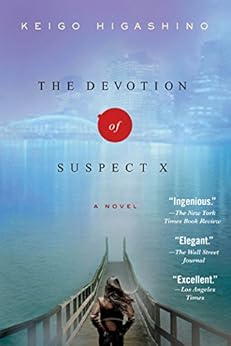
Higashino has also written several books in the Detective Galileo series.  The first book is The Devotion of Suspect X.

Review of The Devotion of Suspect X
3 Stars
Tetsuya Ishagami, a math genius, helps a woman, Yasuko Hanmaoka, hide the murder of her ex-husband. Motivated by his infatuation for Yasuko, Ishagami disposes of the body and constructs an alibi for both Yasuko and her daughter.

Kusanagi, the lead detective, tells his friend, Manabu Yukawa, a university physics professor, about the case. What results is an intellectual battle between two geniuses, one intent on constructing the perfect crime and the other on using logic to solve it.

The ending is an unguessable twist because the author withheld information from the reader. Even after everything is explained, the conclusion is unsatisfactory: the extent of Ishagami's devotion seems unbelievable, and Yukawa's behaviour, especially considering his friendship with Ishagami, is hurtful.

The pace is quick and the book is very readable, but one cannot help but feel cheated in the end.

***************

There is also a second Higashino series, this one featuring Detective Kaga.  The first novel in this series to be translated into English is entitled Malice.

Review of Malice
4 Stars
This Japanese mystery is a must-read.

Osamu Nonoguchi, a children’s author, discovers the body of Kunihiko Hidaka, a childhood friend and fellow author. Detective Kyochiro Kaga investigates and soon comes to suspect Nonoguchi though he seems to have a perfect alibi. The difficulty is identifying a motive. Kaga begins digging into the past and uncovers startling information about the two men’s school days and their literary careers. But theory after theory about the motive proves to be incorrect. Will the case ever be satisfactorily solved?

As a whodunit, the story is a locked room mystery which is solved rather quickly. It is when the book becomes a whydunit that it excels. The book could really be identified as a study of the psychology of murder. And what it reveals is chilling.

This struck me as very much a Sherlock Holmes mystery. There is little reliance on forensics. It is the determination and intelligence of the detective that solve the case. The novel is narrated through a series of journal entries kept by Kaga and Nonoguchi so the reader is given all the information Kaga has at his disposal. The reader is expected to be observant and try to make sense of the clues. (Hint: if something doesn’t seem quite right, it probably isn’t.) So many mysteries cheat by keeping information from readers; this was a problem with the other Higashino novels I’ve read (The Devotion of Suspect X and Salvation of a Saint). In Malice, however, there is no such ploy so the book really challenges the reader.

Because we learn so much background about Nonoguchi, Kaga and even Hidaka, they emerge as characters with depth, not the flat characters often encountered in second-rate mysteries. Kaga certainly earns the reader’s admiration and respect, and both the victim and his murderer will garner some sympathy.

This book appeared on the 2015 summer mystery reading list compiled by a panel on Shelagh Roger’s The Next Chapter on CBC Radio. I am certainly happy that it made it to my reading list.

***************

Another Japanese crime writer I would recommend is Six Four by Hideo Yokoyama which I read earlier this month:  http://schatjesshelves.blogspot.ca/2017/03/review-of-six-four-by-hideo-yokoyama.html.