4 Stars
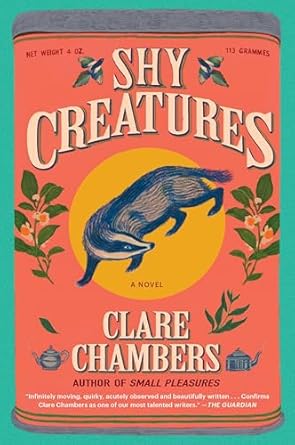
This slow-paced novel was perfect for listening to on my morning walks.
Thirty-four-year-old Helen Hansford is an art therapist at Westbury Park, a psychiatric hospital. She has been in a long-term romantic relationship with a psychiatrist at the facility, Dr. Gil Rudden, who is married to a distant relative of Helen’s. Thirty-seven-year-old William Tapping is admitted as a patient. He has spent 25 years as a virtual recluse; living with three elderly and eccentric aunts, he has had almost no contact with the world outside his home. Though he does not speak, Helen discovers he has artistic talent and so takes a special interest in him. She sets out to learn about his past and finds people, Francis and Marion Kenley in particular, who knew William as a young boy. Eventually the reason for William’s trauma and subsequent paranoia, isolation, and silence is uncovered.
The novel alternates between the present (1964) and the past (1938). Both Helen and William’s perspectives are provided so the two emerge as fully developed characters whose motivations the reader comes to understand. It is impossible not to like William. Because of his upbringing, he lacks social skills, but he is intelligent, kind, and loyal. Likewise, Helen is intelligent and dedicated to work and her clients and dutiful to her family. Gil is her blind spot.
I disliked Gil from the beginning. He’s handsome and charismatic and he knows it; he uses charm to manipulate people to give him what he wants. What he usually wants is to have his ego stroked. His treatment of Lorraine, Helen’s teenaged niece who is briefly admitted to Westbury Park, is despicable. He tends to be patronizing which betrays his feelings of superiority. It is not difficult to predict how his and Helen’s relationship will develop.
My favourite character is Marion Kenley. She is open-minded and kind-hearted, not just in words but in actions. Her efforts to make amends for past missteps are commendable and even inspiring. She is the one who most clearly shows the transformative power of kindness. The name William gives her at the end is most appropriate.
The book is described as examining “all the different ways we can be confined” and that is an apt statement. William was confined in his home, Helen is bound to an unsuitable man, and Lorraine’s life is constrained by her mother. In the end, all come to experience the joy of freedom. Of course, the happy ending may strike some readers as somewhat sentimental.
The portrayal of British society in the time periods of the novel is excellent. People are so repressed; even horrifying and traumatic events are spoken of in an emotionally muted way using euphemisms. The discussions of the treatment of people with mental illness are informative.
This is my first book by Clare Chambers. Because I enjoyed it so much, I’m going to download her Small Pleasures, an earlier novel which was longlisted for the Women’s Prize for Fiction.

From the author: "Thank you for your thoughtful review." (https://x.com/ClareDChambers/status/1957775528284332215)
ReplyDeleteHow lovely that the author responded to your lovely review. I feel much the same way as you do about this one. I've loved all her other books that I've read so far, but Learning to Swim was brilliant and is my favourite of all.
ReplyDeleteI'm currently enjoying "Small Pleasures." I'll definitely check out "Learning to Swim" - thanks for the recommendation.
Delete