Ranked a Top Canadian Book Blog
Twitter: @DCYakabuski
Facebook: Doreen Yakabuski
Instagram: doreenyakabuski
Threads: doreenyakabuski
Substack: @doreenyakabuski
Bluesky: @dcyakabuski.bsky.social

Monday, September 29, 2025

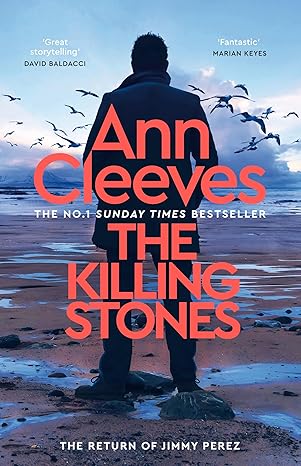
Review of THE KILLING STONES by Ann Cleeves (New Release)

 3.5 Stars

Those familiar with Detective Jimmy Perez of the Shetland series will be happy for his reemergence, this time in Orkney.

Jimmy has settled in Orkney with his partner, Chief Inspector Willow Reeves, and their growing family. One stormy night near Christmas, his oldest friend, Archie Stout, goes missing on Westray. Jimmy travels to the island and finds his friend’s body near an archaeological dig site. He was killed by one of the ancient Westray story stones. Jimmy finds himself in a difficult position; he needs to investigate because assistance from Glasgow is not forthcoming, but he has to emotionally detach while grieving the loss of his close friend and to maintain objectivity while questioning people he knows to determine if they could be potential suspects. Though officially on maternity leave, Willow steps in to assist and the two work together to solve Archie’s murder. But his killing is not the last.

Jimmy is the Jimmy I remember from the Shetland series. He is intelligent, sensitive and empathetic, while still harbouring insecurities. Willow describes him well: “An investigation would never be work for him. It was a personal crusade, even if he’d never met the victim” and “He often had too much compassion, too much empathy” so “his sympathy seemed to be channelled towards the victims, the relatives and even the perpetrators of crime.” Despite his skills as an investigator, he is sometimes plagued by “the old fear of incompetence.” He admits, however, that he is learning that “he couldn’t save the world.” Jimmy and Willow make a great team because she keeps him grounded.

There are several suspects, though I suspected from the beginning that the perpetrator would be someone not really considered during the investigation. The book is not action-packed; it’s not so much a page-turner as a plodding police procedural. There is, in fact, not a lot of suspense; an occurrence during the Kirkwall Ba’ Game does provide some tension, but it seems almost contrived. There’s not even any waiting for forensic evidence; Jimmy and Willow just interview people to determine who might have a motive.

I didn’t find the resolution particularly satisfying. The motive, when it is revealed, is a total surprise because there have been no hints. Looking back, one can find oblique hints such as the repetition of what mattered most to Archie, but the reason for his being killed comes from left field. The personality of the second victim is likewise not highlighted in a way that would be particularly helpful in suggesting a reason for his death. At the end, there needs to be a lot of explanation of exactly what happened; this is an indication of a lack of fair play on the author’s part.

As in Cleeves’ Shetland series, the reader is transported to another set of wild and remote islands. The descriptions are wonderful, not just of the physical setting but also of the customs and history. For instance, I found myself researching more about the Kirkwall Ba’ Game. Having visited Neolithic sites in Ireland and Portugal and Viking sites in Iceland and the Faroe Islands, I was intrigued by references to the Standing Stones of Stenness, the Maeshowe passage grave, and the Ring of Brodgar, places which are significant in the plot. Orkney has been added to my list of must-visit places.

That being said, a map of Orkney with its main islands and main towns would have been helpful. Willow and Jimmy travel primarily between Kirkwall on Mainland and Pierowall on Westray, but Willow also takes a plane to North Ronaldsay and drives the Churchill Barriers which take her across Lamb Holm to South Ronaldsay. A map would certainly help the reader visualize the archipelago.

I cannot say that this is my favourite book featuring Jimmy Perez, but if this is the beginning of a second series featuring him, I will keep reading.

Note: I received an eARC from the publisher via NetGalley.

Thursday, September 25, 2025

Review of THE BRIAR CLUB by Kate Quinn

4 Stars 

This historical novel is set between June of 1950 and November of 1954 in Washington D.C.

Briarwood House is an all-female boarding house. With the arrival of the mysterious Grace March, the place comes alive. She starts holding weekly dinner parties in her attic room. The seven boarders and various acquaintances form a family of sorts, but a shocking act of violence threatens to tear them apart.

Chapters focus on the female boarders: Nora, a policeman’s daughter whose romantic relationship threatens her dreams; Fliss, an English woman raising a child alone and struggling with post-partum depression; Bea, a frustrated female baseball player; Reka, an embittered refugee from Hitler’s Germany; Claire, a young woman who has a secret lover and dreams of owning her own home; Arlene, an unquestioning supporter of McCarthyism; and Grace, who listens to, encourages, and assists everyone but reveals nothing about herself.

Though there are several characters, it is not difficult to differentiate among them. Their backstories, which are very different, explain their motivations and behaviours in the present so the readers’ initial impressions may change. The chapters devoted to individual characters reveal their secrets, struggles and dreams. Each emerges as a complex character with both strengths and flaws. In each chapter, we also see Grace’s influence and consequently how each woman attains some self-knowledge and achieves some personal growth.

Between the character chapters, there are some interludes from Thanksgiving of 1954 which include the perspective of Briarwood House itself. There’s been a murder, but the reader does not know the identity of either the victim or the murderer. Obviously there’s a lot of suspense here. As each character is developed, the reader is left to speculate why someone might kill her or why she might kill someone.

There are some male characters including Pete Nilsson, the teenaged son of the selfish and domineering landlady, a mobster, an FBI agent, and a Black jazz musician. Most of these are developed to some extent, but it is definitely men who are the main villains. And that includes Senator Joe McCarthy who fueled fears of widespread Communist subversion.

It is obvious that the author did a lot of historical research into the political and social climate of the 1950s. The book addresses a number of issues of the time: McCarthyism, the Korean War, the women’s professional baseball league, organized crime, police corruption, domestic abuse, contraception, classism, racism, sexism, poverty, and sexuality. The historical notes at the end of the book clearly explain how the author incorporated historical facts into each woman’s story.

Though the novel examines many serious subjects, there are some lighter touches. For instance, recipes for the dishes that the women contribute to the dinner parties are included. Each ends with an apt, tongue-in-cheek comment about when to consume it. The music references add local colour: “eat when hungover or when life is in danger of spectacularly imploding in all directions, while listening to ‘Wanted’ by Perry Como.” There actually was a fruit salad called a Candle Salad?!

My one objection to the novel is its pro-American tone. Yes, there are attempts to show that the U.S. is not a perfect country: “Lady Liberty had taken her in, after all – and many others – and Reka would never lose the bone-deep thrum of thankfulness for that. She just wished that so many of the huddled masses this country took in hadn’t found themselves treated like a resource: stripped of what little they’d brought with them so it could be given to someone else, someone better off.” But the overall message is that the United States is better than the rest of the world. As a Canadian, I find this pro-America rhetoric in so many American books and films annoying at the best of times, but in these days of MAGA, that message is distasteful.

This historical novel will appeal to readers who are interested in women’s perspectives on events and issues of the 1950s. The events of Thanksgiving 1954 and its aftermath may require some suspension of disbelief, but the book has been carefully researched and provides an entertaining read.

Monday, September 22, 2025

Review of THE LIBRARIANS by Sherry Thomas (New Release)

2.5 Stars 

Librarians tend to be organized, but the same cannot be said for this book; the best adjective for it, I think, is chaotic.

Four staff members at a branch of the Austin Public Library are the focus in this novel. Hazel has recently moved from Singapore to Austin to begin a new life. Jonathan, a former college football player, is still pining for Ryan, a high school classmate. Astrid is nursing a broken heart after she has been ghosted. Sophie tries to lead a quiet life with her daughter Elise. Two patrons turn up dead after a game night at the library so the police interview all of them. Each of them has secrets they fear will become uncovered by the police investigation. Feeling threatened, they decide to trust their coworkers with their secrets and work together to get to the bottom of the deaths.

The pace is very slow and then the plot becomes convoluted and confusing. Parts are far-fetched and other parts are just weird. For example, the number of connections between various characters is unbelievable. Jonathan loves Ryan who is Conrad’s roommate. Conrad knows Perry (loved by Astrid) who knew Kit who married Hazel who is in love with Conrad?! Conrad and Hazel met in Madeira twelve years ago and now meet again in Austin, Texas? Four timid librarians turn into action heroes skilled in self-defense and the use of weapons?! One character has spent virtually her entire life living a lie and speaking with a fake Swedish accent? People have names like Heneage Pericles Bathurst and Valerian Conrad de Clausonne de Villiers? We are to accept Jeannette’s motivation for contacting Sophie? In the middle of a crisis, a character makes a list of things to do and others take copious notes?

The story of Kit’s deceptions is so complicated. We are subjected to explanations of his behaviour like, “’the reason he embezzled was to meet a margin call so that the exchange wouldn’t start liquidating his Bitcoin positions.’” Why would Kit have put a box of books in a random library in Austin before he knows that Hazel is going to move to Austin and get a job there? And in that box he includes a yearbook with a message for Hazel?! Then when the blockchain private key is found, it’s never used?!

Other things make no sense. The force of a plane crash, even in water, causes significant trauma to the human body, leading to severe injuries that can fragment a body, yet the victim of such a crash “does not look dead, but . . . restful”? One minute the murders are solved and Detective Shariati “will receive the bulk of the credit for solving the murders of Perry Bathurst, Jeannette Obermann” and then three sentences later, Detective Hagerty hopes “he can successfully pin Jeannette Obermann’s death on the quiet librarian”? Some things just stretch credibility. For instance, not just one but two copies of Shakespeare’s First Folio are found that were probably “held by criminal elements”? And Hazel needs to borrow a stack of rare books for inspiration for a book-themed tabletop game? The police would allow civilians to be so involved in a plan to entrap suspects and even allow them to carry weapons? Private investigators play key roles and always have useful friends.

The plot is not linear: there is constant switching among characters and times so it’s difficult to know who was doing what when. In other words, plot construction can only be described as clumsy and awkward. And then, once the murders are solved, the novel goes on and on and on to make certain that everyone has a happy ending.

What stands out in terms of style is the use of pop culture references: “She is as beautiful and resolute as Daenerys Targaryen, standing at the bow of her ship, sailing to Westeros – except the Khaleesi should have stayed the fuck home” and “So many emotions – in such overwhelming quantities – have besieged her, like the legions of Mordor coming to sack Minas Tirith” and “’I don’t want you to think that I was Don Draper, escaping some kind of horrible Midwestern past’” and “Nainai voguing as she slides into the camera frame, blue steeling as if she gave birth not only to a doctor and two engineers, but also Zoolander himself.”

The book relies on romance, with virtually everyone yearning for someone, a thin and contrived mystery, a convoluted plot with plot holes, and an unacceptable number of coincidences and random connections. The result is a clunky book lacking cohesion.

Note: I received an eARC from the publisher via NetGalley.

Thursday, September 18, 2025

Review of THE BOOK OF GUILT by Catherine Chidgey (New Release)

 4 Stars

I’ve read three of Catherine Chidgey’s novels and they’ve all been wonderful reads, so I was excited to read her latest. It did not disappoint.

The novel is set in 1979 in England but in an alternate world where there was no victor in World War II. After the assassination of Hitler by German conspirators, a peace treaty, the Gothenburg Treaty, was negotiated. It established peace and allowed for the sharing of scientific and medical research including “’access to studies conducted in the camps before and after the war.’”

Identical triplets, Vincent, Lawrence, and William, are the last remaining residents at a Sycamore Home for boys in the Hampshire countryside. Thirteen-year-old orphans, they are looked after my three women: Mother Morning, Mother Afternoon, and Mother Night. Every day they are given various medications, prescribed by the jovial Dr. Roach, to help them with a mysterious illness: “We didn’t know the name of our sickness, and its symptoms varied from month to month and boy to boy; we just called it the Bug.” Boys who recover are allowed to move to Margate, a paradisaical seaside resort with a huge amusement park.

In nearby Exeter, Nancy, also thirteen, lives a secluded life with her parents who dote on her but don’t let her leave the house. When her life intersects with the three brothers, dark secrets are brought to light concerning their origins, their purpose, and their likely fate.

The novel is narrated from three perspectives. Vincent, in first person narration, tells his story and that of his brothers, whereas Nancy’s story is told in third person limited omniscient point of view. Also in third person, the perspective of Sylvia Dalton, the Minister of Loneliness, is included. She is charged with closing down the remaining Sycamore Homes.

Though the three brothers are identical in appearance, distinguishable only by the colours of their shirts, they are not identical in personality; Vincent insists, “we weren’t the same. We weren’t.” Vincent is the watchful, thoughtful one; Lawrence is the sensitive, soft-hearted one; and William is the mercurial one who is capable of cruelties. Interestingly, it’s William that Vincent loves best: “I loved William better. I still can’t explain that.”

The book is cleverly crafted with secrets gradually revealed. I don’t want to reveal too much of the plot because much of my enjoyment was trying to answer the many questions that came to mind: The boys are told they’re special but not told why or how. Why are the boys kept isolated from the outside world? What is on the missing page of their Book of Knowledge? Why does Mother Night took at the boys so sadly? When the boys are allowed in the nearby village, why do people avoid them? Why are the boys’ dreams of such interest to the doctor? What is the purpose of the Book of Guilt in which their misbehaviours (lying, kicking, and displaying the wrong attitude) are diligently recorded? The only element that bothered me is Vincent’s seeing a newspaper with a photo of a little boy. His finding this picture is unlikely and too convenient to be believable.

I was kept interested throughout. From the beginning, there’s a sense of unease, but as more and more is revealed, I found myself increasingly unsettled. Not only is the book entertaining, it is thought-provoking: it addresses the nature versus nurture question and asks what is acceptable for the advancement of knowledge.

Here are links to my reviews of the other Catherine Chidgey novels I’ve read:

Remote Sympathy: https://schatjesshelves.blogspot.com/2022/04/review-of-remote-sympathy-by-catherine.html

Pet: https://schatjesshelves.blogspot.com/2024/03/review-of-pet-by-catherine-chidgey.html

The Axeman’s Carnival: https://schatjesshelves.blogspot.com/2024/06/review-of-axemans-carnival-by-catherine.html


Note: I received an eARC from the publisher via NetGalley.

Monday, September 15, 2025

Review of THE MAN IN THE STONE COTTAGE by Stephanie Cowell (New Release)

 3 Stars

This novel will appeal to lovers of the Brontë sisters.

In the 1840s, Charlotte, Anne, and Emily live with their father Patrick and brother Branwell in the parsonage in Haworth. Life is not easy: their elderly father is losing his vision and Branwell is troubled, drifting from job to job and squandering money on alcohol and drugs. There are also constant financial worries. The three women want to publish their poetry and novels in order to provide financial security for the family but have difficulty finding a publisher. In the meantime, Emily, in her wanderings across the moors, meets a man living in a once-abandoned cottage. She visits him periodically and the two become intimate friends.

A mystery in the novel is whether the man in the cottage, Jonathan MacConnell, is real or a product of Emily’s imagination. The entire time Emily spends with him no one else sees him. It’s emphasized that Emily lives in a world of her own, and she thinks, “He hadn’t seemed real to her, and then he was so real she could feel his breath.” During one encounter, “Her vision blurred for a moment, and this kind, redeemed man also blurred before her as if he dissolved into the air.” All the sisters seem to believe “that the things we imagine are as real to us as the things that everyone else can see; if we love them enough, we give them life.” So did Emily really have a love life unbeknownst to her sisters or did she create him just as she created Heathcliff? In the end, though, it hardly matters.

The title is actually misleading. Jonathan is actually not present in that much of the novel. The focus is on the women, Emily and Charlotte in particular, so surely they should be given prominence. By naming the novel after Jonathan, the author is giving him a prominence he doesn’t deserve and the women do – another example of women being treated as subordinates to men!

The three sisters are clearly differentiated. Charlotte is the one who takes charge; after her mother’s death, she was tasked with being the mother in the family. Emily complains that Charlotte will “’be directing us how we should have our lives. You’ve done it since you were a child.’” Her intelligence is obvious, but we also see her loneliness and desire to be loved despite her plain appearance. Emily is an interesting character. Solitary and introverted, with an aversion to social situations and a dislike of being touched, Emily has traits that today might identify her as being on the autism spectrum. Both Charlotte and Emily are described as being virtually possessed when they write: “Something touched the small of [Charlotte’s] back and gently pushed her into the chair” and she begins Jane Eyre; and Emily writes Wuthering Heights in a type of frenzy after “her novel woke her like something shaking her arm,” and when she tries to rest from writing she has to pull the pillow over her head “against the strange people in her room and whispers from the corners.” Anne receives the least attention; she seems a quiet and gentle soul. Though they possess different personalities and sometimes annoy each other, there is no doubt of a strong bond among them. The novel shows their joys, sorrows, struggles, and hopes and dreams.

Branwell is not particularly likeable. He is self-pitying and has a tendency towards histrionics. Anne seems to understand her brother’s failings well: in a letter to her sisters, she writes, “’he sees great things he could be but has no idea of the patience it needs to get there. . . . He wants to step into greatness as if he opened a tower door. . . . He feels he ought to be above such mundane clambering.’” The sisters are enablers. Emily, for instance, regards Branwell as a “little god” who when he shows himself to be very human, she thinks of as “broken bits of a tiny statue . . . she knew she would work to put together once more. . . . From the time she was small, trying to mend his hurt feelings, his insecurities, while at the same time, convincing him of his greatness.” He is constantly being rescued by his father or sisters, yet he embarrasses his family by having an affair with a married woman, drinking, and accumulating debts.

The writing style is flat and doesn’t flow. For instance, in one sentence Charlotte is looking at Emily’s cabinet piano and in the next sentence she is thinking about how a man she loved said “her name ponderously with his French accent as if giving it serious thought.” What is the connection? Dialogue often sounds disjointed. For instance, Emily says, “’I sometimes watch the stars at night too and think I hear voices from centuries ago. My two eldest sisters died when I was young.’” Charlotte says, “’Emily, no one speaks more clumsily than you do,’” but they all seem to speak in a disordered way, often with a long series of questions. Charlotte speaks this way (“’Why are you here? How was he caught? What did he do?’”) and so does Emily (“What do you mean it’s ended? Oh, dear God, what has happened? Are you well? . . . What is it? What can I do?’”) and so does Jonathan (“’You have the book still? Good. And your brother’s come back after all? And your sister as well?’”)

As I stated at the beginning, this book will probably appeal to lovers of the Brontës. I enjoyed their novels, but this one about them not so much. The style is unimpressive and the magic realism elements are not to my liking either.

Note: I received an eARC from the publisher via NetGalley.

Friday, September 12, 2025

Review of RIPENESS by Sarah Moss (New Release)

 4 Stars

Sarah Moss is one of my must-read authors. Ripeness, like her other novels, has thematic depth which cannot but impress.

There is a dual timeline, both focused on Edith Braithwaite. In the late 1960s, she is 17 and bound for Oxford when her mother dispatches her from the family farm in Derbyshire to a villa in the Lake Como region of Italy. She is to look after her unmarried sister Lydia, a ballet dancer, who is pregnant. Once the child is born, Edith is to insure that the child is picked up by French nuns who will arrange for its adoption. This timeline is narrated in first person by Edith.

In 2023, Edith is 73. After a divorce, she is happily living on the west coast of Ireland where she has started a relationship with Gunter, a German potter. Her best friend Méabh learns about a half-brother who was given up for adoption and of whose existence no one had been aware. This inspires Edith to write a letter to her nephew, the one given up for adoption: “an account, an explanation – expiation? - for Lydia’s son to find if he comes looking when she’s gone.” This timeline is narrated in third person.

Half a century passes between the two timelines and it’s interesting to read the older Edith’s comments about her teenaged self and what she’s learned since: “I had all the certainty of adolescence and I was a prude and I hope and believe I would have had kinder and better instincts even a year or two later” and “in those days it still seemed to me that directness was truth and indirectness lying, that there was only one way to be honest.”

I loved the writing style. Parts read like an interior monologue and others are more stream-of-consciousness: “Fingers numbing, weed gone or not felt by the toes, time’s up, body for the dry land again, turn, water-pull, ocean-pull, beach-pull, foot grazes sand, stumbles, swim on, a while yet, wave, no salt-slap now, face already salt, already cold, already sea, hair-weed on salt-neck, grounding, grounding, feet meet sand, sand meet feet, bodyweight, lift, walk. Hello, air, earth, elements.” Dialogue is not indicated by punctuation. Literary allusions abound; reference is made to Keats, Gerard Manley Hopkins, Shakespeare, Dickens, and Milton.

The novel develops a number of themes, a major one being immigration/displacement and belonging. Edith’s mother was a Jewish refugee and in the present there are refugees from the war in Ukraine. There are protests against the use of a local hotel as emergency housing for African refugees. And, despite having lived in Ireland for a long time, Edith feels like an outsider, never “local enough.” So what does it mean to belong? Now divorced, she enjoys her autonomy, the freedom and ability to make her own decisions and act independently, but does such autonomy preclude belonging? When Méabh’s American half-brother writes to say “he wants to see where he comes from,” Edith wonders why “He, who has never set foot in this place, comes from here, and she . . . remains a stranger.” She believes that “national identity isn’t generic, that blood doesn’t give you rights of ownership, whatever the passport rules say. Méabh’s brother can’t just come here and call it home, say he belongs, when nothing she or the Ukrainians do will ever entitle them to say such things . . . It’s all blood and soil, all nativism, this confusion of biology and citizenship.” Edith advises her nephew to “be free of all that, that’s my advice. You’ll belong by caring for people and places. You can’t go home, wanderer. You come from where you were last. . . . We’re all wanderers. We all live dangerously, the brave thing is to know it.”

Other topics are also touched on. One is the impact of mothers on their children: Edith’s mother was largely absent so Edith thinks “I went on trying so hard for so many years not to be Maman that perhaps I forgot, forgot how to be myself” and wishes “Maman had been there, had been able to be there, when we were growing up, had been able to show my beautiful sister how not” to live fast and glamorously. There are comments about men being hurt by patriarchy “for their unvoiced fears and emotional deficits.” Reference is made to rape culture, unwanted pregnancies, and the Magdalene Laundries. Being English, Edith often gives voice to relations between the Irish and English: “You can still blame the English . . . for the way Irish people didn’t or couldn’t resist the power of the Church once independence came. Assertiveness could be fatal under English rule and it takes generations to forget those lessons.”

Perhaps because I am close to Edith’s age, I agreed with many of her observations. As I’ve often commented, there’s little difference between a nun’s habit and a traditional Muslim woman’s dress; Edith compares a nun’s “black veil secured somehow under the chin, like an uncannily stiff hijab.” She refers to a Biblical story that has always bothered me: “Abraham and Isaac which has always seemed to me more a test of human decency than of faith and therefore a test that Abraham fails. If your god tells you to kill a child, find another god.” Some of her comments are more light-hearted: “a water bottle, what is it with the under-fifties and water, really, love, we all used to go hours without water, lunch until dinner, did no harm at all.” I loved her rant about scented candles which “will rejuvenate, relax, restore you. They will nourish and uplift and replenish, in all ways prepare you to continue to provide service and comfort uninterrupted by your own ageing or fatigue or hunger. How about actual rest, . . . how about a proper meal and a long walk and an afternoon with your mates, only that might inconvenience a man or child or take up resources a man or a child might want so why don’t you light a little candle and smell the pretty smell while you iron your pretty tablecloth, crone?”

My husband and I visited Ireland last fall and spent three weeks driving around the country so some of the descriptions brought back fond memories. Like Edith, we loved the Burren, though not so much the constant rain on the “cold wet coast of a cold wet island.” We did drive the Wild Atlantic Way and so I chuckled at Edith’s comment that “whoever thought of renaming the N67 deserves either a life-changing bonus or pushing off the Cliffs of Moher . . . [because] there might be challenges involved in navigating a narrow coastal road in variable weather on the unaccustomed side.” And yes, we wondered about the Irish “signing boreens as 90 kilometres an hour.” That might be “a maximum, not a recommendation, eejit,” but we couldn’t imagine that speed as a reasonable maximum on narrow country lanes.

This novel is slow-paced but that’s not a criticism. It is so skillfully and beautifully written that a reader must take time to savour, and there is so much insight that a reader must take time to think.

If you haven’t read Sarah Moss before, I also recommend four other of her novels that I have read:

Summerwater: https://schatjesshelves.blogspot.com/2021/05/review-of-summerwater-by-sarah-moss.html

The Tidal Zone: https://schatjesshelves.blogspot.com/2021/05/review-of-tidal-zone-by-sarah-moss.html

The Fell: https://schatjesshelves.blogspot.com/2022/03/review-of-fell-by-sarah-moss-new-release.html

Ghost Wall: https://schatjesshelves.blogspot.com/2020/11/review-of-ghost-wall-by-sarah-moss.html


Note: I received an eARC from the publisher via NetGalley.

Monday, September 8, 2025

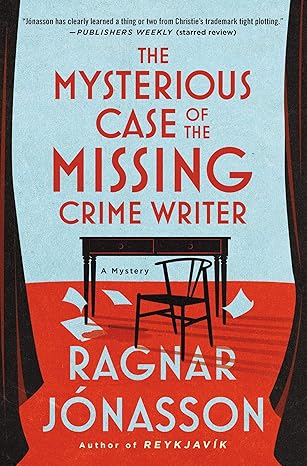
Review of THE MYSTERIOUS CASE OF THE MISSING CRIME WRITER by Ragnar Jónasson (New Release)

 2.5 Stars

This is a frustrating book; it begins okay but then the plot becomes disjointed and the ending will have readers wondering if pages are missing at the end.

It is 2012 when a bestselling crime author Elín Jónsdóttir goes missing. Detective Helgi Reykdal is charged with determining what happened to the writer. He investigates by interviewing those closest to Elín: her publisher, Rut Thoroddsen, and two friends, Thor and Lovísa, whom she sees regularly. Secrets in Elín’s life are gradually revealed.

There are also three timelines with their own storylines. There is some focus on a bank robbery in 1965 in which a guard was killed. Einar Másson was arrested and imprisoned, but he never revealed his accomplice who actually shot the guard. In the 1970s, Hulda Hermannsdóttir, Helgi’s predecessor, interviews Einar, hoping to learn the identity of the accomplice. In 2005, Elín is interviewed by an unidentified reporter.

Background is given into Helgi. He’s obsessed with golden age detective novels. We also learn about his relationship with Bergthóra who verbally humiliated and physically attacked him. He has walked away from that relationship, but Bergthóra seems unwilling to let Helgi move on. Helgi’s investigative skills are not highlighted: all he does is interview people and talk to people who contact him. I had assumed this was a standalone novel but have learned that Helgi is actually introduced in an earlier novel, Death at the Sanatorium.

I had a number of issues with the plot which definitely lessened my enjoyment. Hulda went missing years earlier, but police haven’t really investigated her disappearance. This makes no sense. The police were also incompetent in the bank robbery case. Any checks into Einar’s background would easily have uncovered his accomplice’s identity. And the motive for the bank robbery was to commit the perfect crime “’for the thrill of it . . . as a way of spicing up their life’”? This just seems like a weak motivation, especially given who the robbers are. What exactly are the clues in the interview that have a woman suddenly talking to her parents about a sensitive topic she’d never felt a reason to address earlier? Helgi is told he must “’maintain complete discretion’” about the contents of a document, but he then proceeds to reveal them? Then there are the plot holes in Elín’s life. She teaches for a year and then goes into teacher training? She hikes to stay fit so the explanation as to her fate is illogical. Once her disappearance is explained, Helgi doesn’t bother to confirm what he is told and just proceeds to repeat the information to everyone?

The novel just feels flat. Helgi does little but talk to characters again and again. The case is solved because someone comes to see him. Dialogue often feels unnatural. And there is little excitement or tension, and that is crucial in crime fiction. Only as regards Bergthóra’s behaviour is there any real suspense.

I was disappointed with this book; though the publisher’s description does not indicate this, I assume it’s the first of a new series. I dislike being left totally hanging.

Note: I received an eARC from the publisher via NetGalley.

Friday, September 5, 2025

Review of BAD JULIET by Giles Blunt (New Release)

 4 Stars

This historical novel is part romance and part mystery narrated by an older, wiser narrator detailing events that led to his increasing self-awareness 40 years earlier. 

In 1915, 22-year-old Paul Gascoyne, after sabotaging an academic career, becomes an English literature tutor to patients at a tuberculosis sanitarium in the Adirondacks of upper New York State. There he meets Sarah Ballard, a young woman who survived the Lusitania disaster. To rouse her out of her gloom, Paul encourages her to write a memoir. It eventually becomes clear that her memoir is a mix of fact and fiction. Then when her health deteriorates and death is not unlikely, Sarah begs Paul to be the one person in the world who will truly know her and she reveals secrets she has told only one other person. But is she a reliable narrator of her life story?

There is also a romance story. Paul falls in love with the beautiful, enigmatic Sarah, but she is in love with Jasper Keene, a promising playwright, who is also in love with her. The three are friends, but when Jasper disappears for extended periods without explanation, Sarah turns to Paul. She often places him in the difficult position of assisting her relationship with Jasper. Will Paul be able to put Sarah’s happiness ahead of his personal desires?

It is the characterization of Paul which stood out for me. As a man in his sixties, Paul describes his younger self very aptly: a “callow, pompous, and self-involved” young man who needs to learn that “he may misjudge people and get things wrong even when – especially when – he is most confident he is right.” When he first arrives in Saranac Lake, it takes him a while to escape “his personal ivory tower . . . moated with prejudice” and leave behind his “juvenile resentment at the injustice of my exile.” His life has been privileged and not particularly difficult until his fiancée jilts him and then he throws away a job as a university lecturer because he isn’t given what he wants. He seems very much a spoiled, entitled young man.

It is Paul’s attitude to women that I found particularly distasteful. He decides that his mission for the next few years will be to become “’a thoroughgoing cad . . . a heartbreaker of the first order. I’m going to enjoy as much female affection as possible while limiting my own emotional engagement to lofty amusement.’” He wants to rid himself of “the tiresome burden of virginity” and so attempts to seduce women without any concern for their feelings or reputations. Totally oblivious to the double standard, he then believes that he could never “fall in love with anyone who was not a virgin.” He has a lot to learn about love and the lessons are painful, as he realizes only later.

These views about love cause him a lot of difficulty; full of self-importance, he doesn't like his beliefs challenged. For the longest time, he will not allow himself to believe what Sarah tells him about her life. She admonishes him, “’What I may have been to you I don’t know – a Madonna? A Juliet attached to the wrong Romeo? I make a bad Juliet. But for some reason – some reason that has nothing to do with who or what I actually am – you’ve chosen to idealize me.’” He is very much a doubting Thomas with “an innate preference for comfortable ignorance.”

I loved the writing style. I enjoy diction which uses words like farceur, Panglossian, gracile, and seraglio. Literary allusions abound: reference is made to Charles Dickens, T. S. Eliot, Robert Louis Stevenson, Stephen Crane, George Eliot, Henry James, Joseph Conrad, and, of course, Shakespeare. And the title is perfect. Given the fate of Sarah and Jasper, that title provides food for thought.

Giles Blunt may be best known for his John Cardinal detective series, but this literary fiction is definitely worthy of attention too.

Monday, September 1, 2025

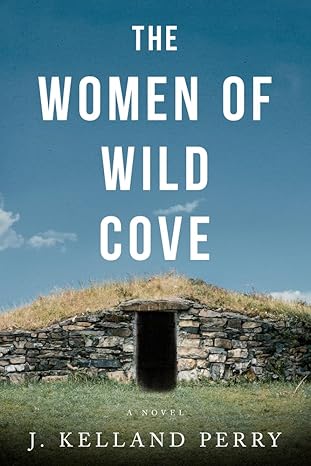
Review of THE WOMEN OF WILD COVE by J. Kelland Perry (New Release)

 2 Stars

This post-apocalyptic novel reminds me of the young adult book The Chrysalids by John Wyndham.

After global collapse, the island of Newfoundland has survived though it is diminished in size. Women rule the various villages; they have all the power and make all the decisions. Men are subservient, indoctrinated as either peons (used for manual labour) or consorts (used primarily for breeding). One day 18-year-old Kat stumbles across an injured mainlander who wrecked his boat trying to get to the island. Despite what she has been taught about outsiders being a threat, she decides to help Marcus return to his home. He is captured, however, and his assimilation begins. When he finally confesses the true nature of his mission, it may already be too late for both him and the islanders.

I disliked the portrayal of all men as untrustworthy and irresponsible unless they are indoctrinated to totally accept women’s leadership. The community leader tells Marcus, “’Why should you feel entitled to such license after the havoc your gender has wreaked on the planet? Entire countries have met their end because of your careless stewardship, your greed for money and power and your propensity for violence and aggression. The division and strife you’ve created, the effects of global warming – worldwide floods, famine, disease – caused by man’s heedless practices, have brought us to the absolute brink of extinction. And let’s not forget other life forms.’” At meetings, women listen to passages from journals written by women who were abused by men so the male gender is equated with abuse. All men are held responsible for the past actions of men and therefore are given no power or even choices over their destinies.

The leaders speak of their idyllic villages, but life is not perfect. Children are raised by caregivers in a village other than the one in which they are born. Because there have been a large number of infant deaths, the leaders decide that younger women must now begin breeding at 18 years of age and must bear two children. If they do not agree, all privileges and the vocations they have chosen for themselves will be revoked; in other words, they are coerced into complying with the directive to reproduce. There’s concern about the consorts; Kat asks, “What was with these dudes? What had happened to their masculinity? Along with aggression, had too much testosterone been bred out of them as well?” And men of course are virtual slaves; their compliance is aided by an elixir given to all men to drink.

There are several weaknesses in the novel. There are a lot of information dumps providing background about what happened. On the other hand, there is insufficient explanation about where the islanders get what is needed to carry out medical research. Some characters are one-dimensional; Trent, for instance, is a cartoon villain complete with leers and dialogue like “’Well, well, well . . . We’ve been expecting you.’” They supposedly possess scientific knowledge but have no understanding of the menstrual cycle because Kat is expected to have sexual intercourse immediately after her period ends until she conceives.

There are other plot holes that break the internal logic of the narrative. Why doesn’t Marcus tell Kat the reason for his venturing to Newfoundland? Since time is of the essence, why doesn’t he tell the truth immediately because it would most likely convince Kat to give him what he needs? The passage of time is unclear. Days seem to pass, yet then we’re told that is not the case. The ending is too pat with its almost miraculous, just-in-time discovery – too deus ex machina for my liking. And then Kat gives up on her dream, the dream that is of such importance to her?!

I found this book rather amateurish. It has an interesting premise, but the execution is weak.