2 Stars
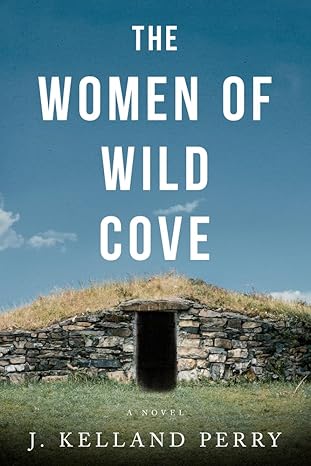
This post-apocalyptic novel reminds me of the young adult book The Chrysalids by John Wyndham.
After global collapse, the island of Newfoundland has survived though it is diminished in size. Women rule the various villages; they have all the power and make all the decisions. Men are subservient, indoctrinated as either peons (used for manual labour) or consorts (used primarily for breeding). One day 18-year-old Kat stumbles across an injured mainlander who wrecked his boat trying to get to the island. Despite what she has been taught about outsiders being a threat, she decides to help Marcus return to his home. He is captured, however, and his assimilation begins. When he finally confesses the true nature of his mission, it may already be too late for both him and the islanders.
I disliked the portrayal of all men as untrustworthy and irresponsible unless they are indoctrinated to totally accept women’s leadership. The community leader tells Marcus, “’Why should you feel entitled to such license after the havoc your gender has wreaked on the planet? Entire countries have met their end because of your careless stewardship, your greed for money and power and your propensity for violence and aggression. The division and strife you’ve created, the effects of global warming – worldwide floods, famine, disease – caused by man’s heedless practices, have brought us to the absolute brink of extinction. And let’s not forget other life forms.’” At meetings, women listen to passages from journals written by women who were abused by men so the male gender is equated with abuse. All men are held responsible for the past actions of men and therefore are given no power or even choices over their destinies.
The leaders speak of their idyllic villages, but life is not perfect. Children are raised by caregivers in a village other than the one in which they are born. Because there have been a large number of infant deaths, the leaders decide that younger women must now begin breeding at 18 years of age and must bear two children. If they do not agree, all privileges and the vocations they have chosen for themselves will be revoked; in other words, they are coerced into complying with the directive to reproduce. There’s concern about the consorts; Kat asks, “What was with these dudes? What had happened to their masculinity? Along with aggression, had too much testosterone been bred out of them as well?” And men of course are virtual slaves; their compliance is aided by an elixir given to all men to drink.
There are several weaknesses in the novel. There are a lot of information dumps providing background about what happened. On the other hand, there is insufficient explanation about where the islanders get what is needed to carry out medical research. Some characters are one-dimensional; Trent, for instance, is a cartoon villain complete with leers and dialogue like “’Well, well, well . . . We’ve been expecting you.’” They supposedly possess scientific knowledge but have no understanding of the menstrual cycle because Kat is expected to have sexual intercourse immediately after her period ends until she conceives.
There are other plot holes that break the internal logic of the narrative. Why doesn’t Marcus tell Kat the reason for his venturing to Newfoundland? Since time is of the essence, why doesn’t he tell the truth immediately because it would most likely convince Kat to give him what he needs? The passage of time is unclear. Days seem to pass, yet then we’re told that is not the case. The ending is too pat with its almost miraculous, just-in-time discovery – too deus ex machina for my liking. And then Kat gives up on her dream, the dream that is of such importance to her?!
I found this book rather amateurish. It has an interesting premise, but the execution is weak.

No comments:
Post a Comment