Ranked a Top Canadian Book Blog
Twitter: @DCYakabuski
Facebook: Doreen Yakabuski
Instagram: doreenyakabuski
Threads: doreenyakabuski
Substack: @doreenyakabuski
Bluesky: @dcyakabuski.bsky.social

Monday, March 30, 2026

Review of SON OF NOBODY by Yann Martel (New Release)

 4 Stars

This is a very interesting read from the author best known for his Life of Pi.

Harlow Donne, a Canadian doctoral candidate studying Ancient Greek literature, leaves his wife Gail and his daughter Helen for a study year at Oxford University. From scraps of papyrus, he pieces together fragments of an unknown epic poem that he entitles The Psoad. This poem, about the Trojan War, differs in some ways from the version in The Iliad. What is most interesting is that Donne’s discovery presents the Trojan War from the point of view of Psoas, an ordinary foot soldier.

The novel has an interesting structure. Donne’s translation of this imagined Greek text is accompanied by commentary. Some of the annotations are academic in nature, clarifying, analyzing and interpreting the text. For instance, Donne notes differences between The Psoad and The Iliad and suggests parallels between The Iliad and the Bible as well as similarities between Psoas and Jesus. But there are also personal musings on his life with Gail and Helen.

Donne is not an especially likeable character. There is no doubt that he loves Helen, but he is academically ambitious and puts his studies before his family. After a tragedy, the extent of his self-centredness is emphasized. I noted that his academic notations tend be be precise and detailed whereas his personal reflections are much more general. There are several explanations for this but one is definitely that his focus is his scholarship; he himself admits that his “mind, strapped to the mast of a ship, was in the thrall of a Siren’s song.”

A major theme is that “the past is never done with, that always there are parallels and returns and repetitions, always the song continues.” Donne argues that The Iliad, Gilgamesh, and the Bible are foundational stories with few verifiable facts: “distant, immediate, unverifiable, compelling, subjective.” He also mentions “a commonality between the story of Troy and the story of Jesus: the acquiescent sacrifice of an offspring without which neither story can proceed. In both, the future is begot by killing the future.”

This theme is further explored with suggestions of parallels between Psoas and Donne. Both leave their countries and families on a quest, both have difficulties adjusting to their new environments, both experience a madness of sorts, and both are visited by tragedy. I did find that the parallels are sometimes spotlighted in a heavy-handed fashion. For instance, Psoas’ conversation with Hades obviously points towards a major event in Donne’s life. Obviously, the book highlights universal human experiences and emotions. Both Psoas and Donne experience homesickness, love, loss, anger, regret, and grief. Both learn about the sacrifices and cost of ambition.

Another theme is ordinary people are not really different than those of high status. Commoners are also capable of strength and courage. The Iliad focuses on the feats of heroes but Donne argues that The Psoad is a “radical call for egalitarianism” because it shows Psoas, often described as the son of nobody, as also capable of acts that are deemed heroic. Both Donne, a nobody from an unknown university, and Psoas dare to challenge those in authority. Even Jesus was “an illiterate, impoverished tradesman from an oppressed minority.” And, on the other hand, regardless of status, people can be “hiding places for monsters.”

This is a thought-provoking novel that I really enjoyed. It is unique and creative in its exploration of how an ancient story can resonate in the present.

Note: I received an eARC from the publisher via NetGalley.

Thursday, March 26, 2026

Review of THE MAID'S SECRET by Nita Prose

 2.5 Stars

Had this book not been chosen for book club, I would not have finished it. I found it insipid and overly sentimental and clichéd. I enjoyed the first book, The Maid, because Molly, the narrator and protagonist, offers an interesting neurodivergent perspective. In this novel, I found her less charming and really the focus is on Flora, Molly’s Gran, who is the maid in the title.

At an Antiques Roadshow-like event at the Regency Grand, Molly and her fiancé Juan Manuel learn that Gran’s ornamental egg is a Fabergé worth millions. Molly decides to sell it, but at the auction, it is stolen. The present-day chapters detail the search for the egg but these alternate with lengthy diary entries addressed to Molly in which Gran tells her life story and, indirectly, that of the Fabergé egg.

The book ends with Gran’s comments that “life is a fairy tale” and this story actually reads like one. Though marketed as a “spirited heist caper” and a “spellbinding whodunit,” it is not. The focus, as stated in the prologue, is love. Much of the book reads like a historical romance, and that is not a genre I enjoy. Since much of Gran’s story, especially her relationship with John Preston, is discussed in the earlier books in the series, there’s not much suspense either.

The characters are caricatures which had me rolling my eyes. Gran’s parents and the Braun family are just arrogant rich people; focused on money, they have only contempt for those not of their social class. They get away with robbery, rape and murder?! Servants like Margaret Mead and Uncle Willy, on the other hand, tend to be saintly and capable. We are expected to believe that a dishwasher works his way up to the position of pastry chef in a 5-star hotel?

I had several issues with the book. There are problems with setting. Gran is a teenager in the mid-20th century, but she and her family behave like characters from Downton Abbey. The curtseying seems anachronistic, as does the attitude towards girls’ education. The novel is vague about the country in which it is set, though references suggest a North American city; for instance, Molly and Juan Manuel live in an apartment, not a flat. So what’s with the references to manor houses and barons?

I have other questions. Gran didn’t recognize the egg when it made its way into her home? If she did, wouldn’t she have taken advantage of its value to ease their financial situation? Molly and Juan Manuel’s landlord makes an instant decision to convert the apartments to condos? Magnus Braun has decided to purchase Gray Investments but then tells Reginald Gray, “’you’ve got nothing I want’”? The police department needs Speedy’s help to set up proper surveillance? Angela is “accepted into the local police academy, prerequisites waived on account of ‘experience in the field’’? A reality show about antiques has rabid groupies who pursue Molly for autographs?

Dedicated fans of the series might enjoy the book, and it will certainly appeal to readers who like cozy, feel-good fiction. Unfortunately, I found it predictable and tedious, lacking the originality of the first book. I hope this is the last book in the series; if not, I will not be reading any further installments.

Monday, March 23, 2026

Review of DAUGHTER OF EGYPT by Marie Benedict (New Release)

 3 Stars

This feminist historical fiction focuses on two ambitious women defying expectations.

There are two storylines. One begins in 1486 BC and focuses on Hatshepsut, one of Egypt’s few female pharaohs, and her rise to power. The other timeline is post-World War I; Lady Evelyn (Eve) Herbert, the daughter of Lord Carnarvon, wants to join her father and Howard Carter, the famous Egyptologist, on their digs in the Valley of the Kings. She is determined to find Hatshepsut’s tomb.

I did not find this book a compelling or engaging read. The pace is slow and there is not much tension; often not much happens. Perhaps my knowing what was discovered in the Valley of the Kings in 1922 meant there was little suspense for me. Attention is often given to unnecessary details. For instance, do we really need to know that a rare skin oil is applied from an alabaster jar found on a marble dressing table before Hatshepsut is dressed in a pure white linen gown and adorned with an ornate gold diadem and a gold and carnelian collar or that she lies back on a crimson, emerald, and gold wooden chaise? There’s needless repetition; in case readers forget, they are reminded that Luxor was once called Thebes, that Eve prefers her mother as a self-sacrificing nurse, and that there were attempts to erase Hatshepsut from history.

There are information dumps about Egyptian history: the Ottoman Empire, the British occupation, and Egyptian nationalism. In historical fiction, there is always the necessity to provide historical information to help the reader understand events, but the use of dialogue to do so makes conversations anything but natural. For example, Hatshepsut says, “’Could it be the royal branch of the family stemming from my father’s predecessor, Amenhotep? . . . Amenhotep died without an heir; that is, of course, how my father became pharaoh. . . . Or perhaps the threat originated from relatives of Pharaohs Kamose or Taa the Second who preceded Pharaoh Ahmose, Amenhotep’s father.’” This explanation is hardly necessary in a conversation with someone very familiar with pharaonic history so the exchange just sounds awkward and clunky.

Sometimes the reader is almost insulted because the author insists on pointing out what is patently obvious. For example, Eve overhears Englishwomen wondering why, after years of British presence, Egyptian women haven’t adopted British practices. Eve comments that the women are provincial and ignorant as if that is not clear. It is not necessary to tell what has already been shown.

Some scenes feel very contrived and unbelievable. Eve is invited by Mrs. Seton, whom she has just met, to join her in a very sensitive meeting with Madame Zaghloul. Given the circumstances at the time, this invitation is highly improbable. The explanation for the invitation is that Mrs. Seton is doing it for all women who seek understanding and connection and who step outside societal expectations to do so. This just feels like an artificial attempt to exaggerate Eve’s accomplishments.

Eve is not an especially likeable character. Her obsession is finding Hatshepsut’s tomb and she thinks everyone should help her in her search. She becomes petulant if her plans are thwarted. Sometimes she is so naive. For instance, it never occurs to her that there is a limit to her father’s fortune or that he and Howard Carter are basically looting graves and keeping treasures that don’t really belong to them? She is an amateur archaeologist but she thinks very highly of herself. She disagrees with her father, thinks she gives an acquaintance something to reflect on that he hadn’t ever contemplated, and believes she can bring insights to the understanding of Hatshepsut that academics do not possess. She even claims to be the last hope if Hatshepsut’s tomb is every to be unearthed and she owes it “to the generations of women before and after.”? Her attitude of superiority is grating. And then there’s the hypocrisy of being outraged at the criminality surrounding her father’s collection but then agreeing to break many rules and to follow the spirit, not the letter, of the law.

I did not find Hatshepsut’s story convincing. Her sections feel like cursory snapshots. There are huge gaps in the timeline and, though we are told of her accomplishments, we are not shown how she achieved them. There is little depth to her character; at times she just comes across as a power-hungry opportunist. She tells the people that she has been instructed by the god Amun to be pharaoh so who can contradict her? She does whatever is necessary to convince her people of the righteousness of her reign, even using the equivalent of the Christian Annunciation by claiming that the god Amun impregnated her mother and told her father that his daughter would be both human and divine. The explanation for Hatshepsut’s erasure from history is not historically accurate, not in keeping with expert opinion, and I found the author’s version to be weak.

I enjoy fiction with strong female characters, but I don’t find the two women in this novel admirable. Both possess an attitude of superiority that is off-putting. And they both easily adopt facades, both even alluding to changing roles for public perception, so there’s an aura of manipulation around them. I knew virtually nothing about Eve and Hatshepsut so I did learn about women largely forgotten by history, and I did like the book’s examination of the partage system in Egypt.

I did not find reading this book to be an immersive experience since it relies on trivial details and lacks emotional depth. I’m certain the book will appeal to many readers, but personally I found it tedious and easy to put down.

Note: I received an eARC from the publisher via NetGalley.

Friday, March 20, 2026

Review of THE LONELINESS OF SONIA AND SUNNY by Kiran Desai

 4 Stars

This 670-page tome was shortlisted for the 2025 Booker Prize and I kept coming across rave reviews so thought I’d read it. It’s a novel of ideas that demands the reader to engage patiently.

Sonia Shah, an Indian student in Vermont, hopes to become a writer. Lonely, she becomes easy prey for Ilan de Toorjen Foss, an arrogant, totally self-obsessed artist who is a manipulator and abuser. Sonia eventually escapes but leaves behind an amulet, a treasured gift from her grandfather. In Delhi meanwhile, her father tries to arrange a marriage for Sonia with the grandson of a friend.

The intended, Sunny Bhatia, is an aspiring journalist in New York living with a white girlfriend, a fact he hides from his widowed, class-obsessed mother Babita. He returns to India for a visit and, by chance, meets Sonia after they’ve each rejected their families’ attempts at an arranged marriage. The rest of the novel focuses on their relationship which is beset with obstacles. Both of them must also figure out their own paths in life before setting out on one together.

As the title clearly indicates, loneliness is a major theme. Both protagonists experience isolation living in the U.S. In fact, both feel that isolation is almost a requirement for success in the West which their families desperately want for them. India places more value on family while the West emphasizes individualism. For instance, Sonia and Sunny list all the tasks that people are expected to do for themselves. Sonia and Sonny are also looking for a home, a place where they feel they belong. They feel displaced from their home country, family and culture, but do not feel accepted in the U.S. either. Of course living with others does not guarantee that loneliness will be lacking; Sonia’s mother, for example, leaves an oppressive marriage and escapes to an isolated cottage.

Sonia and Sunny do not meet until a third into the novel. The first part concentrates on Sunny’s relationship with Ulla and Sonia’s, with the older artist. It is the latter that particularly interested me. Ilan is a predatory narcissist, a totally despicable person who takes possession of Sonia’s life. He suppresses her literary ambitions and leaves her empty and haunted. She must find herself again before she can move on with her life.

I have a dislike of magic realism so the use of it in the novel discomfited me. There’s a vicious dog that makes an appearance several times. A threat, it emphasizes Sonia’s inner turmoil, but I didn’t find it a necessary element. There are also recurring motifs of eyes and mirrors.

I enjoyed the portrait of contemporary Indian society. The reader sees the lingering effects of colonialism, the caste system, colourism, and corruption. I was especially interested in the portrayal of life for a single woman in India: “A single woman was expected to be grateful for any scrap that fell her way.” Divisions because of religion are also shown: “Someone who belonged to a religious minority had to appear meek and patriotic.”

There is also no doubt that the novel is well-written. Here’s a description of Sonia’s reaction to her loneliness: “Because her condition of winter loneliness had grown acute, and she felt compelled to tell her most compelling stories so she would be attractive and they could know each other quickly, profoundly, so she could relieve her solitude.” The pressure Sunny feels to succeed in America is compared to the push of people boarding a plane: “Crowds were trying to squeeze into the doorway past which a few chosen individuals were allowed to catch their flights, the rest of the family left ever farther behind. . . . he was pushed on by the bearing weight of people behind him, feeling their desperation concentrated upon his shoulders, his back. He carried the terror and ambition of thousands for the span of time it took to get through the eye of the needle.”

There are subtle touches of humour which lighten the predominantly serious mood. For instance, the mingling of international students searching for romance is described: “There was a slapstick randomness to these loves conducted in dozens of languages during movie nights or ballroom dancing lessons, or in the cafeteria, where everyone went despite the dullest food in the city in case a potential romance awaited by the steamed vegetable medley.” At one point, Sunny meets two brothers on a train; they’re seed breeders and Sunny wants to interview them, “But to be a journalist you have to win over the people you meet, and were they going to trust a man who did not speak to his mother? This violated the laws of the animal-vegetable-mineral kingdom.”

A novel of ideas, the book explores loneliness, cultural alienation, and the immigrant experience, but it also comments on other subjects as well. Love is examined: “Maybe all you needed was to be loved once. It was too much to ask to be loved all the way through life, and you could return to the memory for sustenance. Being loved all the time might be a curtailment, a redundancy. It was wild and restful to think without attachment.” The resentment of men is analyzed: “She recognized it, it was ubiquitous, it was in the air, it was in every man she’d ever met, that resentment. . . . It was the anger of being countered, refused, surpassed, denied, not adored enough – or simply ignored, because hell hath no fury like a man who is not the center of attention.”

Some of the commentary is light-hearted but some is scathing. There’s a discussion of English colonial mentality that struck me: “it occurred to him that Italy was the Englishman’s first India, their first scorching sun, swarthy skin, their first garlic and hot temper, their first people whom they viewed alternately as children and as savages, charming and suddenly cruel – ultimately baffling. Perhaps Italy had allowed them to attempt India. This would suggest Italian charm had some truth to it, or else the English would have returned to their sunless, un-garlicky island and saved the world the ruinous empire.”

The book is long, perhaps too long, with too many minor characters with detailed backstories. There were certainly times when I wanted a greater narrative focus with fewer digressions and less philosophizing. I recommend the book with a caution: readers must be prepared to invest time, not only because the book is lengthy but because it is dense and so requires concentration.

Monday, March 16, 2026

Review of THE CABIN by Jørn Lier Horst

 3.5 Stars

This is the second Norwegian police procedural in the Cold Case Quartet.

A prominent politician dies and 80 million kroner is found in his cabin. Chief Inspector William Wisting is asked to conduct a secret investigation to determine the origins of the money. Wisting comes to realize that there may be a link between the money and two cold cases: the disappearance of a young man, Simon Meier, and an airport robbery, both of which happened 15 years earlier.

As I mentioned in my previous review of the first book in the series, The Katharina Code, the character of Wisting is what drew me to the series. In this book, he is as likeable as ever: thorough and competent, it is not surprising that he is asked to lead this investigation. What bothered me then is that Wisting takes some actions which just don’t seem in keeping with his reputation for professionalism. For example, he asks Lise, his journalist daughter, to assist in this sensitive, confidential case? And he decides to keep the fortune in his house? Then he also adds other people to his team almost at random.

There are other elements which bothered me as well. Wisting doesn’t show much concern when he sees a stranger around his daughter’s house? Lise likewise doesn’t worry too much about finding the door to her house open or to discovering that her daughter Amelia’s drawing is missing? And Lise enlists the help of another journalist she’s never met before?

Then there’s the coincidence that Adrian Stiller, whom we met in the previous book, just happens to be reopening the Simon Meier case at the same time. Of course adding Stiller to the case adds tension because Wisting has “reservations about the man’s approach and methods” and Line agrees: “his investigations were a game of strategy in which he set the players up against each other, held the cards close to his chest and did not always play fair.”

Readers should not expect a fast-paced thriller. This is more of a plodding investigation, and I imagine most crime investigations, especially those into cold cases, are exactly that. Momentum does pick up towards the end as the attention of some nefarious characters is attracted. I must say however that there is perhaps too much attention paid to domestic details, especially those involving Amelia.

I was not as impressed with this book as I was with The Katharina Code, but I will still continue reading the series.

Friday, March 13, 2026

Review of THE KATHARINA CODE by Jørn Lier Horst

 4 Stars

My husband and I have streamed all seasons of Wisting, a Norwegian police procedural television series based on the William Wisting books by Jørn Lier Horst. We loved the shows and the character of the senior detective. I just learned that Horst wrote a series, entitled Cold Case Quartet, featuring Wisting investigating cold cases. The Katharina Code is the first of the four books.

Katharina Haugen went missing 24 years earlier and what happened to her has never been discovered. One clue, a note with a message in code, no one has been able to solve. Every year on the anniversary of her disappearance, Wisting visits Martin, Katharina’s husband. Over the years the two have formed a bond. This year Wisting is asked to assist in another cold case, that of Nadia Krogh, a teenager who was kidnapped two years before Katharina vanished. Because of finger prints on a ransom note, Martin is now suspected of Nadia’s abduction. Wisting is needed to use his connection with Martin to determine whether he was involved in Nadia’s disappearance and perhaps Katharina’s as well.

As I mentioned at the beginning, the character of Wisting is a reason for my taking an interest in this series. He’s not the typically tortured protagonist found in much of Nordic noir. He’s a widower with two adult children and a granddaughter he dotes on. He’s kind, calm, and determined. Not only intelligent, he is wise. He’s a principled man dedicated to the pursuit of justice. In this novel, he struggles with having to deceive Martin as he tries to determine the truth.

This is not a fast-paced, action-packed, twisty thriller, but a cerebral, character-driven police procedural. My interest did not wane, however, as there are hints as to what happened and I wanted to confirm my suspicions. There is also considerable tension when Wisting spends time with Martin at an isolated cabin. Also, Adrian Stiller, from the National Crime Investigations Service in Oslo, who leads the investigation into Nadia’s case is very ambitious and not above manipulating others or using unorthodox methods. Can he be trusted?

The perspective of three characters is given. Besides that of Wisting, there’s that of Line, Wisting’s daughter, who is a journalist covering the investigation into the kidnapping case. Finally, there are some chapters focusing on Stiller and it’s soon clear that he has an interesting backstory.

I really enjoyed this crime fiction story. It’s well-written and entertaining. I think I will move on to the next book in the series, The Cabin.

Monday, March 9, 2026

Review of CROSSBONES YARD by Kate Rhodes

 3 Stars

I was recently introduced to the author’s Isles of Scilly series which I enjoyed so thought I’d listen to the first book in her other series featuring Alice Quentin. Unfortunately, it was a disappointment.

Alice is a psychologist who had a difficult childhood because of an abusive father and selfish mother. Her mentally ill brother is a drug addict living in a van. Alice is drawn into an investigation into the deaths of young women. The way they are tortured and killed resembles the pattern of an infamous couple of serial killers. Soon Alice begins to receive threatening notes and has to be given police protection. A subplot focuses on the developing relationship between Alice and Ben Alvarez, the police detective leading the case.

The book is formulaic and predictable. I guessed the identity of the murderer very early and continued listening only to confirm that I was correct. There are so many clues that anyone who regularly reads crime fiction will identify the villain. There are red herrings, but they are just such obvious distractions. What I did not know is the murderer’s motive, but when it is explained, I found it very weak; it is certainly not sufficiently strong to explain the depravity demonstrated.

A major problem is the character of the protagonist. Alice works as a clinical psychologist treating eating disorders and anxiety, but then acts like a forensic psychologist? She’s not an expert on serial killers so her involvement with the investigation is unconvincing. In the large metropolis of London, surely there would be someone more qualified. For someone who should be knowledgeable about human psychology, she is a terrible judge of character. She tends to jump to conclusions about people. And she is so judgmental. Every time DI Burns appears, she comments on his weight; whenever another man shows up, she laughs at his television watching habits. Then there’s her lack of common sense: she constantly puts herself in danger. Her constant foolish choices mean she is not someone to be admired or respected.

This is not a taxing book requiring deep concentration so it made for a good audiobook. I should probably give the series another chance and perhaps I will in the future, but right now I think I’ll move on to another author.

Friday, March 6, 2026

Review of THE SPIRIT OF SCATARIE by Lesley Crewe

 3 Stars

This novel is set on Scatarie which I had never heard of but is a real island off the northeastern tip of Cape Breton Island.

The narrator is the ghost of Cara Murphy who died when she was fifteen in a shipwreck near the island. She tells the life stories of three people, Hardy, Sam and Mary Alice, all born on Christmas Day 1922. As the three grow up, they become inseparable, and their friendships bind them for the rest of their lives. We learn about the major events of their lives: marriages, births and deaths.

The title may refer to the narrator, but in many ways the book is about life on the island and the spirit of the place. There’s a very close-knit fishing community because people depend on each other. There is little comfort and few conveniences: no electricity, indoor plumbing, or running water, and only one telephone. Daily life on the isolated island is harsh and is described very realistically, though the beauty of the place is also emphasized. As time passes, changes come, especially to the fishing industry, so families move away. Mary Alice talks about “watching our lifeblood seep away.” In fact I came to learn that Scatarie was inhabited for over 300 years as a fishing station until residents were resettled to the mainland in the mid-1960s. The island is now a protected wilderness area.

The three main characters emerge with distinct personalities. I think that Mary Alice is the type of feisty character that would appeal to young readers who enjoy books like Anne of Green Gables. I did have some difficulties with Mary Alice, however. She is obviously attracted to one man but then, without ever showing any romantic interest in another man, says she loves the latter and immediately agrees to marry him.

I found the writing style unpolished. There are a lot of minor characters, mostly relatives of the three main characters, who appear to move the plot along and then disappear. It’s almost impossible to remember who is who. Then there are irrelevant scenes or scenes which have unnecessary details. For instance, do the logistics of each visit to Cape Breton need to be given: this character picked up this person and this character lent a vehicle and this character offered a place to stay? Parts of the narrative are predictable; for example, when Stuart is introduced and his attention to Sam’s wife is described, the narrative arc is totally foreseeable.

One element I really enjoyed is the story of Jane, the war bride. She comes to Scatarie from London with no real idea of what life is like on the island. What she sees upon her arrival is a great shock to her, and I imagine what many war brides faced must have been equally difficult. Of course the women of the community help her, and Jane realizes that “’the island is the best place in the world’” because she had friends and family on Scatarie when she had “’nobody in one of the most populated cities in the world.’”

I wasn’t convinced that the perspective of a spirit was needed, but the author seems to want to comfort the reader by claiming that the spirits of loved ones are around if one is open to them; there is no death: “no loss of life among you, only the ship.” Cara offers lessons to the living: “Life can be cruel and magnificent. You must resolve that both realities exist in the living realm” and “That is the paramount canon here. Forgiveness. Of others, but mostly of your own heart” and “Every little soul needs a friend. That’s a founding principle, a doctrine of this afterlife. No one can get through life or death alone” and “Are you aware of what a few kind words can do for a person? All of us are capable if we have a mind to.”

I did not find this to be one of Lesley Crewe’s finest novels, but it will appeal to readers who like an emotional story with both heart-breaking and heartwarming moments.

Monday, March 2, 2026

Review of MULE BOY by Andrew Krivák (New Release)

4.5 Stars 

This is a rivetingly beautiful book which I think will haunt me for some time.

Ondro Prach is an old man living a solitary life in the forests of New Hampshire. He narrates his life story beginning with a pivotal event when he was 13 years old. On New Year’s Day of 1929, Ondro, the son of Slovak immigrants, after two years of working in a coal mine in Pennsylvania, has been promoted to a mule boy. He handles a mule that hauls cartloads of coal from shafts deep within the mine. When a roof collapses, Ondro is trapped with four other men. He is the only one who escapes. The memory of that day is a burden that has a negative impact on his life: he escapes the mine but becomes a prisoner of his past, unable to escape the tragedy that defined his life. Many years later, he is visited by the miners’ loved ones seeking answers to the men’s last hours. He shares what he remembers, offering healing to the descendants, and finds healing and peace himself.

When I first began the novel, I struggled. It’s written in stream-of-consciousness style; there’s not one period in the entire book, though there are commas which suggest breaths taken by the speaker. I gradually got into the rhythm of the fluid, lyrical prose and ended up finding myself totally immersed, swept away by what is described as “incantatory prose set to the rhythm of human breath.”

This is a novel about tunneling through the worst of times. Because Ondro carries the burden of a terrible trauma, his life becomes a virtual prison sentence: “I went to prison not for what I had done but for what I had failed to do, hidden in a room deep below the ground where I did not find God and God did not find me, and I have wondered if this is what I have been asked to carry for the rest of my life, if there is life in this.” He is obviously suffering with survivor’s guilt. He fears that his life has no meaning; he has a deep fear of the dark, “not the dark in which there is no light but the dark in which there is nothing, no thing.”

Eventually he comes to understand the need to accept life with all it offers, whether horrors and grief and guilt or beauty and peace: “if you are alive, alone or with others, in the dark or in the light, imprisoned or walking freely, it is life right up to the last breath.” A friend speaks to him about the Book of Jonah in which Jonah is swallowed by a big fish, as Ondro was swallowed by the earth. Jonah needs to learn “about God’s mercy and magnanimity” and Ondro needs to be reminded of this as well and to forgive himself. It’s interesting that a miner keeps telling Ondro “ňestaraj śe” which translates as “don’t worry anymore” in a Slovak dialect, a different way perhaps of suggesting that God will provide.

Ondro also comes to terms with death. A friend teaches him that “death is not a destruction of being but a change of state” so “fear of death was weak and unfounded because there is no not being and this is the only way we can live life and not fear death, knowing that to become nothing is impossible and that what matters is the being our bodies consist of and death is simply a change.” (This made me think of an article I once read about how the atoms and energy particles that make up a living person persist in the universe, effectively changing form rather than vanishing. Based on the law of conservation of energy, the energy within a human body cannot be destroyed upon death, only transformed.)

This book really impressed me. With its focus on the burden of being the sole survivor of a tragedy, it is obviously sad, but it also emphasizes the possibility of redemption. I tend not to reread books, but this one certainly deserves a second look.

Thursday, February 26, 2026

Review of DANDELION by Jamie Chai Yun Liew

3.5 Stars 

This was a 2025 Canada Reads selection chosen to be read by my book club.

In 1988, Swee Hua leaves her husband Ah Loy and her daughters, Lily and Bea. Lily, the narrator, is 11 years old when her mother disappears and is never heard from again. Twenty years later, Lily, a new mother, sets out to find Swee Hua.

The novel is divided into three parts. The first part, entitled “Before,” shows the family before Swee Hua’s departure. The family lives in Sparwood, a small mining town in British Columbia. Ah Loy wants them to blend into the Canadian life, but Swee Hua longs to return to Brunei. The second part, entitled “Now,” focuses on Lily as a young mother wishing her own mother were there to help her adjust to motherhood, a desire that sets her on her search. The last section, entitled “See,” describes Lily’s travels to Southeast Asia and her discoveries there.

The novel examines the complexities of the immigrant experience. I appreciated the contrasting views presented by Lily’s parents. Ah Loy is devoted to Canada because it gave him citizenship which he’d not had in Brunei. He largely rejects his ethnic heritage. He tends to be blind to some of the problems within Canada. Swee Hua, on the other hand, hates almost everything about Canada. She feels isolated from her family so she longs to leave and return to Southeast Asia. She tends to romanticize China, turning it almost into a fantasy land.

Other topics are also explored. For example, racism is highlighted. As a child, Lily is ostracized because of her ethnicity, and Swee Hua also faces discrimination. Depression, especially post-partum depression, and motherhood and identity are also addressed.

The novel’s slow pace is problematic. There is, for instance, a lot of repetition. In the first part there are repeated scenes of racism and disagreements between Ah Loy and Swee Hua about life in Canada. In the later sections, there is constant reference to Lily’s difficulties as a new mother. Then virtually every character questioned states s/he knows nothing about Swee Hua’s whereabouts. The many food references become tedious; some paragraphs just list foods: “Hot woks fried blood cockles for char kuey teow, a mortar and pestle ground peanuts for tangy rojack, succulent satay smoke on the grill, popiah were rolled up on wooden cutting boards, sweet and sour asam laksa simmered in a large pot, and layered kueh lapis in a rainbow of colours beamed from a refrigerated counter.”

The writing style does not impress. There is a lot more telling than showing. Dialogue is awkward because it’s used as exposition to give background information. Metaphors tend to be clunky. For example, Lily says, “I remember my teacher last year, Mrs. Henry, telling us knapweed was a noxious and non-native species that was invading the valley. It may have been unwanted, but it was vibrant and strong.” On the previous page, Ah Loy describes his Hakka tribe: “’Like a dandelion, the Hakka can land anywhere, take root in the poorest soil, flourish and flower.’” It’s obvious that neither is actually talking about weeds. Two white women who shun Swee Hua discuss a room divider: “’It’s quite ornate. Hand-painted and Oriental looking. It’s quite fetching . . . I just love how a little exotic touch can add so much to a plain room.’” It’s impossible to miss the irony.

The book touches on some important issues; I just wish the execution were more polished.

Monday, February 23, 2026

Review of HOW TO GET AWAY WITH MURDER by Rebecca Philipson (New Release)

 3.5 Stars

This book’s premise is singular but its execution not so.

Samantha Hansen is a Scotland Yard detective. She has been on leave because of mental health issues, but insists on returning when she learns of the murder of 14-year-old Charlotte Mathers. Found in her backpack is a copy of a book, How to Get Away with Murder, by Denver Brady. The author, a self-proclaimed serial killer, details his methodology and his past victims. Sam is tasked with finding Brady to determine if he’s the killer or if there’s a copycat at work.

Chapters alternate between Brady’s how-to manual and Sam’s investigation. The pacing in the middle is uneven. There’s a lot of repetition, some of which is confusing. What’s the significance of different characters discussing the buoyancy of water and Ben and Jerry’s ice-cream? And it’s sometimes difficult to keep track of Brady’s various victims as described in his book. There’s definitely overuse of the trope of characters being interrupted in their conversation just as one of them wants to convey something important. Then there’s the conversation with a YouTuber who says he feels like a character being cheaply thrown into a scene; this chat feels like a fourth wall break, especially with the addition of Sam’s comment about loving plot twists.

Characterization could be stronger. Sam has positive traits: she is intelligent and persistent and sensitive. She also struggles with PTSD. At the beginning, she experiences physical symptoms like headaches and the taste of salt, symptoms that are mentioned again and again. Readers will feel sympathetic, especially because her being assaulted by a colleague was handled unfairly. But then Sam’s symptoms just seem to disappear without sufficient explanation. Of course, I do understand the need for vagueness in detailing Sam’s “journey” but it may contribute to the plot twist feeling somewhat artificial.

I found myself getting frustrated with Sam’s slow reading of Brady’s instructional guide. Her repeated excuse is that she has difficulty concentrating, but surely reading the book would be an essential first step in the investigation. So much of Brady’s personality is revealed in the book: his pretentiousness and sense of superiority, as well as his misogyny and homophobia, are obvious. When his identity is revealed, it’s really not a surprise.

The ending, on the other hand, may come as a surprise to readers though there are certainly a lot of clues, especially references to there being no rest for the wicked and to Sam’s feelings of injustice. But it’s the use of a bonus chapter that bothers me: since it cannot have been written by the same person, is it added to a second edition or a follow-up book? And how does that bonus chapter connect to Sam’s diatribe about criminals being able to change their names and become untraceable?

This is not a bad book and it will certainly leave readers questioning, but there are some elements that feel contrived.

Note: I received an eARC from the publisher via NetGalley.

Friday, February 20, 2026

Review of LIBERTY STREET by Heather Marshall (New Release)

 3.5 Stars

This is the first book I’ve read by this Canadian author and I came away impressed by this historical fiction which alternates between two timelines.

In 1961, Emily Radcliffe is an editorial assistant with Chatelaine magazine. In order to investigate rumors of horrific conditions in the Mercer Women’s Prison, Emily goes undercover. She has her father tell a judge that Emily is uninterested in marriage, disregards curfew, and has no respect for authority so is in need of reform. This claim is sufficient to get her sent to the prison for six months. What she uncovers, she is certain will launch her career as a journalist.

In 1996, unidentified female remains are discovered in an unmarked grave in a small-town cemetery. Detective Rachel Mackenzie is tasked with unraveling the mystery. Her investigation leads to the now-shuttered Mercer Women’s Prison. At the same time Rachel is still dealing with the trauma of a family tragedy, details of which are slowly revealed through flashbacks to the 1980s.

A major question throughout is how the two stories will connect. Is the body that of one of the women in the prison during Emily’s time there? Rachel’s backstory, on the other hand, feels unnecessary. Her complicated and difficult relationship with her mother I found a distraction. Yes, it does touch on mental health issues, but there’s sufficient examination of that topic without this addition.

I appreciate how much research the author did for this novel. As explained by the lengthy Author’s Note at the end, the characters are based on real people. I enjoyed the portrayal of Doris Anderson, the long-time editor of Chatelaine, a magazine my mother read faithfully all her life. And the deplorable prison conditions depicted in the novel are based on actual conditions uncovered in the Andrew Mercer Reformatory.

I want historical fiction to enlighten me and that is certainly the case here. In particular, I learned about the Female Refuges Act, an oppressive law that made it easy to institutionalize women for subjective misbehaviour. Prostitution or pregnancy outside marriage were offenses but a parent could bring before a judge any female under 25 who was deemed unmanageable or incorrigible.

What is emphasized is the lack of women’s rights. Women had few choices; what was expected is that they conform to society’s expectations. The author notes that the prison was intended to reform women: “to instill the valued feminine virtues of the era – namely subjugation and docility – in the name of reform.”

I did have some issues with characterization. One character, Dr. Eris Stone, is almost a cartoon villain because she has no redeeming qualities. And then there’s Emily who is too naive. She is convinced that she will be given a 3-month sentence and that she’ll be able to cause a public uproar with her story. Even after all she’s heard and her own experiences with Dr. Stone, it never occurs to her that she could jeopardize her release by confronting the doctor? I understand that her naivety propels the plot and creates suspense, but it’s as if her time in prison has had no effect on her. Emily acknowledges being “green and naive and bursting at the seams with idealism” but it’s a bit late.

Sometimes the novel feels somewhat heavy-handed in its development of theme. For example, “Women who came from broken homes and poverty, who were ill in the mind or body. She could see now how those things limited a person’s opportunities, dictated the direction of her life as they forced her down paths that were rockier, darker and more dangerous than the ones Emily had been allowed to traverse” and “society always calls a woman crazy when she knows she is right about something, or when, like the ill-fated Cassandra of lore, she sees something the others cannot – or will not.” I prefer less telling and more showing; there should be no need to tell the reader what is already made obvious by events.

Despite some weaknesses, this book is a worthwhile read. It sheds light on women’s rights (or lack thereof) in the 1960s, on the conditions in reformatories, and on the treatment (or lack thereof) of mental illness.

Note: I received an eARC from the publisher via NetGalley.

Monday, February 16, 2026

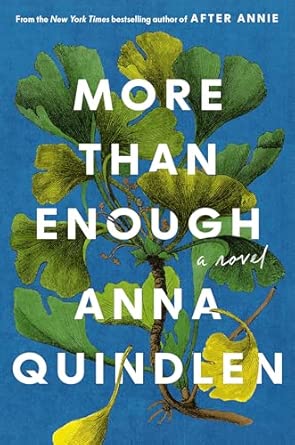
Review of MORE THAN ENOUGH by Anna Quindlen (New Release)

 3.5 Stars

This novel didn’t resonate with me as much as did the author’s previous one, After Annie (https://schatjesshelves.blogspot.com/2024/03/review-of-after-annie-by-anna-quindlen.html).

Polly Goodman, in her early 40s, is an English teacher in a girls’ private school in Manhattan; she is married to Mark, a veterinarian at the Bronx Zoo. Polly loves her job and her marriage is a happy one. She does, however, desperately want to have a child, but her biological clock is winding down and fertility treatments have not been successful. Other concerns are her strained relationship with her mother, her father’s worsening dementia, and her best friend’s illness. And there’s also the DNA test she took which has a surprising result.

The plot meanders and so lacks focus. There are several subplots, some of which seem unnecessary. For instance, the Josephine story seems irrelevant. The displacement of the in-laws needs to be detailed so much when it’s only real purpose is to bring Lou and Sarah together? And do we really need so much information about alpacas? With all these side stories for various characters, the plot feels scattered. This impression is not helped by the time shifts as the narrative constantly moves back and forth between past and present. And then there’s the unnecessary repetition: the gossip chain in Mark’s family, the housesitting for Sarah, the book club that requires members not to read the books, etc.

Polly is the narrator. She has several positive traits: she’s sensitive, thoughtful, kind, and compassionate. Her brother describes her as strong, smart, and dependable. Unfortunately, though I sympathized with her at first, I eventually became annoyed with her. Her desire to have a biological child seems an obsession, though I will admit that my never wanting to have children may add to my frustration with her. And she is so oblivious to her blind spots, especially as concerns her mother, even after Garrison, Mark, and her therapist try to warn her. She makes offhand comments like, “The thing about family: Lots of times someone was doing something behind your back, for your own good, even when it didn’t feel that way” without connecting that observation to her own mother. Then there’s the whole genealogy question; Polly totally ignores the obvious explanation. She is married to an expert in genetics, yet they never have a discussion that could have clarified everything very quickly?!

The number of too-good-to-be-believable characters is a problem. There’s the perfect mother-in-law, the perfect best friend, and the perfect husband. The character who most interested me is Garrison. Chapter 22, in which Garrison speaks very bluntly to his sister, had me cheering. It’s telling that Polly’s response is to run home to her bed. On the topic of characters, is it credible that a judge, someone who must be rational, intelligent, and must possess strong analytical skills, does not ever question such a significant event in her own life?

The ending is very tidy, too tidy for my tastes. Given the details revealed and repeated in the past, Polly’s news seems incredible. The title suggests that a major theme is the importance of practising gratitude, and this outcome left me wondering if she has learned this lesson or would she continue to be unhappy with her lot if things did not work as they apparently do. Polly has more than enough in her life; she has a rewarding career, a happy marriage to an unfailingly supportive husband, loyal and generous friends, strong family support, and enough everyday experiences that should bring her joy. She scoffs at a comment made by a student’s mother because it suggests a lack of understanding of true tragedy; the irony, of course, is that she herself focuses on what is wrong with her life instead of being grateful for what she already has.  Her attitude belies her surname.

This is not a bad book. The prose is engaging, but there are too many tangential stories. I’m certain the reader is to empathize with the main character, but I found myself losing patience with her. (Perhaps that reveals more about me than Polly?) Though entertaining in parts, the plot’s arc is predictable and the ending too neat.

Note: I received an eARC from the publisher via NetGalley.

Friday, February 13, 2026

Review of ADRIFT by Will Dean (New Release)

 3.5 Stars

This is an emotionally exhausting psychological drama about domestic abuse.

In 1994 in the Illinois/Indiana/Kentucky area, Drew and Peggy Jenkins and their teenage son Samson live on a rundown canal boat. Drew is a controlling and abusive man who uses isolation, intimidation, and gaslighting to undermine his wife. With no financial resources, Peggy is totally dependent on her husband but desperate to get away with her son. The situation becomes increasingly untenable when Peggy, an aspiring writer like Drew, has a publisher interested in her novel.

The novel alternates between the perspectives of Peggy and Samson so the reader gets to understand them quite well. Peggy loves her son and wants to take him away from Drew’s influence. Samson is bullied at school and dreams of escape as well; his plan is to do well at school so he can go away for further studies. What bothered me about Peggy is that she seems rather naive and oblivious. Samson is being badly bullied at school, but she is “grateful he likes his new school as much as he does.” Even when she witnesses her son being a target of bullies, she makes light of it: “Thank God those kids were only calling him names.” And it never occurs to her how angry and jealous Drew will be when he learns about her success in writing? The logical thing to do would be to keep her novel a secret and to use the money to facilitate an escape.

The character of Drew is problematic. He is adept at psychological manipulation; he lies, denies past events, twists facts, shifts blame, and is dismissive of Peggy’s feelings. He doesn’t want Peggy to have a paying job. He isolates his family by continuously moving the boat further and further away from the town. He even rations food, heat and water. Unfortunately, he becomes almost a cartoon villain because he has no redeeming qualities. Peggy claims he was kind and loving when they first met, but the reader doesn’t see any evidence of these traits; in fact, the book opens with a flashback to 1973 which shows the extent of Drew’s depravity.

A sense of unease permeates the novel from the beginning. The dread only grows further as the boat is moved further away from others who might intervene to help. The small boat (six feet wide and fifty feet long) is claustrophobic; it has no privacy or distance or personal space. The three people are confined and the reader feels restricted as well. The pace is rather slow; in the middle there is just repetition of gaslighting and bullying. Then the resolution is almost deus ex machina where a hero comes to the rescue.

I’m confused about the setting. The novel is set in the U.S. but British terms like kit, instead of sports gear, and biro, instead of pen, are used. Samson eats Cola Cubes, a traditional British candy? Canal boats, especially narrowboats, are common in England. The author is British so why would he choose an American setting for no reason?

This is an unsettling read, but it’s the issues with characterization, a slow pace, and the novel’s climax that bothered me.

Note: I received an eARC from the publisher via NetGalley.

Monday, February 9, 2026

Review of KIN by Tayari Jones (New Release)

 4 Stars

This novel focuses on the lives of two black women growing up in segregated America in the 1950s and 1960s. Vernice (Niecy) and Annie are motherless girls born in Honeysuckle, Louisiana. Niecy is raised by her maternal aunt after a murder-suicide. Annie is abandoned by her mother Hattie Lee shortly after her birth and so is raised by her maternal grandmother.

As girls, they are inseparable, but afterwards they end up on very divergent paths. Niecy attends college in Atlanta where she ends up joining a sisterhood of powerful women. Marriage into an affluent family seems inevitable. Annie is fixated on finding her mother and just before her high school graduation runs away with friends to Memphis to find her. Despite being separated by distance and eventually by their socio-economic status, their connection is not broken.

The two girls are foil characters. Niecy is guided by reason; cautious and sensible, she has a desire for stability. Annie, on the other hand, is more a wild child guided by passion. She is totally single-minded in wanting to find her mother; it’s almost as if she lacks control of her emotions. Despite their differences, their love for and loyalty to each other is unbreakable.

The novel examines the meaning of kin and argues that a kin is not necessarily a blood relation. Annie states, “Me and Niecy weren’t sisters, and nowhere near twins. I didn’t have what she got nor the other way around. What you have the same isn’t what binds you. Hearts grow strings because of what you know that’s the same, what happened to you that’s the same.” What binds the girls is their sense of abandonment because of the loss of their mothers. Though both have other women who step in to raise them, that sense never leaves them. Annie and Niecy’s actions clearly indicate that they regard each other as their closest kin. The poignant ending is indeed a powerful testimony to friendship.

The book is narrated by both girls in alternating chapters so the reader is privy to their complicated internal lives. Both emerge as authentic characters; they’re human with flaws. Both make choices with which I disagreed but understood and so I hoped for the best for both of them.

The novel is primarily about mothers and daughters and about friendship, but it touches on other topics as well. Racism, poverty, sex work, abortion, sexual orientation, and gender roles are examined.

I very much enjoyed this book. It has beautiful prose, engaging characters, and thematic depth.

Note:  I received an eARC from the publisher via NetGalley.

Friday, February 6, 2026

Review of HARRIET HATES LEMONADE by Kim McCollum (New Release)

 3.5 Stars

This book examines emotional abuse.

Harriet Henderson, 52, lives in Bozeman, Montana. After the death of her husband Les, she continues to live by his rigid rules and judgmental opinions. Her isolated, dreary existence, however, comes to an end when Robyn and Chris Carter and their 12-year-old daughter Audrey move into the neighbourhood. One day Audrey asks Harriet for help because she fears for her mother because of Chris’ violent behaviour. Reluctantly, Harriet steps up and decides to help Robyn find safety for herself and her daughter. When she accompanies Robyn to meetings of a support group for abused women, Harriet begins to re-evaluate her own marriage to Les, a man who’d been controlling and unyielding with lots of rules and consequences and demands.

At the beginning, Harriet is unlikeable. She is adamant that rules are followed; she has frequent clashes with neighbours because she doesn’t hesitate to report people who break the rules of the local homeowners’ association. She lacks social skills and bluntly criticizes others, showing no regard for their feelings. As we learn about her life with Les, we come to understand why she behaves as she does and we feel some sympathy for her. As she starts to reflect on her relationship with Les and to take steps, however tentatively at first, to change her attitude towards and treatment of others, we cannot but cheer for her.

To see the transformation in Harriet is heart-warming, though the narrative arc is predictable. From the beginning I found myself thinking of books like A Man Called Ove by Fredrik Backman and Major Pettigrew’s Last Stand by Helen Simonson. It is not surprising that Harriet reads Elizabeth Strout’s books featuring Olive Kitteridge.

The book offers a lot of information about emotional abuse. I had never heard of the narcissistic cycle of abuse: love bombing, devaluing, discarding, and hoovering. Harriet’s slow realizations about her own marriage emphasize how victims do not always recognize emotional abuse tactics; Harriet, for instance, thinks of abuse only in terms of violent physical behaviour.

The plot is clunky for a number of reasons. Pace, for instance, is uneven. At the beginning, pace is slow. Then there’s a dramatic event, after which the pace quickens considerably. Some changes, like Harriet’s descent into alcoholic states of near unconsciousness, happen so fast as to be unbelievable. Some events seem illogical. Why would Audrey run away from Isla’s? Audrey would show no interest in the trial? Custody hearings can be scheduled virtually overnight? Then there are gaps which affect narrative flow. Characters are mentioned frequently and then are never mentioned again until needed to move the plot. Harriet’s dog is mentioned repeatedly at first and then he virtually disappears for a time. The same is the case for Tammy.

The novel’s examination of emotional abuse is commendable. Harriet’s journey of discovery, about herself and her marriage, is interesting and well developed. It is the later sections that are weaker; narrative structure is clumsy so the overall impression is underwhelming.

Note: I received an eARC from the publisher via NetGalley.

Monday, February 2, 2026

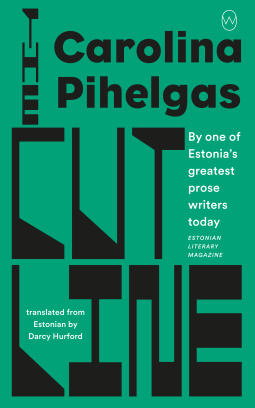
Review of THE CUT LINE by Carolina Pihelgas (New Release)

 3.5 Stars

This novella is a translation from Estonian.

Liine has left an emotionally abusive 14-year relationship with Tarmo, a man 15 years her senior. She retreats to Tsõriksoo, a virtually abandoned farmstead owned by her family. She spends the summer of self-imposed isolation doing physical work around the property as she reflects on her relationship with Tarmo and her mother.

The book focuses on Liine’s inner life. She experiences a gamut of emotions: grief, self-blame, fear, bitterness, doubt, and anger. She knows she needs time to come to terms with the toll her past has taken on her self-worth and to rebuild her life: “I need to stay beneath the soil, in the ground, here in a safe remote place until I find the strength within me to sprout new shoots.” Yet she worries about what will emerge: “I want to shake my body, throw off the pressure that’s accumulated on my skin, scrub off all the muck. What will be left?” There are steps forward but her journey of growth and healing is not easy or straightforward: “I’m building a new shell, but how long will it take? I’m crackling, I’m expanding, and I’m afraid of getting hurt.”

Though the focus is on Liine, there are repeated references to threats from the outside world. The farm is located next to an ever-expanding NATO base, on the border of Russia, so almost daily she is exposed to the sounds of military exercises suggesting a conflict is looming. There are also several references to climate change and the heatwaves and drought Estonia is already experiencing. All of this creates a claustrophobic atmosphere.

The title is perfect. Liine describes living on the cut line: “I’m swaying on the cut line that separates my previous life from what’s to come.” She wants to linger on the fine line between the past and the future, hoping that she will eventually step firmly into the future. There is hope as, at the end of the summer, she states, “My legs are strong from the groundwork, and I’m not easily bowed.” The title also suggests creating new boundaries as she takes up “more and more space.”

There is no action-packed plot. Very little actually happens. It is a slow-paced, detailed examination of the emotional aftermath of a woman’s escaping a toxic relationship. Though bleak and repetitive, it seems authentic. The ending is predictable.

The prose is lyrical: “Doubt is like a cobweb – very delicate, but when you touch it, it clings to your fingers. Gray and sticky.” The descriptions of nature are especially poetic: “At night I walk to the edge of the forest. The sky’s still glowing the color of sunset, but the forest’s already almost dark. The mosquitoes whine. . . . The shadows of the trees are long and a little lonely. . . . I rustle through the scrub, dry branches crackling under my feet.”

This book is not for everyone. Those who enjoy introspective books will find much to admire.

Note: I received an eARC from the publisher via NetGalley.

Friday, January 30, 2026

Review of THE HOPE by Paul E. Hardisty (New Release)

3.5 Stars 

This is the last of The Forcing Trilogy which begins with The Forcing (https://schatjesshelves.blogspot.com/2023/02/review-of-forcing-by-paul-e-hardisty.html) and continues with The Descent (https://schatjesshelves.blogspot.com/2024/02/review-of-descent-by-paul-e-hardisty.html).

The novel is set in 2082 in Hobart on the island of Tasmania. It’s a dystopian world where most live miserable, fear-filled lives with no freedom and under constant surveillance. Sixteen-year-old Boo Ashworth, her Uncle Kweku, and their friend Raphael collect whatever books they can find and hide them in a secret library; their goal is to preserve human knowledge in a world where information is heavily censored and people are kept illiterate. Boo, who loves to read, has the ability to instantly memorize entire texts. When the library is destroyed, Boo manages to escape. She sets out to find her family and ends up drawn into a plan to overthrow Eminence, the tyrant who maintains absolute control through the use of AI and threats of extreme punishment.

Interspersed regularly throughout Boo’s narrative are extracts from Kweku’s latest manuscript which documents his interviews with a man “at least partially responsible for more deaths than almost any other person in the history of the human race.” This manuscript, Kweku writes, “would form the third part of our family story spanning three generations, a tale of the perils of unconstrained greed, the cost of cowardice, and, perhaps, the power of hope.”

The title of the book, of course, points to its theme of the power of hope. This message is repeated again and again: “’Even when things are darkest, you can still care, and keep trying. As long as there is hope, there is a chance’” and “’there is always a pathway to a better future, even if you can’t see it. You have to keep hope alive. It’s what keeps you going. But you have to have courage in order to hope. You need to be brave. Because it’s a lot easier not to hope.’”

Though these comments are made to people of the future, there is no doubt that they are also intended to those of us who have “spectacularly wilful blindness.” Events of our time are described: “’The confluence of conditions unlike humanity had ever seen before. The rise of robotics and artificial intelligence, the largest population of human beings the Earth had ever borne, the heaviest burden. Technological prowess unmatched in our history, the ability to edit and extend life, to plunder the planet like never before, to fundamentally alter the climate. The rise of autocrats and strong men, of fundamentalist religions, the use of social media and disinformation to control minds and erode the democratic dream.’”

Reading about the aftermath of the election of President Bragg feels like reading a current newspaper about life after the election of President Trump: “’the civil service at every level in America had been completely dismantled and replaced by a phalanx of Bragg loyalist institutions. Everything – the courts, the senior military brass, local law enforcement, government agencies, the CIA and the FBI – everything was stacked with Bragg’s appointees. . . . Congress became nothing more than a group of old men taking turns holding a rubber stamp. The courts had long since been cowed, rendered impotent. All the so-called guardrails had been removed. . . . Environmental protections of all kinds had been wound back. The National Parks service was dismantled and the major wildlife refuges and areas protected for over a century were opened up for commercial exploitation – lumber, mining, oil and gas. Science agencies that studied climate change, the atmosphere and the oceans were gutted. Foreign aid was suspended. The right to protest was eliminated. Taxes on corporations and the rich who owned them were cut to the point where most billionaires paid nothing.’”

I got goosebumps as I read about Bragg suspending elections, citing the need for stability in a time of crisis, around the time Trump “joked” about cancelling midterm elections. And so many people feel overwhelmed by Trump’s chaotic shock and awe approach to governance: “’People walked around in a permanent state of disbelief. We were literally stunned. Shell-shocked. It had happened so fast, on so many fronts and with such ferocity, that there was simply too much to process.’” Much in this novel is unsettling because of its realistic depiction of our times; the possible consequences hypothesized are certainly not far-fetched.

Boo is an interesting character. Love for and loyalty to family define her. She is intelligent and possesses a maturity beyond her years. She is strong, yet at times is paralyzed by fear. Her relationship with Leo bothered me; because we see little of Leo, for much of the book it is difficult to understand the reason for the strength of her feelings. I understand that her love serves as a motivation and is necessary for the revelation in the last paragraph, a revelation not in the least surprising.

Tension is not lacking. Boo and various family members are often in danger. The scenes in the palace are sometimes difficult to read. The only light-hearted moment is the reference to “a plastic bag full of novels from a publisher called Orenda.”

I’d advise readers to begin with the first two books in the trilogy for a more complete understanding of what happened. There are returning characters and many references to earlier events. Unfortunately, the reader may end up feeling overwhelmed. I understand the importance of imagining a “just and fair future for humanity” and a pathway forward is prescribed, but are there enough people brave enough to hope and fight with love in their hearts?

Monday, January 26, 2026

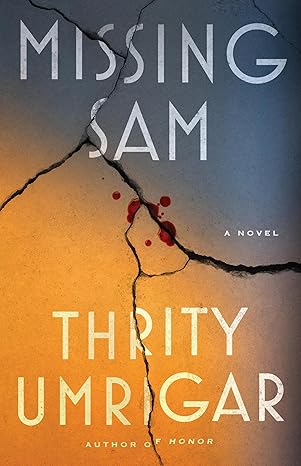
Review of MISSING SAM by Thrity Umrigar (New Release)

 4 Stars

This novel, set between July 2019 and March 2020, focuses on Aliya (Ali) Mirza and Samantha (Sam) O’Malley, a gay couple living in Cleveland Heights, Ohio.

After an argument with her wife the previous night, Sam goes for a morning run and disappears. Ali reports Sam missing but as a gay and Muslim daughter of Indian immigrants, she can’t escape the suspicion of both acquaintances and strangers. As she contends with guilt and fear, Ali is isolated and vilified online.

The novel alternates between the points of view of Ali and Sam. Besides describing their current circumstances, they reveal their difficult pasts. Ali’s mother died and her father (Abba) remarried a woman who disapproves of homosexuality, so Ali and her father have been estranged. Sam’s abusive father disowned her for the same reason, and her relationship with her mother has been affected by her mother always deferring to her husband.

Pacing is uneven. The first part, focusing on the search for Sam and her fate, is fast-paced and suspenseful. The second half is much slower because it centres on whether/how it’s possible to return to “normal” life after such a trauma.

The emotional lives of both Ali and Sam are clearly described. Both are fearful, though for different reasons. Both feel guilty about their contributions to their often tempestuous relationship. Both feel alone, Sam because no one knows of her whereabouts and Ali because she has little support in face of public scrutiny and mistrust. I sometimes felt very frustrated with Ali: some of her choices seem foolish and only add to her troubles, though I admit to never having been in her situation so perhaps I’d behave similarly. I did appreciate that both undergo some personal growth; their traumatic experiences bring lessons, especially about understanding other people and their behaviours.

This is not a light read. Besides describing trauma and its effects on people, the book highlights racism, homophobia, Islamophobia, and xenophobia. The author clearly suggests that the political climate created during Trump’s first term contributed to these problems in society. The book, however, is a worthwhile read.

Note: I received an eARC from the publisher via NetGalley.

Friday, January 23, 2026

Review of DEPARTURE(S) by Julian Barnes (New Release)

 4 Stars

Julian Barnes turned 80 on January 19, the day before this book was published. And it is so very much a Julian Barnes book, one difficult to categorize as either fiction or non-fiction, which the narrator’s friend would undoubtedly dismiss as “’This hybrid stuff you do.’”

The narrator is a writer named Julian Barnes who states that what we are reading will be his last book. He begins with a lengthy discussion of memory, how it works and its fallibility. Promising that there will be a story, or a story within the story, he eventually tells the story of two friends, Jean and Stephen, for whom he played matchmaker, once in the 1960s and again 40 years later. This narrative feels less of a plot and more a device for examining love. The latter part of the book is a reflection of the narrator’s life (his writing career, the deaths of his wife and friends, his diagnosis with blood cancer, the ravishes of aging, and his eventual death). The book closes with a farewell to his readers.

I’ve really liked several of Barnes’ novels and this one was no exception. I enjoyed reading his thoughts about memory, love, grief, and death. Perhaps because I am only a decade away from his age, his reflections resonated with me. I especially liked his way of accepting life’s vicissitudes and one’s inevitable death: it’s just the universe doing its stuff.

At the end, the narrator addresses the reader directly and imagines the writer and reader sitting side by side at a cafe, watching and musing at the lives passing by. Throughout, the narrator speaks in a relaxed voice as if indeed the reader and writer are having a conversation – though he admits to seldom catching the reader’s mutterings since he imagines the reader sitting on his deaf side. As such conversations between companions do, this one meanders with digressions touching on both serious and trivial topics.

The serious topics outnumber the inconsequential, but there are definite touches of humour. The discussions about Jimmy, a Jack Russell, are often hilarious. I chuckled at Julian’s description of his triage fantasy: imagining that during Covid, he’d be dismissed as an old geezer relegated to end-of-life care until someone notices his lapel badge announcing his winning of the Booker Prize. And I loved his jabs at Trump, commenting it would be appropriate if he’d sworn on a copy of the Wicked Bible which commands “Thou shalt commit adultery.”

The title is perfect. The narrator has experienced the departure of memories, has had some people in his life leave temporarily and some die, and he gives more than passing thought to his own departure from life. And is he saying goodbye to his writing career? The narrator emphasizes how writers lie and don’t keep promises, like the one he made to Jean and Stephen to never write about them. So should we take Barnes’s statement, about this being his last book, at face value?

I hope this is not his last book, but if it is, it is a good one to mark the end of his career. And though I won’t stop looking at “the many and varied expressions of life,” I’ll miss his “sturdy presence” and “conversational mutterings.”

Note: I received an eARC from the publisher via NetGalley.