Ranked a Top Canadian Book Blog
Twitter: @DCYakabuski
Facebook: Doreen Yakabuski
Instagram: doreenyakabuski
Threads: doreenyakabuski
Substack: @doreenyakabuski
Bluesky: @dcyakabuski.bsky.social

Friday, March 17, 2017

For St. Patrick's Day - Irish Writers


Ireland is blessed with a rich literary heritage, so on St. Patrick’s Day, I thought I’d share some informative pieces about Irish writer. 
https://electricliterature.com/infographic-a-literary-atlas-of-ireland-7fb9a8f7b78f#.ijosd9b3v is an infographic about Irish writers who have written about the beauty of their home country.


And LitHub has highlighted 25 contemporary Irish writers:  http://lithub.com/15-great-irish-writers-youve-probably-never-read-but-should/

Why not choose a book from one of these lists for your next read? 

Thursday, March 16, 2017

Japanese Crime Writers (Especially Keigo Higashino)

I came across this article about some recommended Japanese crime writers:  http://bookriot.com/2017/03/16/5-japanese-crime-writers-that-should-definitely-be-on-your-radar/?utm_source=Sailthru&utm_medium=email&utm_campaign=Riot%20Rundown&utm_term=BookRiot_TheRiotRundown_Tue-Thur.

One of the authors mentioned, Keigo Higashino, I’ve recently read.  Here’s my review of Keigo Higashino’s Under the Midnight Sun, one of his standalone novels:   http://schatjesshelves.blogspot.ca/2017/01/review-of-under-midnight-sun-by-keigo.html.

***************

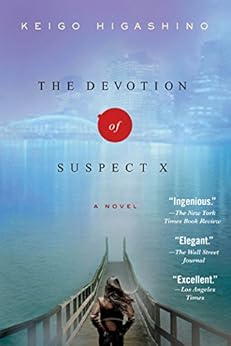
Higashino has also written several books in the Detective Galileo series.  The first book is The Devotion of Suspect X.

Review of The Devotion of Suspect X
3 Stars
Tetsuya Ishagami, a math genius, helps a woman, Yasuko Hanmaoka, hide the murder of her ex-husband. Motivated by his infatuation for Yasuko, Ishagami disposes of the body and constructs an alibi for both Yasuko and her daughter.

Kusanagi, the lead detective, tells his friend, Manabu Yukawa, a university physics professor, about the case. What results is an intellectual battle between two geniuses, one intent on constructing the perfect crime and the other on using logic to solve it.

The ending is an unguessable twist because the author withheld information from the reader. Even after everything is explained, the conclusion is unsatisfactory: the extent of Ishagami's devotion seems unbelievable, and Yukawa's behaviour, especially considering his friendship with Ishagami, is hurtful.

The pace is quick and the book is very readable, but one cannot help but feel cheated in the end.

***************

There is also a second Higashino series, this one featuring Detective Kaga.  The first novel in this series to be translated into English is entitled Malice.

Review of Malice
4 Stars
This Japanese mystery is a must-read.

Osamu Nonoguchi, a children’s author, discovers the body of Kunihiko Hidaka, a childhood friend and fellow author. Detective Kyochiro Kaga investigates and soon comes to suspect Nonoguchi though he seems to have a perfect alibi. The difficulty is identifying a motive. Kaga begins digging into the past and uncovers startling information about the two men’s school days and their literary careers. But theory after theory about the motive proves to be incorrect. Will the case ever be satisfactorily solved?

As a whodunit, the story is a locked room mystery which is solved rather quickly. It is when the book becomes a whydunit that it excels. The book could really be identified as a study of the psychology of murder. And what it reveals is chilling.

This struck me as very much a Sherlock Holmes mystery. There is little reliance on forensics. It is the determination and intelligence of the detective that solve the case. The novel is narrated through a series of journal entries kept by Kaga and Nonoguchi so the reader is given all the information Kaga has at his disposal. The reader is expected to be observant and try to make sense of the clues. (Hint: if something doesn’t seem quite right, it probably isn’t.) So many mysteries cheat by keeping information from readers; this was a problem with the other Higashino novels I’ve read (The Devotion of Suspect X and Salvation of a Saint). In Malice, however, there is no such ploy so the book really challenges the reader.

Because we learn so much background about Nonoguchi, Kaga and even Hidaka, they emerge as characters with depth, not the flat characters often encountered in second-rate mysteries. Kaga certainly earns the reader’s admiration and respect, and both the victim and his murderer will garner some sympathy.

This book appeared on the 2015 summer mystery reading list compiled by a panel on Shelagh Roger’s The Next Chapter on CBC Radio. I am certainly happy that it made it to my reading list.

***************

Another Japanese crime writer I would recommend is Six Four by Hideo Yokoyama which I read earlier this month:  http://schatjesshelves.blogspot.ca/2017/03/review-of-six-four-by-hideo-yokoyama.html.

Wednesday, March 15, 2017

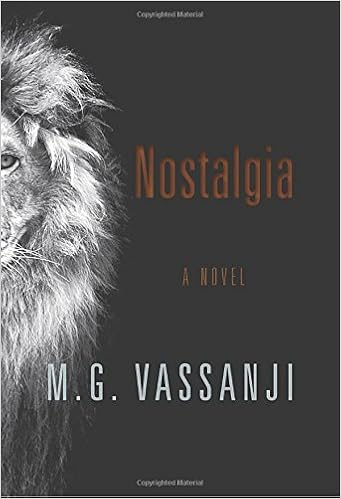
Review of NOSTALGIA by M. G. Vassanji


3.5 Stars
At the end of my last book review (for Company Town by Madeline Ashby), I mentioned that I do not read much speculative fiction. But I was confronted with another book of that genre, a dystopian tale of human engineering, when I picked up this other Canada Reads finalist for the book Canadians need now.

Nostalgia is set in Toronto in the near future when near-immortality is possible.  People, tired of one life, may get refurbished bodies, new faces, and new pasts implanted in their brains.  Unfortunately, the process is not perfect so sometimes memories from a past life intrude; those suffering from this nostalgia syndrome go to see a doctor like the protagonist of the novel, Frank Sina, who repairs the leaks.

A patient, Presley Smith, approaches Frank because of nostalgia symptoms, and he immediately feels a bond with this man although he doesn’t understand why.  Even when the Department of Internal Security warns him that Presley is a national security risk, Frank persists in seeing Presley. 

Meanwhile, a young reporter, Holly Chu, has been abducted in Maskinia, a lawless and barbaric country south of the Long Border that separates it from countries like Canada which are part of the North Atlantic Alliance.  Frank follows the news of her fate very closely.

The novel examines a number of conflicts.  There is, for example, a young versus old conflict.  BabyGens who have real relatives and no past lives feel hostile towards GN people who have been regenerated.  One BabyGen summarizes their case to Frank:  “You had it so good, you were pampered right into middle age like big babies.  Then, on top of all that security, you built up your lives and fat worths.  What chance do we stand in this world that you’ve made?  What do we inherit when our natural parents simply move on, taking their wealth with them” (83)?  He also says, “My point is that while you, the elderly elite, find ways to prolong your existence with new organs and new lives and monopolize the world’s resources, what about us young people?  When do we get a chance?  Youth unemployment is approaching thirty percent” (183)! 

There is also strife between rich and poor.  Frank is asked, “Since rejuvenation is available to the rich, what about the poor?  What is their place in this Brave New World of yours?  Is your science a method to cull the poor from our midst” (179)?  Economic disparity is also obvious between the inhabitants north and south of the Long Border.  Those not part of the North Atlantic Alliance suffer from poverty; they are dependent on food donations from aid agencies:  “Despite its natural wealth, Maskinia by all measures of development remains one of the poorest areas in the world, the majority of the population earning less than five dollars a day and lacking basic amenities such as electricity, running water, and sewage disposal” (172). Of course, the natural resources of Maskinia are exploited, and wealthy tourists take tours through this third-world region on the edge of collapse.  In her tour of Maskinia, Holly realizes, “A small percentage of the people on earth wallowed in wealth while the rest suffered deprivation” (188).

Because of the unequal distribution of wealth, there are anxieties about immigration as people from south of the Long Border try to find better lives in the north.  The Long Border was constructed “to stop the tides of desperate migrants sweeping upon European and American shores” (172).  The border has created other problems, however:  “Tighter clampdown and casualties at the Long Border are a cause of bitter resentment, used to advantage by the [ethnic and religious] militias to rally for recruitment into their ranks” (173).  These militias carry out “abductions; attacks on development and aid networks; attacks on industrial activities such as mining; smuggling people to the north; and drug trafficking . . .  [and send] personnel through the Long Border to carry out acts of terror” (173 – 174). 

Of course, life north of the Long Border is not perfect.  There are several Orwellian touches.  For example, the government watches Frank by installing a camera in his office, hiding a device in his clothes, and having someone follow him.  Computers have become like HAL in 2001: A Space Odyssey; Frank’s computer observes him and Frank admits, “He knew my innermost thoughts . . . perhaps before I did” (34).  Frank’s records are accessed and he knows this is routine:  “Any privacy you possess is a privilege that can be casually and briskly withdrawn” (108).

And, as one can expect with technological and scientific advances, not all problems have been solved.  There are unanswered questions:  “Can the soul (or the heart) be transmitted across generations? . . . [Can] personality traits or sensibilities such as the artistic” (85)?  Even more significantly, “We who have violated personal history and personal relationships in our bid to become immortal, can we now really know for certain who we are” (126)?  There is a fear of loss of self:  those implanted with idyllic fictions can become fictions (206).  The novel suggests that knowledge of one’s past and roots and a sense of connection through family and community are necessary for happiness. 

There is much in the novel that will remind the reader of the present.  Certainly, the current global refugee crisis came to mind with this description:  “some sixty refugees had attempted last week to swim under the EuroBarrier section of the Long Border in the Mediterranean; some twenty-five survived, the remaining were electrocuted or simply drowned” (16).  The Long Border sounds like Trump’s wall with Mexico, and the description of life in Maskinia could be a description of life in any number of Third World countries.  Ethnic and religious wars, famine, economic subjugation, class divides, science versus faith conflicts, immigration anxieties, and concerns about the dehumanizing effects of technological and scientific advances are all found in our world. 

That is perhaps the strongest element of this novel:  it is set in the future but a future that is not impossible.  Perhaps it is indeed the book that Canadians need now. 

Tuesday, March 14, 2017

2017 Stella Prize Shortlist


The Stella Prize is presented for the best work of literature, fiction or nonfiction, published by an Australian woman.

The shortlist for the 2017 award was announced last week:
Between a Wolf and a Dog by Georgia Blain
The Hate Race by Maxine Beneba Clarke
Poum and Alexandre by Catherine de Saint Phalle
An Isolated Incident by Emily Maguire
The Museum of Modern Love by Heather Rose   
Dying: A Memoir by Cory Taylor

“The 2017 Stella Prize shortlist celebrates books that combine extraordinary literary accomplishment with the social and familial reverberations of some of the most significant issues of our time: racism, violence against women, the aftermath of totalitarianism, the place of art in everyday life and the way we confront our individual mortality,” said Brenda Walker, the chair of the judging panel (http://thestellaprize.com.au/prize/2017/).

Monday, March 13, 2017

Baileys Women's Prize Longlist


Last week, on International Women’s Day, the Baileys Women’s Prize, which celebrates fiction by women writing in English, announced its longlist of 16 titles. 

Stay With Me by Ayobami Adebayo
The Power by Naomi Alderman
Hag-Seed by Margaret Atwood
Little Deaths by Emma Flint
The Mare by Mary Gaitskill
The Dark Circle by Linda Grant
The Lesser Bohemians by Eimear McBride
Midwinter by Fiona Melrose
The Sport of Kings by C.E. Morgan
The Woman Next Door by Yewande Omotoso
The Lonely Hearts Hotel by Heather O’Neill
The Essex Serpent by Sarah Perry
Barkskins by Annie Proulx
First Love by Gwendoline Riley
Do Not Say We Have Nothing by Madeleine Thien
The Gustav Sonata by Rose Tremain

I was pleased to see three Canadians (Margaret Atwood, Heather O’Neill, and Madeleine Thien) on the list.  Three of the nominees (Linda Grant, Eimear McBride, and Rose Tremain) have won previously. 

For information about each of the books, go to http://www.womensprizeforfiction.co.uk/.

The shortlist for the £30,000 prize will be announced on April 3, and the winner will be announced on June 7.