Ranked a Top Canadian Book Blog
Twitter: @DCYakabuski
Facebook: Doreen Yakabuski
Instagram: doreenyakabuski
Threads: doreenyakabuski
Substack: @doreenyakabuski
Bluesky: @dcyakabuski.bsky.social

Tuesday, April 11, 2017

Shortlist of 2017 DUBLIN Literary Award


The shortlist of the International DUBLIN Literary Award has been announced. 

The ten finalists are as follows:

A General Theory of Oblivion by José Eduardo Agualusa (Angolan)
Confession of the Lioness by Mia Couto (Mozambican)
The Green Road by Anne Enright (Irish )
The Prophets of Eternal Fjord by Kim Leine (Danish/Norwegian)
The Story of My Teeth by Valeria Luiselli (Mexican)
The Sympathizer by Viet Thanh Nguyen (Vietnamese/American)
Under the Udala Trees by Chinelo Okparanta (Nigerian-American)
A Strangeness in My Mind by Orhan Pamuk (Turkish)
A Whole Life by Robert Seethaler (Austrian)
A Little Life by Hanya Yanagihara (American)

I’ve read only two of these finalists: 

These ten titles were chosen from the longlist of 147 titles.  For the complete list, go to http://www.dublinliteraryaward.ie/.   For my analysis of the longlist, see http://schatjesshelves.blogspot.ca/2016/11/2017-international-dublin-literary.html.

The International DUBLIN Literary Award is worth €100,000 ($143,300 CAN) and is the world’s most valuable annual literary award for a single work of fiction.  The Award is presented annually for a novel written in English or translated into English.  Nominations are made by library systems in major cities throughout the world.  Established in 1994, the Award is now wholly funded by Dublin City Council.

The winner will be announced June 21. 2017.

Monday, April 10, 2017

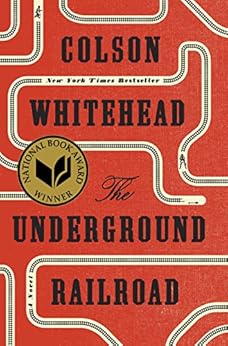
Colson Whitehead wins Pulitzer Prize for Fiction


The winners of the 2017 Pulitzer Prizes were announced earlier today.  


The Underground Railroad by Colson Whitehead won the Pulitzer Prize for fiction; the novel won the National Book Award earlier in the year.  The book, following two slaves as they escape a brutal master on the underground railroad, which is an actual physical subterranean train, will be adapted for a limited series on Amazon, directed by Moonlight’s Barry Jenkins.   See my review of the book at http://schatjesshelves.blogspot.ca/2016/09/review-of-underground-railroad-by.html.


For information about all the winners in the various categories, go to http://www.pulitzer.org/prize-winners-by-year/2017.

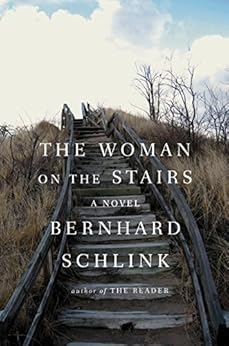
Review of THE WOMAN ON THE STAIRS by Bernhard Schlink


3.5 Stars
The unnamed narrator is a corporate lawyer who became involved in a dispute over ownership of a painting.  “Woman on Stairs” is a nude painting of Irene Gundlach painted by Karl Schwind; it was commissioned by her wealthy industrialist husband Peter.  Irene left Peter and moved in with Karl.  While serving as Karl’s lawyer, the narrator falls in love with Irene, and she manipulates him into helping her steal the painting for herself.  Forty years later, the narrator comes across the painting in a gallery in Sydney, Australia, and he tracks her down; he wants to confront her about how she used him in the past but wasn’t willing to have a relationship with him.

His encounter with Irene results in his examining his past.  Through flashbacks, we see how he became successful and wealthy in his career:  “Now, looking over the past, I have no idea what was a blessing, what a curse; whether my career was worth the price.”  Security mattered more than anything:  “No, I was not shackled to my life, rather I had chosen it with care, and held on to it with care. . . . I chose my career out of spite; I married because there was no good reason not to.  The first decision led to the big law firm; the second, to three children.” 

He led a dull life of routine:  “the years themselves had become a ritual faithfully adhered to, case by case, client by client, contract by contract.”  He always did the pragmatic thing; he claims “I take things seriously, sometimes too seriously, I aim for precision in everything I do, sometimes too much precision:  again and again I have difficulty understanding why people become emotional in difficult situations instead of solving the problem rationally.’”  He is emotionally stunted; he even refused to share his feelings with his wife, seeing such sharing as “a ritual of submission.”  He seems incapable of sympathy or empathy:  “’The exploited and oppressed – they have to figure out their problems themselves.’” 

Irene points out that he lived a “walled-in life” and comments, “’I love how keen you are to trudge from task to task, dutifully doing yet another merger, yet another acquisition, as if it meant something.’”  As a result, the narrator gradually starts to question his priorities and the choices he made.  He wonders whether his wife and children had been unhappy:  “Did I hear no complaint from them only because we talked so little?  What else was left unsaid?”  He questions the decision he had made to send his children to boarding school:  “Had I really thought that was what was best for them?  Or had I just given myself an easy and comfortable child-free life?”

Irene is a foil for the narrator.  She is enigmatic; he is so predictable.  She explains that, unlike him, security was not what she had wanted:  “’I was looking for someone .  .  .  who would take a risk, someone I could take a risk with.’”  She hated being a trophy wife for Peter, a muse for Karl and a damsel in distress for the narrator, so she took control of her life and left all of them.  The narrator admits, “How courageously she had lived it; how timidly I had lived mine.”

The novel examines how one’s life is affected by the choices one makes.  Irene took risks and there have been consequences for some of her past actions, yet she seems content with most of her choices.  Her one regret she tries to correct.   Irene calls the narrator both “brave knight” and “pure fool”.  So late in life, will be continue to be the latter or become the former?

This is very much a novel of character.  I enjoyed it though I found the narrator unlikeable.  Karl and Peter were also self-absorbed.  Why all the men would be infatuated with Irene is understandable.  I was, however, troubled by Kari the Aboriginal boy who keeps an eye on Irene.  He seems like a stereotypical Aboriginal wise man.  What is his purpose?  Is he just another male smitten by Irene? 
The book will appeal to readers who don’t mind a slow-paced narrative which focuses on characters.  Though fairly interesting, it does not carry the emotional impact of Schlink’s The Reader.

Sunday, April 9, 2017

On the 100th Anniversary of the Battle of Vimy Ridge, read . . .


I took this photo in 2009.

Today is the 100th anniversary of the Battle of Vimy Ridge, a battle very significant in Canadian history.  There are any number of non-fiction books about the battle; the only one with which I am familiar is Vimy by Pierre Berton.  I will let others recommend scholarly works.

I know much more about fiction, and the novel that comes to mind is The Stone Carvers by Jane Urquhart.  The book is not about Vimy but part of it deals with Walter Allward’s ambitious plans for a war memorial at Vimy, France, honouring the Canadian men who lost their lives in the Great War.  It is at the foot of this monument that events come together in the novel’s climactic moments. 
 
I love the last paragraph of the book:  “And so the impossible happens as a result of whims that turn into obsessions.  A priest is struck by the light in an unexpected valley, a king requires rainbow machines, on the one hand, and a belief in the magic of distant landscapes, on the other.  A Canadian man dreams the stone that will be assembled and carved to expiate the sorrow of one country on the soil of another.  The men in the counting houses of government rage against the expense, preferring to hoard their coins for the machinery of war.  And still the beautiful stone walls rise in barely accessible, elevated places.  Heartbreaking operas are written and performed in various private and public rooms.  Mass is celebrated.  And the windows and statues and towers are maintained longer than you might think, in the face of autumn’s bitter winds and winter’s frantic storms.  If you stand in certain parts of the valley you can see them shine.  A clear flash of silver or alabaster in daytime, lit by a rich inner fire, or reflected moonlight at night, they disperse light and strength and consolation long after the noise of the battle has ended, and all of the warriors have gone home” (390).

Other Jobs of Famous Writers


Yesterday’s blog about the salaries/earnings of writers got me thinking about jobs held by authors before and during their literary careers.  Most people know that T. S. Eliot worked in a bank while Wallace Stevens spent his life with an insurance company.  Joseph Conrad was a sea captain.  Arthur Conan Doyle practised as a doctor.  Mark Twain (Samuel Clemens) prospected for silver and worked as a journalist.

If you’re interested in what jobs writers have held, here are three articles:

“The Jobs 13 Famous Writers Had Before They Became Best-selling Authors”:  https://www.bustle.com/articles/101251-the-jobs-13-famous-writers-had-before-they-became-best-selling-authors

“The Early Jobs of 24 Famous Writers”:  http://mentalfloss.com/article/31026/early-jobs-24-famous-writers

Saturday, April 8, 2017

Salaries of Authors and Fictional Characters


There are some exceptions (e.g.  J. K. Rowling, Stephen King), but generally fiction writers are not well paid.  My research has shown that the average fiction writer in Canada earns about $500 a year in royalties.  Since most writers earn less than $2.00 per book, it’s not surprising that the vast majority of Canadian writers have day jobs. 


Of course, even if writing only makes up a tiny fraction of income, it can still be a job and should be treated as such.  This is the thesis of an article I read recently:  “No matter how many ‘death of the novel’ think pieces are published each year, people still pay — in dollars or eyeballs — to read writing every day.  If your writing is getting read, you should expect to be paid, even if it isn’t enough to live off, entirely; hell, even if it isn’t enough to pay your bar tab as you weep over your tiny royalty statement. Writing is a job, but will only remain one if we treat it as such” (https://electricliterature.com/yes-writing-is-a-job-even-if-it-doesnt-pay-well-b13bf4aa2e4e#.wcvyvpjvg).

I was interested then in an infographic looking at the salaries of fictional characters from famous British authors, adjusting the salaries of the character jobs to 2017 British pounds:  https://electricliterature.com/infographic-the-salaries-of-famous-fictional-characters-6d8c67324ff9#.mjhimeh2w.  (Currently, one Canadian dollar equals 0.61 British pound.) 

It seems that fictional characters might make more than their creators!

Friday, April 7, 2017

Short Novels


Since I posted about lengthy novels yesterday, it’s only fair that I address short novels.  Electric Literature has compiled two lists of novellas that could be read in one sitting.  See https://electricliterature.com/17-brilliant-short-novels-you-can-read-in-a-sitting-a809de5a1046#.h7yjqiih4 and https://electricliterature.com/18-more-amazing-novels-you-can-read-in-a-day-cc7b0e5d3d76#.udfzihcci.

Here are half a dozen recommendations of short novels (150 pages or less) from Schatje’s Shelves:
The Sense of an Ending by Julian Barnes
84, Charing Cross Road by Helene Hanff
Hiroshima by John Hersey
Le Bal by Irène Némirovsky
Animal Farm by George Orwell
The Pearl by John Steinbeck