Ranked a Top Canadian Book Blog
Twitter: @DCYakabuski
Facebook: Doreen Yakabuski
Instagram: doreenyakabuski
Threads: doreenyakabuski
Substack: @doreenyakabuski
Bluesky: @dcyakabuski.bsky.social

Friday, July 19, 2024

Review of ONE GRAND SUMMER by Ewald Arenz (New Release)

4 Stars

Ewald Arenz’s novel Tasting Sunlight wowed me in 2022 (https://schatjesshelves.blogspot.com/2022/06/review-of-tasting-sunlight-by-ewald.html); two years later I’m being wowed once again, this time by his second novel, One Grand Summer.

Sixteen-year-old Friedrich Büchner fails Latin and Math so, instead of going on holiday with his family, he is left in care of his grandparents so he can study and resit the exams. Frieder loves Nana but fears his strict and formal step-grandfather. His mornings are devoted to studying, but he has free time to spend with his sister Alma and his best friend Johann. And then he meets Beate, a girl who captures his heart. By the end of the summer of 1981, he will have experienced love, adventure, and tragedy; that summer changes him and shapes the rest of his life.

This is a coming-of-age novel. Frieder experiences first love, learns how to be a true friend, and comes to more fully appreciate his family. He learns to accept responsibility for his actions and to ask for help when he needs it; Nana points out, “’the ability to see when you need help and then to ask for it, is something very grown-up indeed.’” It is Frieder’s learning about love that stands out for me. He comes to understand that love can be painful and incomprehensible and powerful. Not only does he learn about love first-hand because of his romance with Beate, but he also learns about love from his grandparents. Nana, artistic and free-spirited, and Grandfather, “a hard man,” are so different, but they love each other. And he realizes that “’Love isn’t dependent on whether or not one of you does something stupid.’”

The author excels at capturing adolescent life. He portrays so authentically both the light-hearted, carefree moments of youth but also the unsettling ones. We see the quartet of teens spending time together, setting out on adventures, engaging in rebellious behaviour, falling in love, dealing with conflict, questioning loyalties, making stupid choices, and messing up. We also see them maturing as they learn from mistakes. The depiction of adolescence is so accurate it will leave adult readers reminiscing about their own.

The author is also a master of evocative language, using words and phrases that evoke sensory experiences and imagery in the minds of readers. His are not mere descriptions since he immerses readers in a vivid tapestry of sights, sounds, smells, tastes, and textures. The magical elements of summer are made real, whether the scent of robinia flowers and freshly cut grass, the songs of birds, the sight of silver poplars, the taste of chips with ketchup, or the feel of the midday heat or a wet swimsuit.

The plot is simple but engaging. This book will appeal to young adults for whom the sensitive portrayal of adolescence will resonate and adults will be left nostalgic for the summers of their youth. It’s perfect that the English translation is being released in the summer. I can think of no better book to take with you to a favourite summer spot.

Monday, July 15, 2024

Review of THE BEAUTIFUL MYSTERY by Louise Penny

 2.5 Stars

This is the eighth book in the Inspector Gamache series. In my review of the previous book, I mentioned that the murder cases in these books have become a secondary interest. I find myself more intrigued with what is happening with the residents of Three Pines. Then this book appears and it has no connection whatsoever to these villagers.

This novel is a locked-room mystery of sorts. It is set in the monastery of Saint-Gilbert-Entre-les-Loups in the wilderness of Quebec. The monastery is home to cloistered monks who have taken a vow of silence, though they have become world-famous for their Gregorian chants. The renowned choir director, Frère Mathieu, is found murdered so the monastery doors have to be opened to admit Gamache and Beauvoir so they can find the killer and restore peace and harmony.

The murder mystery is lacklustre. The motivation is unconvincing and once the murder weapon is identified, the identity of the killer is obvious. Given the makeup of the monastic community, it is also not difficult to pick out the monk who stands out from the rest.

The twist in the plot is the sudden arrival of Francoeur. Gamache’s arch-nemesis. Francoeur comes across as a cartoon villain. He has so much to lose but he makes a dramatic entrance at a secluded monastery to set in motion his revenge plot?! He’s the Chief Superintendent of Quebec’s police force, but he has unlimited time to waste? Gamache’s problems with his superiors are becoming tiresome. Surely it’s time for him to take some decisive action.

Beauvoir’s struggles with addiction to pain killers are unconvincing. He has been off drugs for three months and is finally in a relationship with his beloved Annie, but he suffers such a sudden, precipitous decline? His reactions, almost murderous, to Gamache are over-the-top. That melodramatic ending is off-putting.

Penny always includes cultural information, this time about Gregorian chants. Some of this is often interesting. This time, however, I was disappointed. Are we to believe that the erudite Gamache doesn’t know that St. Cecilia is the patron saint of music? Surely he would have encountered John Dryden’s poem “Song for St. Cecilia’s Day” in his education at an elite British university. And then there’s the incorrect interpretation of Pontius Pilate’s “Ecce homo” (“Behold the Man’”) which Penny uses as a central motif. Penny would have been better served to reference “I Don’t Know How to Love Him” from Jesus Christ Superstar with its repetition of “He's a man, he's just a man.”

I’m listening to these books because they are easy to follow. But no one bothered to correct the reader’s pronunciation of Francoeur? He’s never heard the French word coeur? Francoeur is not Fransieur!

Though I’ve not been overly impressed with any of the books, this one is probably my least favourite.

Friday, July 12, 2024

Review of THE HEART IN WINTER by Kevin Barry (New Release)

 4 Stars

I encountered this author via an earlier novel, Night Boat to Tangier (https://schatjesshelves.blogspot.com/2019/12/review-of-night-boat-to-tangier-by.html), which I enjoyed, so I thought I’d read his latest release.

This book begins in October of 1891 in Butte, Montana. Tom Rourke, addicted to a life of alcohol, opium, and debauchery, meets Polly Gillespie who has just arrived and been married to a mine captain. It’s love at first sight for Tom, and Polly quickly succumbs to his roguish charm. Soon the two head west with stolen money and a stolen horse, their escape resulting in a pursuit by hired hit men.

This is, at least in part, a love story. It’s a forbidden love but one Tom and Polly believe is their fate, giving them no choice but to fall in love. Priding himself on being something of a clairvoyant, Tom “senses the approach of a dangerous fate” just before he first meets Polly. I found myself hoping that theirs was not a star-crossed love and that they would be given a chance to be together because, though surrounded by danger and violence, there is no doubt of the tenderness and passion that exists between them. When a situation arises that puts Polly in danger, Tom risks his life, feeling “He had never had a task so sharply defined in his life before, never this weight of purpose, not this fury of intent.”

The book excels at depicting the lives of immigrants working in the silver and copper mines: “they worked until death the pits.” They came to the Promised Land but “Those who had been dispossessed would forever remain so – this was the golden promise of the Republic.” One immigrant says, “In a country like this . . . all they give you is fairy tales. . . . They’ll tell you that you can be happy. That it’s your right and destiny. . . . Now that’s a bunch of horseshit.”

One of the book’s messages is that survival may mean forgetting the past. We learn little about Tom and Polly’s lives before their arrival in Butte. Even with each other they are circumspect: Tom “said little of the time before he came to Butte or where he had come from” and “She was blurry about the details of things” and both sense they should not press for more information. Looking back may result in being “eaten whole and alive by the past” so it’s best to avoid falling “into the drag of the past like the drag of a river because it is so powerful it can take you down.” And of course one’s memories cannot always be trusted: “the past it shifts around all the time. The past is not fixed and it is not certain . . . The past it changes all the while every minute you’re still breathing and how in fuck are you supposed to make sense of it all.”

Westerns are not my genres of choice, but this one is worth reading for the language alone. There is an energy to Barry’s unrestrained language that jumps off the page. Here’s a description of the effects of drinking tequila: “They were neither of them used to Mexican drinking but intrigued by it all the same – its sweet congress and carnival air – despite the trepanation-like skull pain the colourless spirit had the pronounced tendency to leave in it wake.” A winter morning comes up “corpse-grey and ominous. Winter by now was truly the sour landlord of the forest.” The vivid imagery continues: “the stumps of ancient trees showed like broken teeth” and “a dank hallow that felt like an alcove for the laying out of the dead” and “the funereal odour of juniper as in a church incense.” There are also run-on sentences that lack commas and some stream-of-consciousness passages: “in a shotgun shack somewhere in the Idaho Territory getting fed up like a vealcalf by a toothlackin Cornish gunsman of extreme mental dubiety and the wind is pickin up outside and offerin its slow yearnsome tales – go sell ‘em somewhere else, fucker, I’m stocked – and you’re waitin on your sworn lover.” There’s more than tongue-in-cheek humour in the reference to “writing men with a penchant for the high style.”

There is a lot of humour. We’re introduced to Tom as he is engaged in writing matrimonial proposals for “wretched cases . . . The halt and the lame, the mute and the hare-lipped, the wall-eyed men who heard voices in the night – they could all be brought up nicely enough against the white field of a page. Discretion, imagination and the careful edit were all that was required.” Then there are the various characters that Tom and Polly encounter during their travels, among the first being two Métis men enjoying hallucinogenic mushrooms and a man of the cloth imbibing large amounts of tequila.

The book reminded me of The Sisters Brothers by Patrick deWitt, but I enjoyed this one much more. Its memorable characters, humour, vivid imagery, and poetic language make for an engrossing, entertaining read. There’s reference to a newspaper article entitled, “The Twelve Rules of Writing Western Adventures” which Tom studies “in grave and scholastic silence” before commenting sourly “There’s fucken twelve of ‘em?” If such rules exist, Kevin Barry has mastered them all.

Note: I received an eARC from the publisher via NetGalley.

Monday, July 8, 2024

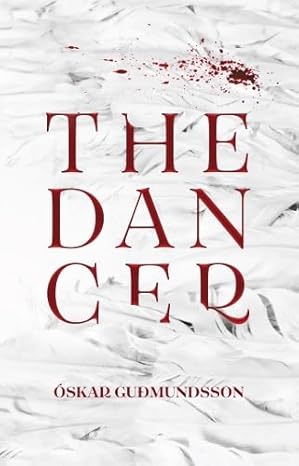
Review of THE DANCER by Óskar Guðmundsson

 3.5 Stars

I’m always on the lookout for Icelandic crime fiction and was happy to discover this author whom I had not read.

Set in 1982 in Reykjavík, the book opens with a dance scene unlike any I’ve ever seen or read about. It certainly sets the tone for the rest of the novel. Gunnhildur was once a promising ballet dancer but an accident left her wheel-chair bound and an alcoholic. From when he was a child, she taught her son Tony to dance and subjected him to years of grueling practice sessions which have left him with damaged feet. By chance, he gets a role on the stage of the National Theatre. After being bullied and ostracized at school, he thinks he might have found friends among his fellow dancers, but he encounters a competitive world whose secrets further damage an already troubled and broken young man.

The book also opens with the discovery of the body of a man who turns out to be Tony’s father. Valdimar, a veteran detective, and Ylfa, a rookie, are paired to investigate. Of course, they are led to Gunnhildur and Tony’s home where they find a woman barely coherent and a young man who has no grief for the passing of his estranged father.

The novel alternates between Tony’s perspective and that of the two investigators. The police procedural elements are secondary because the focus is on Tony’s troubled mind. The book is really a “whydunit” rather than a “whodunit” because the killer’s identity is obvious. It is the exploration of motive that dominates the narrative. Nonetheless, there is a surprise or two.

What is also surprising is that despite the increasingly depraved actions of the killer, it is impossible not to have some sympathy for him. As the depths of his suffering are revealed, it is impossible not to see him as a victim caught in a web of the betrayal and thwarted ambitions of others. He is not an innocent but his desire for revenge is understandable. As one betrayal is piled on another, his descent into madness feels inevitable.

Valdimar and Ylfa make an interesting pair. Brief backstories are given for both: Valdimar has health concerns and Ylfa has marital problems. The two work well together and I hope that this is the first of a series featuring the duo.

My one issue with the book is Tony’s being able to get a part in a ballet already in rehearsals for an upcoming performance. I know that Iceland does not have a large population, but is it really possible for someone to walk in off the street and be given a role in a ballet at the Ƥjóðleikhúsið?

This dark and disturbing book is not for those looking for a cozy mystery. There is brutality and violence. It will appeal to those who are interested in an exploration of the psychological impact of childhood trauma and long-term abuse.

Friday, July 5, 2024

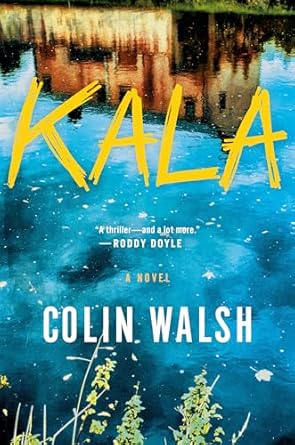
Review of KALA by Colin Walsh

 3.5 Stars

Because my husband and I are planning a trip to Ireland this fall, I’ve been making certain to read some contemporary Irish novels.

This one is set in 2018 in the seaside village of Kinlough on the west coast of the country, but there are repeated flashbacks to fifteen years earlier. In 2003, fifteen-year-old Kala Lanann disappeared; fifteen years later, her remains are found just as three of her close-knit group of friends are reunited. Helen, an investigative reporter living in Canada, has returned for her father’s wedding. Joe, an L.A.-based rock star, is back in his hometown to perform a series of gigs as he relaunches a local music venue. Mush is the one who never left; working in his mother’s coffee shop, he prefers to remain in the background because he’s self-conscious of his facial scars.

The narrative jumps back and forth between the present and the events of 2003 as the characters reminisce about that fateful summer, at the end of which their friend Kala disappeared. Chapters are presented in alternating points of view: Helen and Mush narrate in first person whereas Joe speaks in the second person. This latter approach is disconcerting at first, but it is so appropriate to Joe’s narcissistic personality. The second person narration suggests he’s observing himself from a distance and curating his image for social media where he has a major presence because of his fame.

Pacing is an issue. The book begins very slowly; more than once I considered abandoning the book. Only when two teenagers go missing in the second half does the momentum build. Then suspense ramps up because it seems that though Kinlough may be a pretty seaside village, there’s a violent underbelly, and Kala’s death may be connected to a network of violent men. There are fairly lengthy scenes of violence against both animals and humans. And then there’s an abrupt ending that is not altogether conclusive.

I was certainly interested in learning what happened to Kala, though I guessed the identity of the bad guy fairly early on. Once the obvious suspects are eliminated, it’s not difficult to narrow down the suspects. It was not, however, the thriller aspect of the book that impressed me but its portrayal of teenage life. We learn about their concerns; we follow the development of a romance, and we witness the partying. We see adolescent cruelty, insecurity, self-centredness, recklessness, and vulnerability. Though they can be loyal, the friends also betray each other in different ways.

The lives of Helen, Joe, and Mush are haunted by what happened in 2003. Helen speaks of Kala as “A hidden sun casting new shadows at unpredictable moments” and their being “frozen in some sort of crooked fidelity to adolescence.” Mush talks about how Kala has become “some kind of icon . . . more than a person like.” As the three re-visit the events surrounding Kala’s disappearance, they come to see Kala as a person and must face their roles in what transpired. And they do acquire some self-knowledge.

Though uneven in quality, this debut novel suggests that Colin Walsh, named Hennessy New Irish Writer of the Year, is an author to follow.

Monday, July 1, 2024

Review of THE LION WOMEN OF TEHRAN by Marjan Kamali (New Release)

3.5 Stars

This is a story about female friendship told against the backdrop of political upheaval in Iran.

In 1950, Elaheh (Ellie) Soltani is seven years old when her father dies. She and her mother are left in reduced circumstances and have to leave their large comfortable home to a tiny home in a poor neighbourhood. On her first day of school, Ellie meets Homa Roozbeh, and the two become best friends despite class differences and different personalities. Though they have different ambitions for their futures, both want to grow up to be lion women who are bold and courageous: “Strong women who make things happen.”

After three years, Ellie and her mother are able to return to their former lifestyle and the two girls are separated until a few years later when Homa reappears in Ellie’s privileged world. The two re-connect and pursue post-secondary educations, but political turmoil and an unintentional betrayal have devastating consequences.

Most of the novel is from Ellie’s perspective; only in the second half is the reader given brief sections from Homa’s first-person point of view. Homa is a lion woman from the beginning; Ellie becomes stronger only later in life, and even then she has to be pushed by others to take positive action. Whereas Homa is always admirable, I found Ellie difficult to like. Though intelligent, she is naive and shallow. Self-centred, she tends to be jealous of others. Her focus is finding a husband and having a family. Homa, on the other hand, is kind, spirited, strong-willed, and resilient. She becomes a political activist committed to women’s rights and is willing to risk her personal safety in order to achieve her mission. When we learn about Homa’s reason for keeping her distance from Ellie, one’s admiration cannot but increase.

The theme is friendship: how true, deep friendships can shape our lives. In the book, the actions and choices of one affect the life of the other. The book opens with a quote which clearly indicates the theme: “Events that seem to appear in the present from out of nowhere in actuality have a long history behind them.” The two girls from different social classes and with their different temperaments create a bond that is unbreakable despite separation, trauma, and revolution.

I also enjoyed the novel’s examination of the mother-daughter relationship. Ellie and her mother have a difficult relationship. Ellie describes her mother as “social-climbing, borderline narcissistic, always seemingly selfish” and “striving, shallow, and infuriating.” As a young girl, she wishes she had a mother more like Homa’s. Ellie too has some of these negative traits, and there is no doubt that her choices are strongly influenced by her mother. Only later does Ellie learn about her mother’s secrets, and she comes to terms with her mother’s failings because there is no doubt that she always loved her daughter.

The book provides interesting insights into Iranian culture. There is, for example, a detailed description of a wedding ceremony, and several instances of Iranian etiquette known as tarof: “the classic thanking and praising of the other and self-deprecation of the self.” Ellie learns to cook from Homa’s mother so there are numerous references to traditional dishes.

Since Homa is so passionate about women’s rights, there is a lot of information about the challenges faced by women in Iran. What is especially interesting is that we see women’s lives under both the Shah and the Ayatollah. Divorce and custody laws were improved and women were granted suffrage during the Shah’s rule; after the Islamic revolution, women’s rights were restricted. Several laws were enacted regarding mandatory veiling and a public dress code for women, and restrictions were removed on men's rights to child marriage. The book ends with reference to Mahsa Amini and the protests after her death.

Though I found the book rather slow at times, it has much to offer readers.

Note: I received an eARC from the publisher via NetGalley.

Thursday, June 27, 2024

Review of THE READING LIST by Sara Nisha Adams

3.5 Stars

This novel is about the transformative power of books. It will appeal to bibliophiles though it doesn’t say anything avid readers won’t already know.

Wembley, a suburb of London, is home to the Harrow Road Library. Here 17-year-old Aleisha works as a library assistant. Though it is not the summer job of her dreams, she likes that the library provides her a refuge from a difficult home life where she and her brother Aidan have to look after their mother Leilah who suffers from mental illness.

Mukesh Patel is a widower mourning the death of Naina, his wife of fifty years. He goes to the library thinking that reading might connect him with Naina and with Priya, his book-loving granddaughter. He asks for a book recommendation but Aleisha does not enjoy reading and so is at a loss. By chance, however, she found a reading list with eight titles and so suggests the first book on that list, To Kill a Mockingbird. She decides to read the suggested books as well, and the two become unlikely friends as they discuss their impressions of what they read. Aleisha confides in Mukesh and when a tragedy occurs in her family, he proves to be a true friend.

The book is told from the perspectives of Aleisha and Mukesh though there are chapters focusing on secondary characters who also find the list of books. The inclusion of Chris, Indira, Leonora, Izzy, Joseph, and Gigi adds little to the book. When some reappear, it’s difficult to remember who they are.

The portrayal of mental illness bothered me. The nature of Leilah’s illness is unclear and she has no diagnosis because she’s never seen a doctor. Aidan and Aleisha take turns staying with their mother but they don’t make any real effort to get professional care for her? Then at the end, despite a heart-breaking tragedy, she seems to improve rapidly and agrees to see a doctor?

The theme is obvious: books can transport people to other worlds and also bring people together. Books provide escape, comfort, and a sense of community. They can help a person understand and cope with life’s challenges. For instance, Mukesh feels closer to Naina when he reads a book she read. Mukesh also finds that “reading had helped him find something to pass the time, some way to connect with others, a reason to get out of bed and out of the house.” There is nothing new in what is mentioned; book lovers will find much with which to agree: books “open up your world”; “books say different things to different people”; “books aren’t always an escape; sometimes books teach us things. They show us the world; they don’t hide it”; and “Books always change as the person who reads them changes.”

Sometimes the showing of the influence of books feels heavy-handed. Mukesh identifies with Atticus in To Kill a Mockingbird, finds parallels to his life in Rebecca, and sees his daughters in Pride and Prejudice. Aleisha identifies with Pi’s situation in Life of Pi, and finds parallels with her life in both Pride and Prejudice and Little Women. It’s as if the list were curated just for them!

Because of its exploration of topics like grief, mental illness, and loneliness, the book has some heart-breaking moments. However, the ending is predictably heart-warming. For me it was an okay book, though nothing exceptional. What I actually enjoyed the most was thinking about the books on the list, all of which I’ve read, and considering which titles I’d put on a list if I were to recommend my favourites.