Ranked a Top Canadian Book Blog
Twitter: @DCYakabuski
Facebook: Doreen Yakabuski
Instagram: doreenyakabuski
Threads: doreenyakabuski
Substack: @doreenyakabuski
Bluesky: @dcyakabuski.bsky.social

Saturday, April 25, 2020

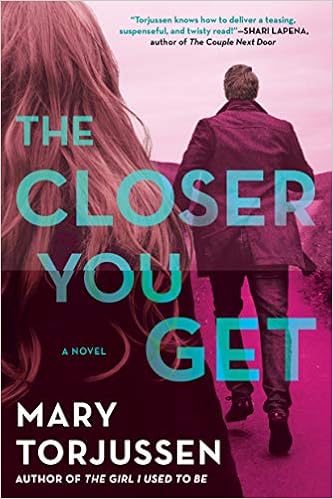
Review of THE CLOSER YOU GET by Mary Torjussen (New Release)

3.5 Stars
Ruby has an 18-month affair with her boss Harry; they agree to leave their spouses to begin a new life together.  Ruby leaves Tom but then Harry doesn’t show up, and she quickly finds herself unemployed and looking for a new home.  As she tries to construct a new life for herself, she starts receiving threatening messages and it seems as if she is being stalked.  As her fear builds, she debates returning to Tom; he is controlling and psychologically abusive but provides physical safety.

Initially, Ruby is the first-person narrator; later, Emma, Harry’s wife, becomes a second first-person narrator.  Having the perspective of both women develops character and explains motivations.  And it is important for the reader to understand why they behave as they do.  I certainly felt sympathy for Ruby; it is obvious that Tom has had such an effect on her that she doesn’t even know herself.  For instance, when she first goes food shopping for herself, she picks up a box of cereal that she never liked but “Tom liked it and used to say there was no point in getting two different cereals, that they’d go stale.”  She then wonders, “What should I buy?  What did I actually like?  My head started to hurt.  I didn’t know.  I just didn’t know what I liked.  It hadn’t mattered what I liked.” 

The women do not always behave in a credible fashion.  Emma’s reaction to an unfaithful husband doesn’t seem realistic.  Likewise, Ruby doesn’t freak out enough when bizarre things start happening to her; her reactions are definitely understated.  And knowing what she does know about people, she should be able to figure out who is responsible for the strange and threatening events.

I liked the fact that Ruby proves to be a dynamic character.  In many ways, she begins a journey of self-discovery when she leaves Tom.  Gradually, she faces the truth about her relationships and gets to know herself.  Her decisions at the end had me cheering.  Emma too realizes her mistakes and shows personal growth. 

There are coincidences which stretch credibility.  Two chance meetings of women are especially problematic. 

This book about lies and misperceptions is not flawless, but it provides an entertaining read.  Certainly, character development is a positive element. 

Note:  I received a digital galley from the publisher via NetGalley.

Tuesday, April 21, 2020

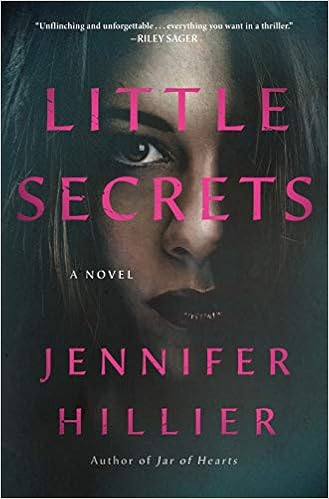
Review of LITTLE SECRETS by Jennifer Hillier (New Release)

3.5 Stars
Marin and Derek Machado are a power Seattle couple whose lives are shattered when their 4-year-old son Sebastian is abducted.  The book focuses not on the abduction but on its aftermath.  Sixteen months later, Marin has difficulty coping with daily life, and she and Derek have drifted apart.  Then the private investigator she hired to try and find Sebastian tells her that she has discovered that Derek is having an affair with a young art student/barista.  Learning about the affair gives Marin a purpose:  she doesn’t want to lose the only family she has left and so takes steps to prevent this from happening.

It is certainly possible to have sympathy for Marin.  The loss of her son, for which she feels directly responsible, leaves her devastated.  She is not, however, a likeable person.  Instead of directly addressing the elephant in the room, she chooses to be secretive and makes morally questionable decisions.  Her only justification is that she is not thinking clearly because of her emotional state.  The problem is that virtually every character in the book carries secrets and behaves immorally.  (The title is an understatement because people have big secrets.)  The only innocent is Sebastian whose absence casts a pall.

There are several twists and turns, as would be expected in a psychological thriller.  A careful reader will not be shocked by the twists because there is ample foreshadowing.  There are certainly sufficient hints as to the identity of the master manipulator.  My objection is that so many characters are brought together by a major coincidence; even a character involved is surprised by the connections among people.  Seattle is a large city, not a small town.  I also had difficulty accepting Marin’s actions after learning about the affair; implausibility rears its ugly head.

Despite its flaws, the book makes for a compelling read.  It is a fast-paced page-turner.  It is not a book that will leave a lasting impression, but it is entertaining.  And in difficult times, good entertainment is not a bad thing.

Note:  I received a digital galley from the publisher via NetGalley. 

Friday, April 17, 2020

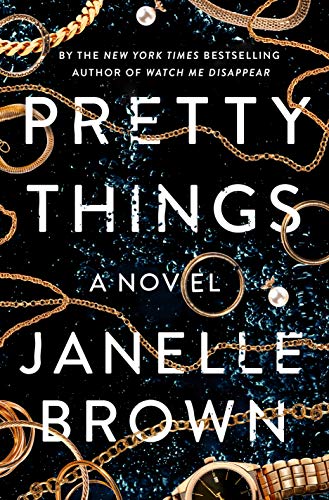
Review of PRETTY THINGS by Janelle Brown (New Release)

3.5 Stars
Nina and her boyfriend Lachlan are scammers stealing from the wealthy in Los Angeles.  When it becomes necessary for Nina to leave the city, she and Lachlan travel to Lake Tahoe.  Their mark is Vanessa Liebling, an heiress and Instagram influencer who has retreated to her family estate, Stonehaven.  Nina had encountered members of the Liebling family in the past and is now looking not just for money but for revenge.  Nina and Lachlan insert themselves into Vanessa’s life, but things do not proceed as planned.

The book begins slowly with the focus on character development.  The perspective of both Nina and Vanessa is given with several flashbacks providing detailed backstories.  As a result, the reader comes to know each of the women very well.  Both prove to be complex people with both positive traits and flaws.  The reader will find him/herself liking and disliking both of them at different times and thinking each is both a victim and a villain.  Because their pasts are explained, it is possible to understand their behaviour in the present. 

Both of the women are dynamic.  They learn about themselves and others.  One of the women, for instance, rails against her circumstances and the behaviour of others but eventually feels shame:  “Shame that I did not do more with what I did have, and shame that I pretended that the road I’d taken was the only option I had.  Because it wasn’t.  I chose that road.  I made it mine.  And if this is where it took me, it’s my own fault.”

In the second half, after the action and pace pick up, there are a number of plot twists.  Most are believable given the people involved.  It soon becomes clear that people are not what they seem, both in real life and on social media.  Suspense is created because no one can be fully trusted. 

The novel is a commentary on the shallowness of social media.  Vanessa thinks about the importance of appearing authentic while carefully showing only the positive:  “The ability to convincingly perform authenticity is perhaps the most necessary skill set for my generation.  And the image you exude must be compelling, it must be brand-positive, it must be cohesive no matter how fractured your internal dialog might be.”  There are comments like “social media feeds the narcissistic monster that lives within us all” and “the Internet has turned us all into armchair critics, experts at the cold dissection of gesture and syllable, sneering self-righteously from the safety of our screens.  There, we can feel good about ourselves, validated that our flaws aren’t as bad as theirs, unchallenged in our superiority.  Moral high ground is a pleasant place to perch, even if the view turns out to be rather limited in scope.”  Because of social media, “People don’t take the time to really look at each other anymore.  We live in a world of surface imagery, skimming past each other, registering just enough to assign a category and label before moving on to the next shiny thing.”

A comparison is made between grifters and people like Vanessa who curate their lives on social media; Vanessa is called a queen of duplicity and told, “’Your career has been all about spinning lies.  Putting up a pretty façade for public consumption when you’re a mess underneath.  Selling a life that doesn’t really exist. . . . You’ve been profiting off a mythical version of yourself, promoting unachievable aspiration, giving your half-million followers insecurity complexes and dooming them to a lifetime of FOMO therapy.  You’re a huckster.’” 

Though the book starts slowly and is somewhat repetitive (because of overlap when the same event is shown from different perspectives), readers who persist will be rewarded.   Will you be able to find the truth in the tangled web of lies?

Note:  I received a digital galley from the publisher via NetGalley.  This book will be released on April 21.

Monday, April 13, 2020

Review of LADY IN THE LAKE by Laura Lippman

3 Stars
The story is set in 1966 in Baltimore.  Feeling unfulfilled in her roles as housewife and mother, 37-year-old Madeline (Maddie) Schwartz leaves her almost-two-decades-long marriage to make a new life for herself.  She finds a small apartment, begins a relationship with a black policeman, and gets a low-level job at a newspaper.  When the body of Cleo Sherwood, a young black woman, is found in the fountain of a lake in an urban park, little attention is paid, but Maddie takes an interest because she feels a connection with Cleo and because she thinks Cleo’s story will help get her a proper reporting job at the newspaper.


The perspectives of both Maddie and Cleo are given.  Though Maddie does not hear, Cleo speaks to Maddie; she doesn’t appreciate Maddie’s snooping into her life and even wishes her body had not been found.  Though the focus is on these women, the voices of many other people are also heard.  After Maddie encounters someone, that person is given a brief chapter to reveal his/her thoughts and feelings.  Some of these peripheral characters are a bartender, a waitress, a policeman, a baseball player, a newspaper columnist, a store clerk, a psychic, and a television host.  Even children are given an opportunity to speak. 

Maddie is not perfect and not always likeable.  She is determined, ambitious, and self-centred.  In pursuit of Cleo’s story, Maddie’s approach to people is often insensitive.  Sometimes, she actually seems downright clueless.  She and Cleo are similar in that both are independent and headstrong, both wanting to build lives despite the barriers they face.  (Maddie has to battle sexism and Cleo has the additional problem of racism.)  Maddie also feels a kinship with Cleo because of similar life experiences.

The book can be seen as a crime novel, but its multiple secondary viewpoints and slow pace do not create a great deal of suspense.  The mystery of who killed Cleo is often in the background.  What does emerge is a picture of Baltimore in the 1960s, so this book might be better classified as historical fiction.  Personally, I found that it dragged at points; it was not the type of novel I expected from this author. 

Thursday, April 9, 2020

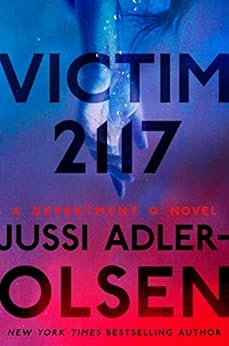
Review of VICTIM 2117 by Jussi Adler-Olsen

3.5 Stars
This is the eighth book in the Department Q series.  In it we finally learn about Assad’s past which has been an unsolved mystery since his appearance in the first novel.

The body of a refugee washes up on shore in Cyprus.  She is initially thought to have drowned attempting to cross the Mediterranean, but it is discovered that she was murdered.  From a photo, Assad recognizes her as the woman who sheltered him and his family many years ago in Syria.  Shaken by her death, Assad finally opens up and tells his Department Q colleagues about his past.  Then, he also recognizes a terrorist known as Ghaalib and becomes convinced he is planning an act of terror and a plot of revenge against Assad.  He and Carl leave for Germany to find Ghaalib.  In the meantime, Rose and Gordon are left to find an obsessive video game player who is planning carnage in Copenhagen. 

All of the Department Q characters are back, including Rose.  Readers familiar with this quirky cast will find them behaving as usual.  There are certainly touches of humour as expected, though there is a lot of action and suspense because there are two races against time taking place.  There are several surprises for both Carl and Assad.

The point of view of several characters is given:  Carl, Assad, Ghaalib, Alexander – the video game player, Joan - a Catalan journalist, and Rose.  Because we are privy to the thoughts of the villains (Ghaalib and Alexander), we know more than the investigators. This approach adds suspense, but it also develops character and clarifies motivations.

I did have some issues with Assad’s back story.  Certain events, especially an escape from a notorious prison, are not realistic.  Also, considering how much Assad has suffered, his loyalty towards the two men responsible for events in Iraq doesn’t make sense.  He should be angry and resentful, especially because they escape relatively unscathed. 

I would not recommend this book to people who have not read previous books in the series.  There is much to be gained by reading the books in sequence.  Apparently, there are two more books to finish the series.  I will definitely read them. 

Saturday, April 4, 2020

Review of ALL THIS COULD BE YOURS by Jami Attenberg

3.5 Stars
This book examines the lasting damage one man has inflicted on his family.  Victor Tuchman, 73, has a heart attack and this novel takes us through the last day of his life.  The focus is not on the dying man but on his family (wife Barbra; daughter Alex; son Gary; daughter-in-law Twyla) and how they react to news of his impending death.

Victor was not a nice man; in fact, he is introduced in the opening sentence as “an angry man” and “an ugly man (3).”  At various times, Barbra thinks of him as “a bad man” (39) and “a mercenary” (95).  Alex hopes that after her father’s death, her mother will tell all about Victor:  “’Like the terrible things he’s done.  Like why she stayed with him’” (216).  In the course of the novel, the reader does not in fact learn all that Victor did; there are hints of shady real estate deals; perhaps his love for the television show The Sopranos tells everything:  “’This show is very good. . . . they really get it right.’”  He is a philanderer, and women accuse him of harassment and physical abuse.  He is totally self-absorbed, convinced of his own self-importance.  He expects total obedience from his wife and children.  When problems arise, he pays to make them go away.  He seems to have a total lack of basic decency.  The indirect descriptions of his personality are perfect:  he “enjoyed the fish that snuck in and stole the pellets away from the turtles” (199) and is “fascinated with the nutria’s insidious power and focus” (39).

Through flashbacks, the beginnings of Victor and Barbra’s relationship are described.  Barbra is a vain, materialistic person who saw Victor as her way out of poverty, a means of giving her the stability her own father denied her.  Her mantra is “thin and pretty,” a mantra she constantly repeats to herself as she ensures she walks thousands of steps daily to remain fit.  Victor calls his wife “Barbie” and that’s an appropriate name.   She sees herself as a swan:  “The only animal Barbra appreciated was the swan, which was exactly her type:  shapely, quiet, pretty, refined, and somewhere off in the distance” (38 – 39).  She makes an agreement to accept his behaviour in return for the objects and privileges the marriage brings her.  Interestingly, when Victor is taken to the hospital, the EMT would “swear she’d been dying and had just come back to life” (6).

Alex hates her father for his “seventy-three years of deviousness and control” (36).  She lists the things she remembers from her childhood:  his “shut-down emotions” and insistence that “no one speak on Sundays in our home because it was the only day you weren’t working.”  She tells him, “’I do not forgive you for exposing us to all your illegal activities. . . . I do not forgive you for making me believe less in the possibility of good in the world.  I do not forgive you for spitting on the notion of family’” (108 – 109).  It is evident that her view of herself has been shaped by Victor’s comments to her when she was a teenager with acne and a few extra pounds of weight:  “She had refined her brain as much as possible to not give a fuck about what her father thought, and yet, every once in a while, she still saw herself through his eyes, heard his voice in her head . . . And then she caught herself assessing her physical form, and it was not with love, no joy at its bounty, but rather through a skewed, screwed-up lens” (108). 

Gary too has been affected by having a “cruel, absent father” (241).  He wants, more than anything, to be a good man.  He wants to know what makes Twyla happy and how to be a “perfect partner” (243):  “Because it was important for you to know all of this, be all of this.  You’d seen what happens otherwise.  You saw the damage, felt the damage.  You wanted to be healed by love” (242). 

As I was reading the book, I could not but find similarities between Victor and Donald Trump.  Besides his traits already mentioned, Alex speaks of her father’s “sexualization of the female form” (107) and his nefarious professional associates “in expensive suits, handcuffed, heads down, off to jail” (109).  I wondered whether the book was an examination of the relationship between Donald and Melania; certainly, her loyalty, like that of Barbra’s, leaves some people confused.  The analogy doesn’t work perfectly, however, because Alex and Gary are certainly not like the sycophantic Trump children. 

The book is not uplifting, but there are some glimpses of hope.  Some peripheral characters are developed:  an elderly man in a wheelchair, a trolley conductor, a ferry worker, a coroner.  They do not have easy lives but they seem like decent people who may recognize the importance of being “a little kinder at the end of the day to the ones they loved” (273).  The novel also ends with a conversation between Victor’s two granddaughters which suggests their focus is not on money and objects but on family.

Anyone looking for an action-packed book should stay clear of this one.  This is very much a character novel.  It may have you examining your own choices and how they’ve been shaped by your parents and how you’ve shaped your children. 

Tuesday, March 31, 2020

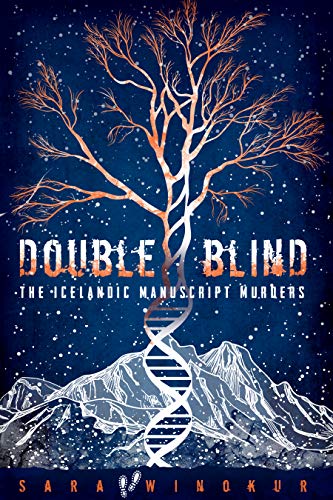
Review of DOUBLE BLIND by Sara Winokur (New Release)


2 Stars

I looked forward to reading this book because of its setting.  I’ve toured Iceland and fell in love with the country.  Also, I’m a fan of Nordic crime fiction.  Unfortunately, despite its setting and genre, this novel didn’t win me over.

Brynja, a forensic geneticist, receives a cryptic poem which seems to suggest that her twin brother Lúkas, who went missing 20 years earlier, is alive.  The poem leads her to become convinced that answers lie in a medieval manuscript of Icelandic sagas.  Unfortunately, people connected to the manuscript end up dying, and she receives warnings to stop her search. 

In the Author’s Note, Winokur states, “medieval Icelandic manuscripts are Iceland’s most precious treasures and would never be couriered around the country simply for someone to have a look at it [sic].”  Why then does she have this done in the book?  Using an (openly admitted) unrealistic event does not “enhance the story line”; that event just undermines the credibility of the book. 

There are other issues with the book.  For instance, there are many information dumps.  Some deal with genetics and others deal with things Icelandic.  For example, here’s information about Icelandic horses:  “her Icelandic horse, her precious Drífa, belonged to an ancient time, a breed of horse lost everywhere but here.  Drífa’s genes led back to the Asian steppes, to the Mongolian horses that had carried Genghis Khan to victory.  The horses spread to Russia and Norse settlers brought them to Iceland in the ninth and tenth centuries, where they mixed with breeds imported from the British Isles.  Along the way, Drífa's forebears had developed mutations which, instead of causing disease, adapted the horse to the harsh conditions of the Icelandic landscape, granting the creature a sure-footed gait, a thick mane and tail, and a double-coated hide for insulation against the cold.”  This description, which goes on even longer, may be interesting but is totally irrelevant.  Likewise, what is the purpose of including recipes for skyr with bilberries, Iceland moss soup, and horsemeat stew?  The medicinal uses of plants may be interesting to an herbalist but including long lists of these plants adds nothing to the plot.

Brynja is not a likeable protagonist.  At times, she comes across as an annoying know-it-all.  Then at other times, she seems totally dense:  she realizes “with a surge of excitement” that she can use RNA to help solve a case.  I am not a scientist, but I know that RNA can identify the organ source of human tissue, so why should this be such a revelation to a geneticist?  She even has to check a genetics website “to confirm her thinking”?!  Brynja is Director of Forensic Sciences but she doesn’t know that her boss is informed whenever anyone accesses a specific database?  She has reached her position but still behaves unprofessionally and unethically by thinking of accessing medical information for personal reasons?  Brynja’s relationship with Ari is problematic.  She is engaged to him, but she doesn’t seem to completely trust him?  On the other hand, she has a new intern as an assistant but she trusts her immediately? 

There’s a narrative technique which is very annoying:  Brynja says she is going to do something but then there is no indication she does this until we are told she did.  For example, “She had called the doctor last night and was told he would be in his office at nine.  She could call in an hour.”  Then, her time is accounted for and she doesn’t make a phone call, though she says later, “’Actually, I called as well.  The doctor’s coming by this afternoon.’”  These types of inconsistencies happen several times. 

And there are other inconsistencies.   A person eats half a tart made with yew berries and gets brittle nails and dry skin immediately?  Icelandic medical staff makes diagnoses by comparing symptoms found in animals like horses and sheepdogs?  Three guards “were stationed in front of the church” but one says, “’I was the only one on duty at the time; the other officers were asleep’”?  Brynja must wear cotton gloves to touch an ancient book, but the pastor touches it with his bare hands?  Brynja suffers from visual auras and she thinks she must rest “to gain some control over the migraines.”  Later she says that some incidents “were a result of migraines and temporary auras.”  My research indicates that aura symptoms strike before migraines; Brynja has visual disturbances but never suffers from migraines.  A police guard is aware that a crime took place at a location but she thinks she has to call the police and have them rope off the crime scene?  A man is admitted into a “Memory Care Home” even though a doctor said “a diagnosis of dementia was premature”?  A man has no pulse and Brynja fails to revive him, but she “gasps” when she later learns the man is in a coma?  Brynja put the poem “on the nightstand, slipped off the bathrobe, and climbed back into bed” but then “Brynja slipped out of bed, walked to the table, and returned with the poem”?!  Elly speaks to a mail clerk and gets some information like, “’He was sure it was posted from a foreign country’” but then Brynja can’t speak with him because “he was away on vacation”?  I could go on, but I think I’ve made my point.

Sometimes things seem thrown into the story for little reason.  What’s with María’s strange behaviour?  Her wanting to sell vegetables from her garden is insufficient explanation for her oddness!  Why is there a bizarre interaction between Elly and Rúnar involving Iceland poppy tea?  Why does Pastor Dalmann say that the manuscript will “’never leave this church again’” when it is destined for the Akureyri Museum?  What’s the point of the animosity between Brynja and Henning?  What’s the motive for Rúnar and Henning “meeting so often and in private”? 

The motive of the villain is very weak considering all that he does.  His obsession just doesn’t adequately explain his actions; as one character say, “’Pretty extreme, though, killing people and all.’”  This person who “except for driving the pickup into town for the occasional errand . . . pretty much kept to himself” takes the truck described as an “old bucket of bolts” because “the door’s practically hanging from the hinges” and drives halfway across Iceland to the Westfjords?

As I said at the beginning, I really looked forward to a good Nordic crime novel; unfortunately, this book has so many problems with it that I kept wanting it to just end. 

Note:  I received a digital galley from the publisher via NetGalley in return for an honest review.