Ranked a Top Canadian Book Blog
Twitter: @DCYakabuski
Facebook: Doreen Yakabuski
Instagram: doreenyakabuski
Threads: doreenyakabuski
Substack: @doreenyakabuski
Bluesky: @dcyakabuski.bsky.social

Wednesday, August 22, 2018

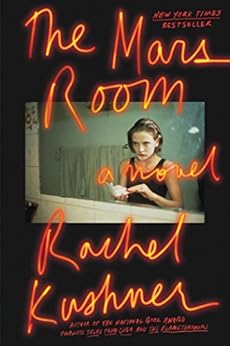
Review of THE MARS ROOM by Rachel Kushner

3.5 Stars 
I kept coming across this title on lists of recommended reads and then found it on the longlist for the 2018 Booker Prize, so I opted to read it though I’m not a fan of Orange is the New Black or prison novels in general.

Set in a women’s correctional facility in central California, the book focuses on one of the inmates, Romy Hall, who is serving two consecutive life sentences for killing a man who stalked her.  Through flashbacks, we learn about her neglectful childhood, the sexual and physical abuse she suffered, her job as a sex worker, and her drug addiction.  We also meet some of her fellow inmates:  a woman who killed her own child, a wisecracking trans woman, a former panty hose model on death row.  Two male characters receive some attention:  Gordon Hauser, a teacher who takes an interest in Romy, and Doc, a sociopathic “dirty cop”. 

There is no traditional plot.  The book is a series of vignettes which shift in focus and point of view to tell the stories of various women:  their early lives and their lives in prison.  The realities of life in prison include punitive rules, inedible food, squabbles between cliques, and unrelenting boredom.  Everyone engages in smuggling and manipulation to try and make life more bearable. 

The author emphasizes that socioeconomic factors directly affect the probability of incarceration.  Each of the women had limited options from birth and almost all were victims of poverty, rape, abuse, and exploitation; Gordon realizes that a person born in poor districts “might be trained from birth practically to represent your block, your gang, to rep hard, to have pride, to be hard.  Maybe you had a lot of siblings to watch and possibly you knew almost nobody who had finished school, or worked a stable job.  People from your family were in prison, whole swaths of your community, and it was part of life to eventually go there.  So, you were born fucked.”   Romy makes much the same point addressing the reader directly:  “You would not have been wandering lost at midnight at age eleven.  You would have been safe and dry and asleep, at home with your mother and your father who cared about you and had rules, curfews, expectations.  Everything for you would have been different.  But if you were me, you would have done what I did.”  The women committed crimes of violence but Gordon points out that “there were more abstract forms [of violence], depriving people of jobs, safe housing, adequate schools.” 

Once arrested, the women become victims of the justice system.  Incompetent and overworked public defenders fail them.  In Romy’s case, for example, the extenuating circumstances of her crime are never mentioned in court.  Once in prison, they are provided counselors:  “Counselor doesn’t mean someone who counsels.  Your prison counselor determines your security classification and when and if you get mainlined to general population.  Your counselor keeps tabs on you and reports to the parole board, if you are headed for parole.”    Romy’s counselor doesn’t help her find out what has happened to her son; instead, she says “’Ms. Hall, I know it’s tough, but your situation is due one hundred percent to choices you made and actions you took.’”  What purpose does learning “excellent on-the job training skills, which would translate into employment upon release” have when a prisoner has no release date?  And serving long-term sentences seems useless, as Gordon observes:  “Gordon could not see that making them suffer lifelong would accrue to justice.  It added new harm to old.” 

The book is not really an enjoyable read.  It tends to be unfailingly bleak since the women had few choices early in their lives and now have little hope.  The disjointed structure makes it difficult to connect with the characters though surely the author wants the reader to do so since her point is that though their existence is such that one may think of them as aliens on Mars, the women are very much products of our world.  The didactic tone is also annoying; Gordon, for instance, often seems not much more than a mouthpiece for the author. 

The book is a strong indictment of the American justice and penal systems and of society as a whole.  It is not, however, worthy of the Booker Prize for fiction because it often reads more like a work of non-fiction.  Apparently, the author did extensive research for the book and it shows, but I prefer my novels to be both thought-provoking and entertaining. 

Saturday, August 18, 2018

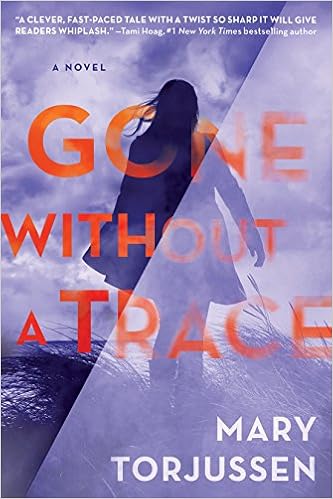
Review of GONE WITHOUT A TRACE by Mary Torjussen

2 Stars
One evening Hannah Monroe returns to her home in Liverpool to discover that her live-in boyfriend, Matt Stone, has left with all his possessions.  There is no record of his presence in her life; photos, emails and all social media have been erased.  Devastated, Hannah is determined to find Matt.  Then she starts receiving cryptic messages and she begins to suspect that someone has been in her home. 

Hannah is a difficult person to like.  At the beginning, I had sympathy for her but as she becomes more and more obsessed with finding Matt, I became impatient with her.  She comes across as immature and self-absorbed.  She always sees herself as the victim, even blaming a friend for dying in such a way that she has bad memories:  “What had she done to me, leaving me with that memory of her?”  Her behaviour is unrealistic as well.  At the beginning, she is so focused on her career but then she sacrifices that career, friendships, and hygiene just to find someone who obviously does not want to be found?

There is a Gone Girl twist which, unfortunately, doesn’t work.  After the great reveal, the reader should want to re-read the first part of the novel to see what he/she missed.  I felt no such compulsion because it is obvious that the author cheated by withholding too much information.  The one positive thing about the twist is that it touches on a subject seldom discussed in reality, much less in fiction.  I just wish that it had been portrayed more realistically.

The premise is interesting, but the execution is weak.  My interest was piqued but then the pace became so slow that my interest lagged.  So much attention is paid to the steps Hannah takes, every little step she takes in her search.  The reader suspects that something is wrong and may even form theories as to the truth but ceases to care when Hannah proves to be such a drama queen and when so much time is spent on her shallow, competitive relationship with her best friend Katie.  The pace around the reveal picks up but then the book drags again as the author takes great pains to explain everything.  On the other hand, what should have been portrayed in more detail (Hannah’s relationship with her parents) is glossed over. 

The editor of this book did not do a good job.  If the novel had been better structured, it would have maintained the reader’s interest and shed light on a topic that deserves more attention.  As is, this book will leave my memory without a trace.

Tuesday, August 14, 2018

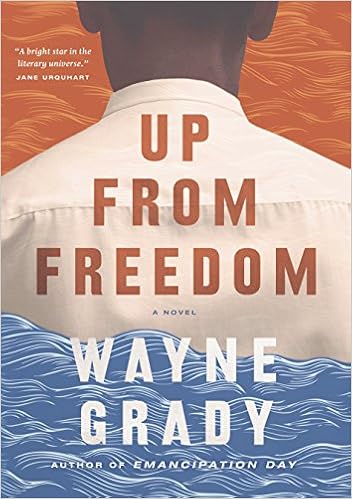
Review of UP FROM FREEDOM by Wayne Grady (New Release)

4 Stars 
Virgil Moody “vowed he would never own slaves, never be like his father” but when he left home “he’d taken Annie [a house slave] from his father’s plantation.”  Moody discovered that Annie was pregnant but he comes to think of her and her son Lucas as his family.  This family is broken apart when Lucas falls in love with a slave belonging to their neighbour and flees with her.  Virgil sets out to find him, enroute encountering people with differing attitudes to slavery.  Eventually, he finds himself in Freedom, Indiana, where he meets Tamsey and her family who are trying to escape the reach of the Fugitive Slave Act.

Though Virgil is searching for Lucas, his journey is very much a journey of self-discovery.   At the beginning he fails to understand that his actions make him complicit in slavery.  He claims to abhor slavery, but he fights on the side of Texas in the Mexican-American War knowing that “Texans were fighting for slavery.”  He convinces himself that he saved Annie from his father’s cruelty but he never asked her if she wanted to come with him.  He claims that he knows Annie stayed with him because she wanted to “’because she didn’t leave’.”  Virgil thinks “of Annie as his wife and Lucas as their son” but “Annie hadn’t been as comfortable with that as he was [because] the consequences for her were far greater than they were for him.”  Virgil tells Lucas, “’I always raised you like a son’” but Lucas points out, “’Did you?  Wouldn’t you have sent your son to school?’”  At one point, Annie asks Virgil to talk to Lucas but Virgil replies, “’He’s your son’” and she responds with “’But he your slave!’”  And Virgil never actually frees them! 

Gradually, Virgil comes to realize that he could have done more.  When Annie and Lucas have to stay in steerage, “suffocated below on straw mats and were fed gruel,” aboard a steamer while he “slept comfortably in his cabin, on clean sheets and in fresh air,” he counts himself “virtuous for having noticed [Annie’s] anger, thinking she would appreciate the difference between his concern and the other passengers’ lack of it.  Annie and Lucas were more to him than slaves:  wasn’t he a fine chap? . . . But what could he have done?  More.”   Virgil comes to see his selfishness, to see that he had blindly assumed “that doing what was good for him was good for everyone else concerned.”  He admits “He was only generous when it suited him.  He transported fugitives only because he thought they might help him find Lucas.  And he didn’t even want to find Lucas for Lucas’s sake, but for his own.  For forgiveness.” 

It is Tamsey who forces Virgil “to admit to himself what he was.  A white man in a world that was increasingly determined by the consequences of slavery.  It was time for him to stop acting surprised and indignant whenever anyone suggested to him that the reason he hadn’t freed Annie or Lucas was that he had liked it that their relationship was based on ownership, that that was the way he’d been raised, and, hate it though he professed he did, it was the relationship he understood and felt most comfortable with.”  Then, when given an opportunity, he sets out to redeem himself.

The concept of freedom is examined in the novel.  Virgil tells Lucas, “’You [and your mother] always been free here” but obviously Anne and Lucas don’t feel that way.  A man Virgil encounters tells him “’our Northern states are proud of the fact that their constitutions do not allow slavery.  No, the workers on these industrious projects are free blacks – a designation that usually signifies a man is free from slavery, but that here has come to mean also a man who works for free.  Or for wages so low that he can’t afford to do anything about his situation.”  Even freed slaves with “free papers” fear fugitive catchers, especially with the passing of the Fugitive Slave Act:  “’I show our papers to catchers, you think they leave us alone?’”  And Virgil can never be truly free of his past.
Set between May 1848 and November 1850, the novel examines racial turmoil in the United States at that time, a turmoil that erupted in the American Civil War a decade later.  But the novel is relevant to today.  Virgil’s father taught him that “’Nothing is forgiven . . . Some things are forgotten, but damn few.  And nothing is every forgiven’” and Virgil realizes that “his father had been right, that forgiveness meant wiping the record clean and that could never happen.”  Slavery cannot be wiped clean and so not truly forgiven but perhaps, as one character says, “’It not too late to seek a better world’”? 

There is a trial towards the end of the novel that has a twist I never expected but is apparently based on an actual case involving the author’s great-great-grandparents.  It emphasizes that the terms “black” and “white” are in many ways meaningless and only labels which can be used/misused to serve one’s purposes.  Can any of us really call ourselves one or the other?

This is an excellent novel which I highly recommend.  It has a compelling plot and a complex character who learns much about the world and himself.  The book will leave readers asking questions about their own behaviour. 

Note:  I received a digital galley of this book from the publisher via NetGalley. 

Saturday, August 11, 2018

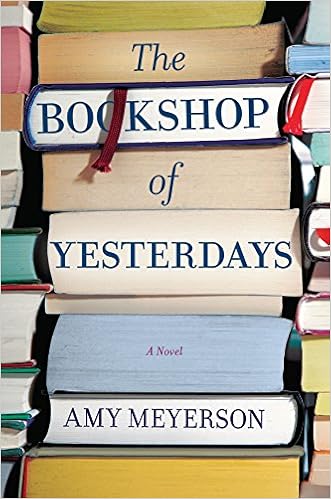
Review of THE BOOKSHOP OF YESTERDAYS by Amy Meyerson

2.5 Stars
I’m a sucker for novels about books and bookstores so when I chanced upon this one, I couldn’t resist.  Unfortunately, my money was not particularly well-spent.

When she was young, Miranda was close to her only uncle, Billy Brooks, a man who created riddles to send her on scavenger hunts.  When Billy and Miranda’s mother had a falling-out, Miranda lost contact with him.  Sixteen years later, she receives word that he has died and left her his bookstore, Prospero Books.  He also left her a literary clue which takes her on one last scavenger hunt; this one leads her to people from Billy’s past and to hidden family secrets. 

The plot is so predictable.  Early on, Miranda’s mother makes a loaded comment:  “’Loving something and being responsible for it are two very different things’” (67).  Two pages later, we learn that she was named for a character from The Tempest, the favourite play of her mother’s best friend (69).  Who names a daughter after a friend’s favourite drama?!  From that point on, I knew what Miranda would learn.  This predictability means that the scavenger hunt goes on for much too long.  The outcome of the romance plot is also totally foreseeable. 

The clues in the form of quotations from and allusions to a variety of literature (The Tempest, Alice’s Adventures in Wonderland, Jane Eyre, The Grapes of Wrath) are obscure and lead to an elaborate, convoluted quest which seems largely unnecessary.  Why wouldn’t Billy have written a letter explaining everything?

Characterization is not a strong element in the novel.  Miranda is not a likeable character.  She is so self-absorbed that she creates unnecessary drama.  If people don’t give her what she wants, she lashes out – as if she were a teenager rather than a 28-year-old woman who should be able to take into account other people’s feelings.  She is irate when people aren’t open with her, yet she shuts out her boyfriend?  

The bookshop is failing and Miranda keeps expressing concern about its future.  She supposedly wants to revive it but she takes little constructive action. What she actually does in the shop is unclear and obviously her contribution is minimal since she flits in and out on a whim.  She cares more about the scavenger hunt than the bookstore and the effects of its closing on the employees. 

Of course, she is not the only self-centred character.  Miranda’s mother was jealous and insecure when Billy had a relationship with her best friend?  And this same woman doesn’t even go to her brother’s funeral!  The minor characters are underdeveloped and remain flat.  The bookstore employees, for example, are quirky, but that is all that is really known about them. 

Miranda’s questions are answered; the reader figures them out long before she does.  There are, however, some things that are mentioned and then dropped.  Whatever happened to those emerald earrings if they were so important?  What was in the letter that Elijah sent Miranda (96)? 

If you enjoy a book whose ending you will know after reading less than 20% of it, pick up this book; otherwise, don’t allow yourself to be lured by its title as I was.     

Tuesday, August 7, 2018

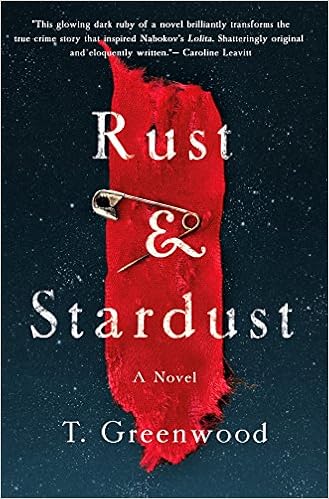
Review of RUST & STARDUST by T. Greenwood (New Release)

2.5 Stars 
I was unaware that Vladimir Nabokov’s Lolita was supposedly inspired by a true crime.  In 1948 in Camden, New Jersey, 11-year-old Sally Horner stole a notebook; the theft was an initiation into a girls’ club she wanted desperately to join.  She was spotted by Frank LaSalle, a recently released convict whose rap sheet included statutory rape and enticing a minor.  He posed as an F.B.I. agent who told her she would be arrested if she did not follow his instructions.  He convinced her she must leave with him to Atlantic City.  Thus began her two-year long kidnapping and serial molestation.

In the Author’s Note, T. Greenwood states her purpose in writing Rust & Stardust:  “While I drew heavily on Sally’s heartbreaking story, this novel is ultimately an imagined rendering of the years that she spent on the road with her captor and of the impact of her abduction on those she encountered along the way as well as those she left behind.” 

The perspective of a number of people is given.  The focus is on Sally, Ella (Sally’s mother), Susan (Sally’s sister), and Al (Susan’s husband), but the views of other minor characters, both real and imagined, are also given.  The one person who is not given a voice is Frank. 

The events depicted occurred 60 years ago when the phrase “stranger danger” did not exist.  I understand that young girls would have been much more innocent and naïve, but would they be as naïve as Sally is for so long?  Susan finds some consolation in learning how Frank lured her sister; she feels better knowing Sally must have been terrified:  “Sally wasn’t a fool, only a scared little girl.”  Though Sally is supposedly an intelligent girl with boundless curiosity who excels in school, she believes Frank’s fabrications even as they become more and more ludicrous? 

Ella is an even more problematic character.  It is difficult to have much sympathy for her.  Even in 1948, would a mother send her daughter on a vacation with a man she meets for the first time when her daughter boards a bus with him?  The man is supposedly the father of Sally’s classmate with whom Sally will be vacationing in Atlantic City, but Ella has never met this classmate either.  Susan questions her mother’s judgement:  “She tried to understand how it was that her mother had handed her own child off to this criminal.  She’d walked her to the bus depot, delivered her to him like a gift.  She couldn’t understand how Ella had been so gullible, so stupid.”  When Sally’s letters make no reference to her classmate and only mention activities with the father, shouldn’t Ella start questioning?  Later, Ella even says, “’Sally.  I forgive her for what she done with that man.’”  Her treatment of her daughter once she returns is hard to understand.  Given how consequential her comments to her husband proved to be, one would expect her to be better able to control her tongue.  When Sally expresses a desire to visit the woman responsible for her rescue, Ella says, “’Of course not . . . What’s the matter with you, wantin’ to go back there? . . . You’d think you missed it there.  Living in squalor with that monster.  What’s the matter with you?’”  Of course Ella suffered, but she is the adult and should be more concerned about her daughter’s feelings than her own. 

There are issues with Frank’s behaviour.  At one point, he tells Sally, “’Your daddy killed himself rather than spend a minute more in the house with you and your crippled mama.’”  Frank would have known about the suicide of Sally’s stepfather which had occurred years earlier?  Ruth writes letters to Sally though she suspects they never reach her, “Not if Frank got to them first.  Every day that went by without a response, she became convinced that he was confiscating them.  Hiding them from her.”  Undoubtedly Frank would have read those letters, the content of which should have aroused his suspicions, so why would he believe a later letter from Ruth in which she suggests he and her husband have a job for him in California? 

The book has too much detail.  Thankfully, the scenes of rape are not graphically depicted, but the book is overly long.  There is suspense at the beginning but a pattern develops and the book drags:  Sally meets someone who suspects there is something wrong but is unable or unwilling to help so her situation doesn’t change until she meets someone else who could help her but misses the opportunity to assist, etc.  Several of the fictional characters added (e.g. Sister Mary Katherine and Lena and Doris) seem to have been added solely to create suspense.  Will this person help?  Then there’s the overly dramatic scene where Frank jumps out of the shower just as Sally is trying to use a phone.  He can hear so clearly through a closed door with the shower running and moves so quickly that she still has the handset in her hand? 

Since the author’s purpose is to imagine the impact of Sally’s abduction, why does the novel continue for so long afterwards?  Do we really need to know what happens to minor characters that are figments of the author’s imagination?  And the references to luminous stars in each of the last five chapters are heavy-handed symbolism.

This book tells a heartbreaking story which is often a harrowing read.  The content often left me feeling uncomfortable.  Though the author insists “this is, in the end, a work of fiction,” I felt that in some ways Sally was being exploited yet again.  I am not in favour of censorship, but I wonder why not use Lolita as inspiration and write a novel from the perspective of Dolores Haze and those she encounters?  

Note:  I received a digital galley of this book from the publisher via NetGalley.

Friday, August 3, 2018

Review of MANHATTAN BEACH by Jennifer Egan

3.5 Stars 
I opted to read this book because it kept appearing on the lists for various literary awards; for example, it was nominated for the 2017 National Book Award for Fiction and longlisted for the 2018 Women’s Prize for Fiction.  It also won the 2018 Andrew Carnegie Medal for Fiction.  I was also interested in the author who received the Pulitzer Prize for Fiction for a previous novel, A Visit from the Goon Squad.

Most of the action takes place in Brooklyn during the years of the Depression and World War II.  The novel opens in 1934 in a home on Manhattan Beach where Anna Kerrigan, her father Eddie, and a man named Dexter Styles are brought together.  The action then switches to 1942 when Anna is 19 and working in the Brooklyn Naval Yard helping to support her mother Agnes and her severely disabled sister Lydia because Eddie vanished from their lives five years earlier.  Anna encounters Dexter, who turns out to be a syndicate boss, and sets out to determine what he knows about her father’s mysterious disappearance.

The story is narrated from the perspectives of Anna, Eddie and Dexter whose lives become intertwined in unexpected ways.  Each of these three becomes well-known to the reader; we learn about their obstacles, internal conflicts, strengths, and flaws.  For me it is Anna who emerges as most interesting.  She is highly spirited and fiercely independent.  She has an unstinting love for her sister and a relentless ambition to become a diver.  People think of her as “a good girl; a smiling, innocent girl” but “she was not good in the way they thought.”  She has a passionate side which she keeps concealed from virtually everyone.  

Anna keeps many secrets.  For instance, she hides her identity from Dexter and keeps a huge secret from her mother.  The others also have secrets:  Dexter has both professional and personal affairs which he wants to remain hidden.  Eddie tells his family nothing about the real nature of his work.  And then there are the secrets of secondary characters; the reader is not always privy to them.  The one that intrigues me is whether Harriet knew what fate awaited her husband.

The ocean is a recurring symbol.  For both Anna and Dexter, it provides solace and escape.  From the beginning, Anna is drawn to the sea; during her visit to Manhattan Beach, she insists on dipping her feet into the icy water:  “Each foot delivered an agony of sensation to her heart, one part of which was a flame of ache that felt unexpectedly pleasant.”  Anna makes it a personal goal to bring Lydia to the sea.  Dexter is endlessly fascinated by the sea, claiming it “was never the same on any two days, not if you really looked.”  Eddie initially thinks of the ocean as “a wasteland” but comes to see it as “an infinite hypnotic expanse” which also brings him both peace and escape.  Water is traditionally a symbol of renewal and new life.  Manhattan was the gateway to new lives for the many immigrants who came ashore there, and the ocean certainly brings Anna and Eddie new lives.  Of course, Anna’s new life is also helped by the war, an event which allowed the breaking down of gender barriers so she can become a pioneering diver helping the war effort by performing underwater repairs to ships. 

Though Anna is very much a sensualist, I struggled with her relationship with Dexter.  She suspects that he has information about what happened to her father, but she has such an intimate relationship with him?  When he takes her to a specific location, surely she would understand that he might have a deeper involvement than she initially suspected?  Yet she still makes the decision she does at Dr. Soffit’s office?  (Interestingly, her choice of the name Leon, thereby evoking her first sexual encounter, could be interpreted as emphasizing her sensualism.)

There are other flaws which deserve mention.  The unsanctioned diving scene requires some suspension of disbelief.  Eddie speaks of the ocean as a place full of “dead bodies” so could someone be taken to the exact location of one of those bodies?  Characters also disappear at convenient times.  One character, for instance, is conveniently and simply removed twice when her presence would hinder plot development.  Sometimes minor characters steal the show and demand more attention; the bosun is someone I’d loved to have learned more about.  

This book is difficult to classify.  It is an adventure tale, a coming-of-age story, a mystery, and a historical novel all in one.  Despite its weaknesses, it has inspired me to seek out the author’s previous works.

Wednesday, August 1, 2018